Non-Food & Alternative Fundraising
Healthy Fundraising Alternatives: What Schools Can Run Under Wellness Policies
How school wellness policies and nutrition guidelines shape what you can sell on campus — and non-food fundraising alternatives that sit outside the food standards.
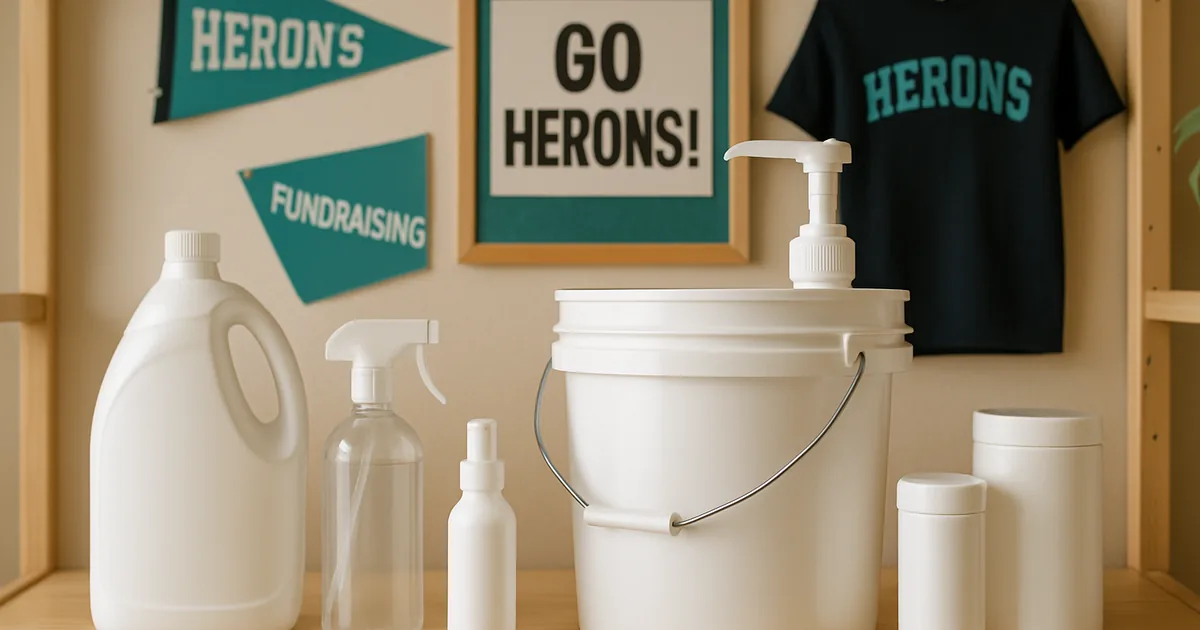
Healthy fundraising alternatives include programs that sell household necessities rather than food — products like laundry detergent, cleaning supplies, and similar staples. Because they are not food, USDA Smart Snacks nutrition standards for foods sold to students on campus during the school day do not apply to them, though local fundraiser-approval rules may still apply. These programs can reduce parent and staff concerns about promoting unhealthy eating and can reach a wider buyer pool because most households use the product regardless of dietary preferences. A bulk household-necessity fundraiser gives groups a repeatable non-food option; confirm your school's own fundraiser approval process before you plan.
If your school or district participates in the National School Lunch Program or School Breakfast Program, it must have a local wellness policy, so you may have run into the question of what you can and cannot sell on campus. USDA's Smart Snacks standards apply to foods sold to students on campus during the school day, including fundraisers, unless your state allows an exemption; many candy products do not meet them.
For many groups, the problem is not that the policies are unreasonable, but that traditional fundraisers were built around products the standards can restrict on campus. A PTA that has run the same candy bar drive for a decade may find it can no longer sell on campus during the school day, and the replacement options presented are often just a different treat with marginally better nutrition facts.
This guide covers what school wellness policies and Smart Snacks standards say, why some food-based fundraisers struggle under them, what non-food alternatives exist, and how a household-necessity program can give groups a repeatable option that nutrition standards for food do not cover.
- Federal law requires local education agencies that participate in the National School Lunch Program or School Breakfast Program to adopt a local wellness policy, which includes nutrition standards for foods sold on campus during the school day.
- USDA Smart Snacks standards apply to foods sold to students on campus during the school day — generally from midnight before through 30 minutes after the official school day ends — including fundraisers; states can allow occasional exempt fundraisers, and the standards do not apply off campus or after that window, though local policies may.
- Some traditional food fundraisers — candy, baked goods — may need an exemption or approval when sold on campus during the school day; preordered bulk cookie dough for home consumption is not required to meet the standards, though local rules may still apply.
- Household-necessity products like laundry detergent and cleaning supplies are not food, so nutrition standards for foods do not apply to them; local fundraiser-approval rules may still apply.
- A non-food fundraiser can reduce parent and staff concerns about promoting unhealthy eating and can reach buyers who would not purchase a treat product.
- Compliance is not just about avoiding a ban — it is about running a fundraiser the school administration will approve and parents will support.
- A bulk household-necessity fundraiser is one category that avoids food nutrition standards while offering broad buyer appeal and a group profit that depends on volume.
What do school wellness policies actually require?
Local wellness policies are required for local education agencies participating in the National School Lunch Program or School Breakfast Program (the requirement dates to the 2004 Child Nutrition and WIC Reauthorization Act and was strengthened by the Healthy, Hunger-Free Kids Act of 2010). That covers most U.S. public schools. The policies must include nutrition standards for foods and beverages available on the school campus during the school day, and some districts extend their own rules to after-school activities and fundraisers.
The USDA Smart Snacks in School standards set calorie, sodium, fat, and sugar limits for foods sold to students on campus during the school day — generally from midnight before through 30 minutes after the official school day ends — and restrict beverages by type and portion size. That includes foods sold in fundraisers. States can allow a limited number of exempt fundraisers, and the standards do not apply off campus or after that window, though local policies may. A candy bar or a bag of flavored popcorn sold on campus during the school day may fail one or more of the tests, while preordered bulk cookie dough for home consumption is not required to meet the standards.
For some groups, that means a food fundraiser needs a policy check, possibly a nutrition review, and a conversation with the principal or district wellness coordinator before launch, and that friction can be enough to stop the idea before it starts.
Why do food-based fundraisers struggle under wellness policies?
Many traditional fundraising products were designed in an era when the main question was whether people would buy them. Candy bars, popcorn, and baked goods are often high in sugar, fat, or both, and some do not meet Smart Snacks thresholds without reformulation.
Some companies offer lower-sugar or portion-controlled versions, though those products may lose some of the appeal of the original. The coordinator can be left selling a compromise product that still requires checking the school's approval process.
Even when a state or district permits an exemption, the process can create delays and uncertainty. A booster club that needs to launch a drive in September may have to wait for approval, and a denial can mean scrambling for a replacement. Choosing a fundraiser that is not food avoids the food-standards question, though it is still worth confirming any general fundraiser-approval rule.
What are the best healthy fundraising alternatives that comply with wellness policies?
One option is to step outside the food category. A fundraiser that sells household necessities — laundry detergent, cleaning products, paper goods — is not selling food, so Smart Snacks nutrition standards for foods and beverages do not apply to it. Local rules about which fundraisers a school will approve may still apply, so confirm with your principal.
This is a shift in what you are asking supporters to buy. Instead of a treat they have to justify or a snack that may not meet their dietary preferences, you are offering a staple they already purchase and use up regularly, so nutrition standards for food are not the relevant question.
Other non-food options include non-inventory fundraisers like pledge drives or direct-donation campaigns, and activity-based events like fun runs or car washes. These work well for some groups, but they lack the tangible product-for-value exchange. A household-necessity fundraiser gives supporters something useful while staying outside the food-standards question.
How does a household-necessity fundraiser address parent and staff health concerns?
Wellness policies exist because parents, educators, and policymakers share a concern about children's health and the role schools play in shaping eating habits. When a school runs a candy or cookie dough fundraiser, some families may see a mixed message: nutrition is taught in the classroom, yet families are asked to buy high-sugar products to fund school programs.
A household-necessity fundraiser can avoid that tension. There is no consumption and no sugar. Parents who would decline to participate in a candy drive may be more willing to support a detergent fundraiser because it aligns with their values and offers something they use. Staff who have raised concerns about food-based fundraisers may find a useful product at a fair price easier to support.
This is not a minor point. One way to lower participation is to ask families to do something they feel conflicted about. A household staple can remove that conflict and turn the ask into a straightforward value proposition: shift one purchase you were already going to make and support the school.
What does a compliant, high-performing healthy fundraiser look like in practice?
A bulk laundry-detergent fundraiser is one model that avoids food standards while offering broad buyer appeal and a $0 upfront cost. Groups sell a 5-gallon bucket for $49.95. A 5-gallon bucket holds 640 ounces, so at $49.95 the buyer pays about 7.8 cents per ounce. Premium national-brand liquid detergents typically cost more per ounce at retail, though exact pricing varies by store, size, and promotion — compare that figure to what you currently pay, since value-tier and store brands can cost less per ounce.
Groups keep about $13.45 to $15.45 per bucket at 100 or more buckets, depending on order volume, with free shipping at 100 or more buckets. The product is non-perishable, so there is no timed delivery scramble, and it is delivered to a commercial delivery address. Because it is a necessity rather than a treat, the buyer pool can be wider than a food fundraiser — grandparents, neighbors, coworkers, and community members who might not buy candy or cookie dough may buy detergent.
Good Clean Fundraising runs this model as The Good Clean Fundraiser. Groups pay $0 upfront because the group collects orders and payment first, then submits the final order with payment. The company provides a Getting Started packet, instructions, marketing materials, and social media strategies. Good Clean Fundraising advertises a 100% money-back guarantee under which, according to the company, any unsatisfied customer is refunded and the group keeps its profit. Groups should plan for the 50-bucket minimum and about two weeks of fulfillment after the paid order is submitted.
For a coordinator navigating food-standard restrictions, a non-food fundraiser may simplify the approval conversation, and a wider buyer pool may raise more per family than a restricted food program would; neither outcome is guaranteed, so confirm your school's approval process.
How do you calculate whether a household-necessity fundraiser will meet your goal?
The math is straightforward. If your group needs a specific dollar amount, divide that goal by the per-bucket profit to find out how many buckets you need to sell, then divide that number by your participant count to see the average per person, after checking which tier the bucket count actually falls into — $13.45 at 100–299 buckets, $14.45 at 300–499, $15.45 at 500 or more — and recalculating at the matching rate if needed. With that confirmed rate, a group can quickly determine whether the target is realistic given their size and typical participation.
For example, if your goal requires selling 200 buckets and you have 50 participating families, that is an average of 4 buckets per family. Whether that is reachable depends on your community; a necessity product may bring in families who sit out food fundraisers, which can lift the total without requiring top sellers to carry the whole campaign.
Because the product is non-perishable and the group collects orders and payment first, then submits the final order with payment, the group does not buy inventory it may not sell. That structure removes the inventory gamble that can sink some traditional fundraisers, though the group should still plan for the 50-bucket minimum.
What other non-food fundraising alternatives are worth considering?
Beyond household necessities, a few other non-food categories avoid food nutrition standards. Reusable products like water bottles, tote bags, and school-branded gear are non-consumable and can carry decent margins, though they are typically one-time purchases rather than repeat buys. Activity-based fundraisers like fun runs, walk-a-thons, and community events build school spirit, but they require more volunteer coordination and often depend on sponsorships or pledges rather than direct product sales.
Digital and no-inventory programs vary in what supporters get back. Online giving platforms and crowdfunding are essentially donation asks — supporters give and receive little or nothing tangible in return, which can limit how often you can return to the same base. Discount card sales are different: supporters get a defined discount benefit at participating businesses, so the exchange is more concrete, even though there is no physical product.
The household-necessity category is worth a look because it combines simplicity, broad appeal, and a lower per-ounce price than premium national brands; whether it fits your group depends on your goals, volunteers, and school approval process.
| Factor | Food Fundraiser | Household Necessity |
|---|---|---|
| Wellness policy compliance | May need exemption for on-campus sales | Not food; food standards do not apply |
| Approval process | Policy review, advance approval required | No food exemption needed; confirm local approval |
| Parent & staff concerns | Tension around promoting unhealthy eating | May align with health values |
| Buyer pool | Treat buyers only | Most households, any dietary preference |
| Repeat participation | Buyer fatigue, policy uncertainty | Repurchased regularly; no food-standard issue |
| Profit & logistics | Moderate margin, often perishable | Profit varies by volume; non-perishable |
Common mistakes to avoid
Assuming a lower-sugar version of a restricted product will solve the problem
A marginally healthier candy bar or cookie may still need to be checked against Smart Snacks thresholds if sold on campus during the school day. It may also lose the appeal of the original product. Consider stepping outside the food category instead.
Waiting until after you have ordered materials to check your district's wellness policy
Some coordinators discover their fundraiser is not permitted only after they have committed to a vendor and received order forms. Check the policy and get written approval before you launch.
Treating wellness-policy compliance as a box to check rather than a selling point
Parents and staff who care about health may be more likely to support a fundraiser that aligns with their values. A household-necessity program is not food, and families may feel comfortable participating, which can support engagement.
Overlooking the buyer-pool advantage of a non-food product
A food fundraiser, even one that meets the standards, still mainly appeals to people who want that particular food. A household necessity is relevant to most households, regardless of dietary restrictions or preferences, which can widen participation.
- U.S. Department of Agriculture — Local school wellness policy requirements under the Healthy, Hunger-Free Kids Act of 2010, which apply to local education agencies participating in the National School Lunch Program or School Breakfast Program. — source
- U.S. Department of Agriculture — Smart Snacks in School: fundraisers. The standards apply to foods sold to students on campus during the school day, including fundraisers; state agencies can permit occasional exempt fundraisers; the standards do not apply off campus or outside school hours, though local policies may; preordered bulk cookie dough for home consumption is not required to meet them. — source
- Good Clean Fundraising program terms — $49.95 per bucket; $13.45 profit per bucket at 100 to 299 buckets (usually $5 to $12 at 50 to 99 buckets, depending on actual shipping costs), $14.45 at 300 to 499, $15.45 at 500 or more; $0 upfront cost; free shipping at 100+ buckets; 50-bucket minimum (smaller orders are not accepted); 100% money-back guarantee under which, according to the company, any customer who is not satisfied is refunded and the group keeps its profit. — GCF pricing, GCF how it works, and GCF refund and returns policy
- GCF per-ounce price calculation — a 5-gallon (640 fl oz) bucket at $49.95 works out to about 7.8 cents per fluid ounce ($49.95 ÷ 640 fl oz = 7.8046875¢/fl oz). Compare this figure to what you currently pay for premium liquid detergent; exact retail pricing varies by store, size, and promotion, and value-tier and store brands can cost less per ounce.
Our recommendation
If your school or district restricts food fundraisers — or if you simply want to avoid food-approval questions and parent concerns that can come with selling candy or cookie dough — one option worth considering is a bulk household-necessity fundraiser. Because it is not a consumable food, Smart Snacks food standards do not apply to it, though local fundraiser-approval rules may still apply. Good Clean Fundraising runs The Good Clean Fundraiser, a bulk laundry-detergent program: groups sell a 5-gallon pump bucket for $49.95, keep about $13.45 to $15.45 per bucket at 100 or more buckets, and pay $0 upfront because the group collects orders and payment first, then submits the final order with payment. Shipping is free at 100 or more buckets, and the company provides a Getting Started packet, instructions, marketing materials, and social media strategies. Good Clean Fundraising advertises a 100% money-back guarantee under which, according to the company, any unsatisfied customer is refunded and the group keeps its profit. Groups should plan for the 50-bucket minimum, a commercial delivery address, and about two weeks of fulfillment after the paid order is submitted.
Frequently asked questions
Household-necessity products like laundry detergent and cleaning supplies are one option: they are not consumable foods, so Smart Snacks food standards do not apply to them, though local fundraiser-approval rules may still apply. Other non-food options include activity-based fundraisers like fun runs, reusable goods like water bottles, and digital donation platforms.
Often, yes. Federal law requires local education agencies participating in the National School Lunch Program or School Breakfast Program to adopt a local wellness policy with nutrition standards for foods sold on campus during the school day — generally from midnight before through 30 minutes after the official school day ends. States can allow occasional exempt fundraisers, and the standards do not apply off campus or after that window, though local policies may.
Foods and beverages sold to students on campus during the school day — generally from midnight before through 30 minutes after the official school day ends — including in fundraisers, must meet Smart Snacks calorie, sodium, fat, and sugar standards unless your state allows an exempt fundraiser. Many candy, baked goods, and sugary drinks do not meet them. The standards do not apply off campus or after that window, and preordered bulk cookie dough for home consumption is not required to meet them, but local policies may add rules.
Because they are not consumable foods. Smart Snacks standards regulate foods and beverages sold to students on campus during the school day; a household product like laundry detergent is not food. A school may still have its own fundraiser-approval process, so confirm with your principal.
It depends on how many buckets you sell and your order volume. At the $49.95 price, Good Clean Fundraising groups keep about $13.45 to $15.45 per bucket at 100 or more buckets. To estimate your total, divide your dollar goal by the per-bucket profit to find the number of buckets you need, then divide by your participant count to see the average per person. Participation is the key lever.
They can be a good fit: a detergent fundraiser avoids the food-standards question, may reach a wider buyer pool because most households do laundry regardless of dietary preferences, and is non-perishable so there is no delivery-day scramble. Whether it raises more depends on your group's participation.
Contact your principal or district wellness coordinator and ask for the exemption process and annual limits. You may need to provide nutrition information for the product and show that it meets Smart Snacks standards or qualifies for an allowed exemption. The process can take time, so plan ahead. If your timeline is tight or your product does not meet the standards, consider a non-food fundraiser.
Opinions vary and no survey data is published here. A household-necessity fundraiser may reduce the mixed message some parents see in selling high-sugar products through the school, and it offers supporters something useful at a lower per-ounce price than premium national brands, which some may prefer.
The Good Clean Fundraiser is Good Clean Fundraising's bulk laundry-detergent program. Groups sell a 5-gallon pump bucket for $49.95 — about 7.8 cents per fluid ounce, typically less than premium national-brand liquid detergent costs per ounce at retail — and keep about $13.45 to $15.45 per bucket at 100 or more buckets. There is a $0 upfront cost because the group collects orders and payment first, free shipping at 100 or more buckets, and a Getting Started packet, instructions, marketing materials, and social media strategies. Good Clean Fundraising advertises a 100% money-back guarantee under which, according to the company, any unsatisfied customer is refunded and the group keeps its profit. Because laundry detergent is not a consumable food, Smart Snacks food standards do not apply to it, though your school may still have its own fundraiser-approval process.
School wellness policies exist for good reasons, and they are not going away. Groups working under them can choose to stay in the food category and manage exemptions, or step outside it and build a fundraiser around a product that nutrition standards for food do not cover and that most households use. Either way, confirm your school's approval process before you launch.