
Product Fundraising: What to Sell
Are Product Fundraisers Still Effective?
Yes — but only when the product is something people genuinely need, the logistics are simple, and the group keeps a real profit.
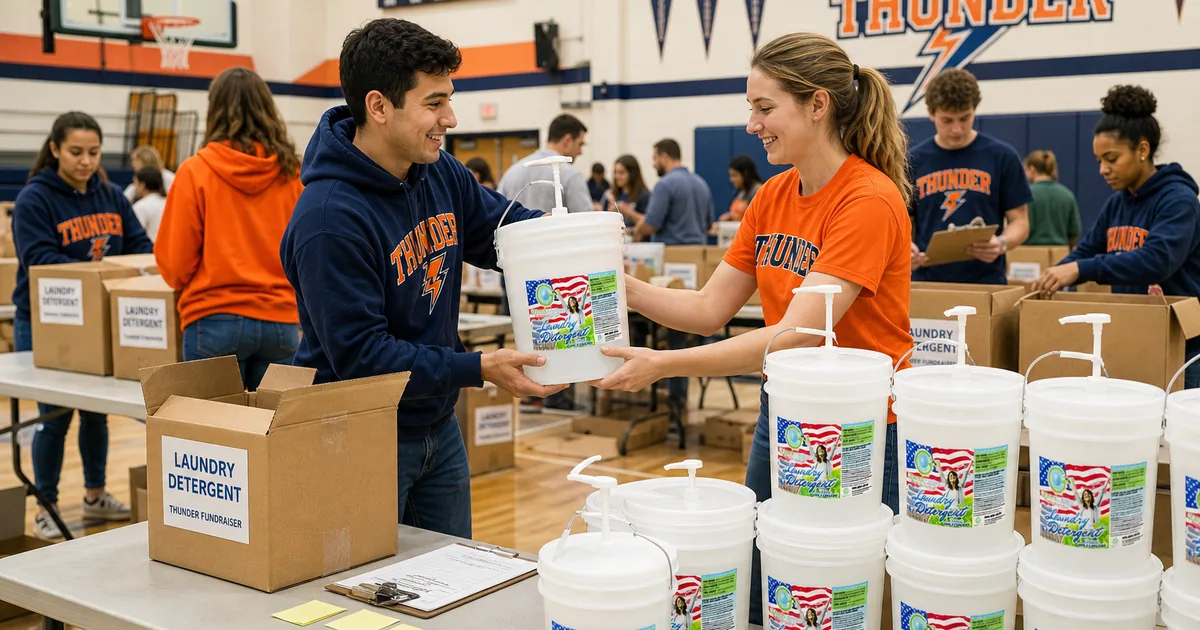
Product fundraisers can remain effective when they sell household necessities rather than novelty items. The programs that work best today offer consumable staples people already buy — like bulk laundry detergent — at a genuinely good price, with no upfront cost to the group and simple logistics. In our editorial view, traditional catalog fundraisers selling overpriced treats and trinkets have lost effectiveness for many groups because supporters are tired of paying a premium for things they don't need, and groups often front money for inventory that doesn't sell. The pattern is that necessity-based product fundraisers can reach more buyers, generate repeat participation, and raise more per family than novelty programs, while digital-only and pledge campaigns lack the tangible value exchange that drives sustained support.
The short answer is yes — product fundraisers are still effective, but the ones that work have changed. A decade ago you could hand families a catalog of cookie dough and wrapping paper, and enough people would buy to hit your goal. Today, supporters are pickier, volunteers are stretched thinner, and many programs that relied on novelty and markup no longer work as well.
What has replaced them is a different kind of product fundraiser: one built around household necessities people already purchase, priced at genuine value rather than a fundraising markup, with no upfront cost and logistics simple enough that a volunteer coordinator can manage it without becoming a part-time logistics manager. Groups running these programs may raise more than they did with traditional catalogs, with higher participation and less friction, though results vary by group.
This guide answers whether product fundraisers still work, why so many traditional programs have lost effectiveness, what separates a high-performing product fundraiser from a low one, and which specific product categories are raising the most right now.
- Product fundraisers can still be effective when the product is a household necessity, not a novelty or treat.
- Traditional catalog fundraisers selling overpriced items may have lost effectiveness for many groups because supporters are tired of paying premiums for things they don't need.
- The most effective product fundraisers today are consumable staples people repurchase — laundry detergent, cleaning products, and similar necessities.
- No-upfront-cost programs remove inventory financial risk and can outperform models that require groups to buy inventory first.
- Supporters respond to genuine value: a useful product at a fair price can beat a marked-up novelty item.
- Household-necessity fundraisers reach a wider buyer pool than treat-based programs because everyone needs detergent, but only some people want cookie dough.
- Simple logistics — non-perishable, easy to ship and store — are a major factor in whether volunteers can actually run the program successfully.
Are product fundraisers still effective in 2026?
Yes, but with a critical qualifier: the product matters more than it ever has. A fundraiser selling a household necessity at a fair price can still work well today. In our editorial view, a fundraiser selling an overpriced novelty item is harder to run than it once was, and for some groups it no longer works well.
The reason is straightforward. Supporters have been asked to buy fundraising products for years, and they have learned to distinguish between a genuine value and a donation disguised as a sale. When a group offers something useful at a price that makes sense — a bulk detergent bucket at roughly half the per-ounce cost of a national brand, for example — people buy it because they were going to buy detergent anyway and this is a better deal. When a group offers cookie dough priced well above the grocery-store price, many supporters may pass, because they know they are being asked to donate with extra steps.
In our editorial view, groups that switch from a traditional catalog to a household-necessity product can see participation rise, average sales per family increase, and total dollars raised go up, though no measured data is cited here. The product fundraiser is not dead — it has simply evolved past the novelty-item model that dominated for decades.
Why have traditional product fundraisers lost effectiveness?
Traditional catalog fundraisers — cookie dough, wrapping paper, popcorn, candles, and similar items — worked for years because they were novel and there were fewer asks. Today, those same programs face three structural problems that have eroded their effectiveness.
First, buyer fatigue. Families have been asked to sell the same catalogs year after year, and supporters have learned that most items are marked up well above retail to cover both the fundraising company's profit and the group's share. The value proposition has become transparent, and it is not compelling.
Second, narrow appeal. A catalog of treats and novelties only reaches people who want those specific items. Cookie dough appeals to dessert buyers; candles appeal to candle buyers. A household necessity like laundry detergent appeals to nearly every household, which is a structural advantage.
Third, upfront cost and risk. Many traditional programs require the group to order inventory in advance, which means fronting money and managing unsold stock. When participation is uncertain, that financial risk may be enough to make some coordinators choose a different fundraiser.
What makes a product fundraiser effective today?
The most effective product fundraisers today share five characteristics, and weakness on any one of them tends to predict underperformance.
First, the product is a consumable necessity, not a novelty. People repurchase laundry detergent, cleaning supplies, and similar staples; they do not repurchase a tub of cookie dough or a decorative candle. Repeat use drives repeat participation.
Second, the price represents genuine value. Supporters should feel they got something useful for less than they would normally pay, not that they overpaid to support the group. When the value is real, selling feels easy.
Third, logistics are simple. Non-perishable products that ship and store easily remove the frozen-delivery scrambles and spoilage risk that make food fundraisers hard to manage. Volunteer coordinators have limited time; a program that requires complex handling will underperform one that does not.
Fourth, there is no upfront cost. No-cost programs let groups collect orders first and never front money for inventory, which removes financial risk and makes participation decisions easier.
Fifth, the profit per unit is high enough to justify the effort. A program that keeps only a small share per sale forces groups to sell far more volume to hit their goal, which increases the workload and lowers participation.
Which product categories are most effective right now?
Measured against those five factors, household consumables — and specifically bulk laundry detergent — are a standout category. Detergent is a necessity every household already buys, it is consumable and repurchased regularly, it is non-perishable and ships easily, and bulk pricing allows for both a strong group profit and a genuine consumer discount.
Good Clean Fundraising's program illustrates why this category works. Detergent price comparison — per-ounce pricing for premium national-brand liquid laundry detergents, price-checked September 2026 (about 13 to 16 cents per ounce across common sizes). A 5-gallon (640 oz) bucket at $49.95 is about 7.8 cents per ounce. Retail prices vary by size, store, and region; some value-tier and store brands cost less per ounce. Supporters may pay roughly half the per-ounce price of premium national brands for a product they were going to buy anyway, and the group keeps about $13.45 to $15.45 per bucket at 100 or more buckets, depending on order volume, with no upfront cost and free shipping on orders of 100 buckets or more.
The buyer pool is the key advantage. A dessert product reaches people who want dessert; a household staple reaches grandparents, neighbors, coworkers, and anyone else who does laundry — which is nearly everyone. That wider pool is what lifts total dollars raised, not just a few points of margin.
Other effective categories include reusable household goods and practical seasonal items, though these score lower on repeat use. Digital and pledge-based programs can work for specific audiences but lack the tangible value exchange that drives broad, sustained participation.
How do modern product fundraisers compare to traditional catalogs?
The contrast is clearest when you compare a traditional catalog fundraiser to a household-necessity program side by side. Traditional catalogs offer a wide variety of items, most marked up significantly above retail, often require upfront inventory orders, and appeal mainly to people who want a specific novelty item. Household-necessity programs offer a single consumable staple at a genuine discount, operate on a no-upfront-cost model, and appeal to nearly every household.
On participation, necessity programs tend to win. More families are willing to sell a product their buyers actually need, and more buyers are willing to purchase something useful at a fair price. On logistics, necessity programs win again: non-perishable products eliminate the frozen-delivery and spoilage issues that make food fundraisers difficult. On profit, the comparison depends on volume, but necessity programs tend to generate higher total dollars because participation is broader.
An advertised money-back guarantee is another factor to compare; some traditional programs offer one and some do not. Good Clean Fundraising advertises a 100% money-back guarantee under which, according to the company, any unsatisfied customer is refunded and the group keeps its profit. That may reduce buyer hesitation and make selling easier.
What do supporters actually want from a product fundraiser?
Supporters want to feel they received real value for their money, not that they donated and got a token item in return. This is the fundamental shift that has made necessity-based fundraisers more effective than novelty catalogs.
When a supporter buys a 5-gallon bucket of detergent for $49.95 and pays roughly half the per-ounce price of a premium national brand, they may feel they got a deal, and per ounce, they did. They were going to buy detergent anyway, and now they have stocked up at a lower price while supporting a group they care about. The transaction feels fair, which can make repeat participation easier.
When a supporter buys a tub of overpriced cookie dough, they know they are donating with extra steps. The cookie dough might be fine, but the value exchange is transparent: they paid more than the product is worth to support the group. That works once or twice, but it does not build the kind of repeat participation that necessity products can generate.
The other thing supporters want is simplicity. They do not want to navigate a 20-page catalog, place a delayed order, and wait weeks for delivery. They want to buy one useful thing, get it quickly, and move on. Programs that respect that preference may raise more.
Our recommendation: switch to a household-necessity product fundraiser
If you are evaluating whether product fundraisers are still effective, the answer is yes — but only if you are selling the right product. In our editorial view, the traditional catalog model has lost effectiveness for many groups, and some groups running those programs may raise more by switching to a household-necessity fundraiser.
Good Clean Fundraising runs The Good Clean Fundraiser, a bulk laundry-detergent program built specifically to replace underperforming traditional fundraisers. Groups sell a 5-gallon detergent bucket for $49.95, a household staple supporters buy at roughly half the per-ounce price of premium national brands, and keep about $13.45 to $15.45 per bucket at 100 or more buckets, depending on order volume. There is a $0 upfront cost (the group collects orders and payment first), free shipping on orders of 100 buckets or more, and a Getting Started packet, instructions, and marketing materials.
Good Clean Fundraising advertises a 100% money-back guarantee under which, according to the company, any unsatisfied customer is refunded and the group keeps its profit.
The program works because it solves the three problems that have made traditional product fundraisers less effective: it offers a product people genuinely need rather than a novelty, it delivers real value rather than a fundraising markup, and it removes upfront cost and complex logistics. Groups that make the switch may see higher participation, easier selling, and stronger totals than they saw with catalogs, though results vary by group.
| Factor | Traditional Catalog | Household Necessity |
|---|---|---|
| Product type | Novelty items & treats | Consumable household staples |
| Buyer appeal | Narrow — specific item buyers | Broad — nearly every household |
| Value to supporter | Marked up above retail | Genuine savings vs. store price |
| Repeat participation | One-time purchase | Repurchased regularly |
| Upfront cost | Often requires inventory order | No-upfront-cost available |
| Logistics | Often perishable or complex | Non-perishable, ships easily |
| Profit per unit | Varies widely | Strong margins with bulk pricing |
Common mistakes to avoid
Sticking with a catalog because 'it's what we've always done'
Tradition is not a strategy. If participation and totals have declined, the program is not working, and loyalty to a vendor will not fix it.
Choosing a product fundraiser with upfront cost when a no-cost option exists
Fronting money for inventory adds financial risk with no upside. No-upfront-cost programs remove inventory financial risk and may raise more because coordinators are more willing to commit.
Selling a novelty item when a necessity is available
A novelty product caps your buyer pool at people who want that specific item. A necessity reaches everyone who does laundry, which is a structurally larger market.
Ignoring logistics complexity
Perishable products, frozen delivery windows, and multi-week order cycles create work that falls on volunteers. Simple logistics are not a nice-to-have — they are a predictor of whether the fundraiser actually gets run well.
Assuming digital-only fundraisers will outperform product sales
Digital and pledge campaigns work for some groups, but many may raise less than a well-run product fundraiser because some supporters prefer a tangible value exchange over a pure donation ask.
- Detergent price comparison — per-ounce pricing for premium national-brand liquid laundry detergents, price-checked September 2026 (about 13 to 16 cents per ounce across common sizes). A 5-gallon (640 oz) bucket at $49.95 is about 7.8 cents per ounce. Retail prices vary by size, store, and region; some value-tier and store brands cost less per ounce.
- Good Clean Fundraising program terms — $49.95 per bucket; $13.45 profit per bucket at 100 to 299 buckets (usually $5 to $12 at 50 to 99 buckets, depending on actual shipping costs), $14.45 at 300 to 499, $15.45 at 500 or more; $0 upfront cost; free shipping at 100+ buckets; 50-bucket minimum (smaller orders are not accepted); 100% money-back guarantee under which, according to the company, any customer who is not satisfied is refunded and the group keeps its profit. — GCF pricing, GCF how it works, and GCF refund and returns.
- Figures reflect standard $49.95 bucket pricing and current retail detergent prices; both vary by group and store, so no single fixed percentage is stated. Profit per bucket is $13.45 to $15.45 depending on order volume.
Our recommendation
Product fundraisers can still be effective — when the product is a household necessity, not a novelty. Good Clean Fundraising runs The Good Clean Fundraiser, a bulk laundry-detergent program that replaces underperforming catalog fundraisers with a consumable staple supporters buy at roughly half the per-ounce price of premium national brands. Groups sell a 5-gallon bucket for $49.95 and keep about $13.45 to $15.45 per bucket at 100 or more buckets, with a $0 upfront cost, free shipping on orders of 100 or more, and an advertised 100% money-back guarantee. The company provides a Getting Started packet, instructions, marketing materials, and social media strategies.
Frequently asked questions
Yes, product fundraisers can still be effective when the product is a household necessity rather than a novelty item. Programs selling consumable staples like laundry detergent at genuine value often outperform traditional catalog fundraisers because they reach more buyers, generate repeat participation, and offer supporters real savings instead of a fundraising markup.
Traditional catalog fundraisers may have lost effectiveness for many groups because of buyer fatigue, narrow appeal, and upfront cost. Supporters are tired of paying premiums for novelty items they don't need, and many programs require groups to front money for inventory. Household-necessity fundraisers can address all three problems by offering consumable staples at fair prices with no upfront cost.
The most effective products are consumable household necessities people already buy and repurchase regularly. Bulk laundry detergent is a standout category because it appeals to nearly every household, offers genuine savings versus store prices, is non-perishable and easy to ship, and generates strong per-unit profit for the group.
Yes, but only when the product offers real value. Supporters may buy a household staple at roughly half the per-ounce price of premium national brands because it is a smart purchase they were going to make anyway. They may be less willing to buy an overpriced novelty item, which is one reason necessity-based fundraisers can see higher participation than traditional catalogs.
It depends on participation and the product, so avoid any program that promises a fixed percentage or total. As a concrete example, in Good Clean Fundraising's bulk detergent program groups sell buckets for $49.95 and keep about $13.45 per bucket at 100 to 299 buckets, $14.45 at 300 to 499, and $15.45 at 500 or more. The bigger factor is participation — necessity products reach more buyers, which raises the total more than a higher margin on fewer sales would.
For many groups, product fundraisers can be the better fit. They offer a tangible value exchange — supporters get something useful for their money — which can drive higher participation and repeat engagement than digital-only or pledge campaigns. Digital fundraisers work for some audiences, but they may raise less because they lack that value component.
If participation has declined or totals have stagnated, it may be worth considering. Some groups raise more by switching to a household-necessity product, though results vary. The shift is not about loyalty to a vendor — it is about choosing a program that works in the current environment.
The easiest product fundraisers are no-upfront-cost, sell a non-perishable item with broad appeal, and come with vendor support materials and instructions. Programs that require fronting money, managing frozen delivery, or navigating complex catalogs create work that falls on volunteers and reduce the likelihood the fundraiser gets run well.
Good Clean Fundraising's bulk detergent program is a household-necessity fundraiser designed to replace traditional catalogs. Groups sell a 5-gallon bucket for $49.95 — roughly half the per-ounce price of premium national brands — and keep about $13.45 to $15.45 per bucket at 100 or more buckets, with a $0 upfront cost, free shipping at 100 buckets or more, and an advertised 100% money-back guarantee. It can raise more than catalog programs because the product appeals to most households and offers genuine value.
Product fundraisers can still be effective — especially ones built around a product people already buy. The shift is simple: stop selling novelties people don't need at prices they won't pay, and start selling household necessities they already buy at prices that represent genuine value. Make that change, and the product fundraiser can be a strong, lower-friction option.