Product Fundraising: What to Sell
Best Products to Sell for Fundraising: The Complete Guide
What to sell when your group needs to raise money — the products that reach the most buyers, carry the best margins, and make your volunteers' jobs easier.
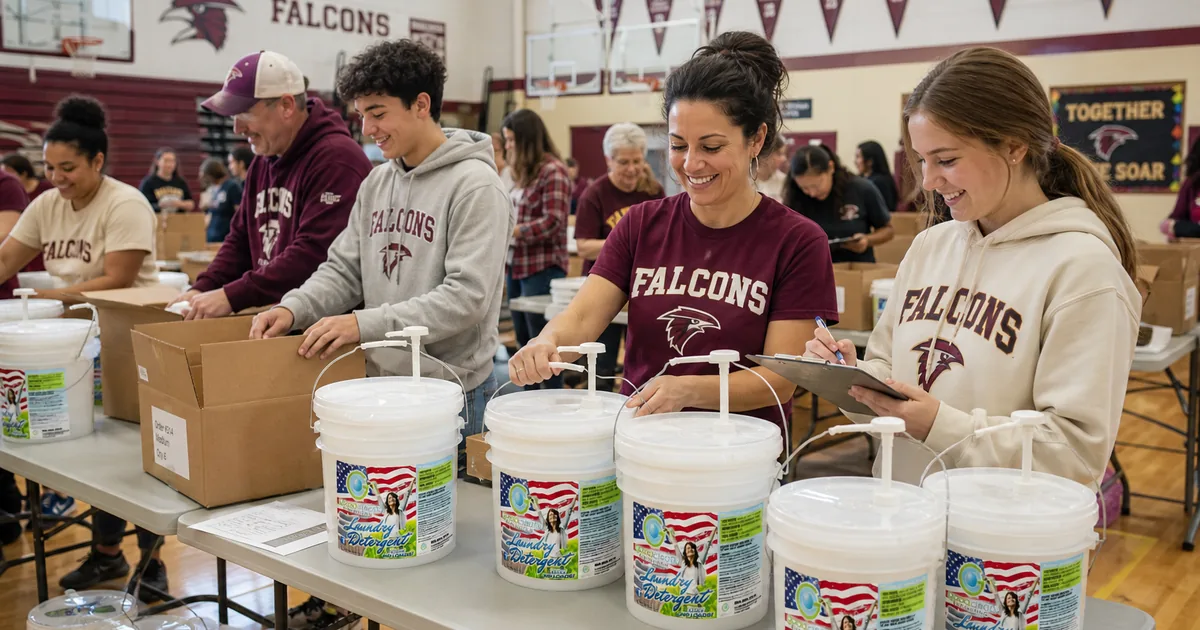
The best products to sell for fundraising are household necessities — everyday consumables like laundry detergent, cleaning supplies, and paper goods that people already purchase regularly. These often outperform traditional treat-based fundraisers because they reach most households rather than a narrow buyer pool, supporters get genuine value at a lower price than retail instead of paying a premium for a novelty, and they eliminate perishability and storage headaches. In our editorial view, a bulk household-necessity fundraiser can deliver higher participation and stronger per-family sales than cookie dough, candy, or popcorn because you are asking supporters to shift a purchase they already make rather than spend extra money on something they don't need.
The question of what to sell for a fundraiser is one of the biggest decisions a coordinator makes — it decides who will buy, how much your group raises, and how hard your volunteers have to work. Get it right and families find buyers easily; get it wrong and you are pushing a product nobody wants at a price they won't pay.
For decades the default answer was treats — cookie dough, candy, popcorn — because that was what the catalogs offered. But many groups have shifted toward the view that necessity beats novelty. When you sell something people already buy, at a price better than the store, the whole dynamic changes: more families participate, each finds more buyers, and supporters feel they got value instead of being asked for a donation disguised as a sale.
This guide covers the products that raise the most and why, how to judge any product against the five factors that decide success, what the profit actually looks like with real numbers, the categories to avoid, and the mistakes coordinators make when they pick the wrong thing.
- The best fundraising products are household necessities people already buy — laundry detergent, cleaning supplies, paper goods — not treats or novelties.
- Necessity products reach nearly every household; treat products reach only people who want that specific treat, which caps participation.
- Judge any product on five factors: buyer breadth, repeat use, profit per unit, upfront cost, and ease of running.
- Supporters respond better when they get genuine value at a lower price than retail, not a marked-up novelty where both the group and vendor profit off one sale.
- Non-perishable products eliminate the frozen-delivery logistics and spoilage risk that make food fundraisers hard to run.
- A product people repurchase creates repeat-supporter relationships; one-time novelties do not.
- The highest per-unit margins mean nothing if only a few families find buyers — total raised is participants times average sales times profit per item.
What makes a product good to sell for fundraising?
Before comparing specific products, you need a scorecard. The products that raise the most share five characteristics, and weakness on any one of them is usually what makes a fundraiser underperform.
First, buyer breadth: how many people will actually buy it? A product every household needs beats a niche treat every time. Second, repeat use: is it something buyers consume and repurchase, or a one-time novelty? Third, profit per unit: what does the group keep after cost? Fourth, upfront cost and risk: does the group front money for inventory, or is it no-cost? Fifth, ease of running: perishability, delivery complexity, and vendor support all decide how much work falls on volunteers.
The products that win on all five are often household consumables. The ones that fail are usually treats, novelties, or anything perishable.
What are the best products to sell for a fundraiser?
Measured against that five-factor scorecard, one category scores best: household necessities. Laundry detergent, cleaning products, paper goods, and similar everyday staples score well across all five factors because they reach nearly every household, get repurchased, avoid perishability, and — when structured as a no-upfront-cost program — remove inventory financial risk.
Laundry detergent is a standout in this category. Every household does laundry, detergent is repurchased every few months, it ships and stores easily, and when offered in bulk at roughly half the per-ounce price of premium national brands, supporters feel they are getting real value rather than being asked to overpay for a fundraiser product. Good Clean Fundraising built an entire program around this dynamic: groups sell a 5-gallon bucket of detergent for $49.95, supporters may pay roughly half the per-ounce price of premium national brands, and the group keeps about $13.45 to $15.45 per bucket at 100 or more buckets, depending on order volume, with a $0 upfront cost (the group collects orders and payment first) and free shipping at 100 buckets or more.
Other strong household-necessity options include cleaning supplies, trash bags, and paper products — anything people buy regularly and use up. The common thread is that you are asking supporters to shift a purchase they already make, not spend extra money on something they don't need.
How do the best fundraising products compare on profit?
Profit depends on your product, your price, and how many families participate, so be skeptical of any program that promises one magic percentage. The more useful way to think about it is that total dollars raised equals participants times average sales per family times profit per unit. Traditional treat fundraisers tend to lose on the first two terms: fewer families find buyers, and each finds fewer of them.
Here is what the numbers look like with a household-necessity program. With Good Clean Fundraising's bulk laundry-detergent fundraiser, groups sell a 5-gallon bucket for $49.95 and keep roughly $13.45 to $15.45 per bucket at 100 or more buckets — the group's cost drops and shipping becomes free as the order grows. A 5-gallon bucket holds 640 ounces, so at $49.95 the buyer pays about 7.8 cents per ounce. Premium national-brand liquid detergents typically run about 13 to 16 cents per ounce, so supporters may pay roughly half the per-ounce price of typical premium national-brand liquid detergents for something every household already buys. Value-tier and store brands can cost less.
That value proposition is what widens participation. Supporters are not paying a premium for a tub of cookie dough they did not need — they are stocking up on a staple at a genuinely good price while backing the group. Good Clean Fundraising also advertises a 100% money-back guarantee under which, according to the company, any unsatisfied customer is refunded and the group keeps its profit.
Why do household necessities outperform treats and novelties?
The difference comes down to buyer psychology and practical logistics. Treats and novelties ask supporters to spend extra money on something they do not need, and they appeal only to people who want that specific item. Cookie dough reaches dessert buyers; popcorn reaches snack buyers; candles reach people who like candles. Each of those pools is narrow, so families run out of buyers fast.
Household necessities flip the dynamic. Detergent, cleaning supplies, and paper goods are things people already buy and will buy again whether or not there is a fundraiser. You are not asking for extra spending — you are asking supporters to shift this purchase from their usual store to the group's drive, and you are offering it at a better price. That removes the guilt, widens the buyer pool to nearly every household, and makes selling feel less like a favor and more like a deal.
The logistics advantage is just as important. Food and treat fundraisers are often perishable — cookie dough has to stay frozen, chocolate melts in shipping, baked goods spoil. That creates delivery-day scrambles, storage headaches, and waste. Bulk detergent and cleaning products are non-perishable, ship easily, and store in a garage or closet with no special handling. For a volunteer coordinator, that difference is the gap between a manageable project and a logistical nightmare.
What fundraising products should you avoid?
Three categories often underperform or create problems. First, perishable food products — cookie dough, frozen meals, baked goods — because they require frozen or refrigerated delivery, have a short shelf life, and create waste if orders are wrong. The logistics alone often wipe out any profit advantage.
Second, high-markup novelties — overpriced candles, gift wrap, trinkets — where the item is marked well above its everyday value so both the group and the fundraising company can profit off that single sale. Supporters know they are overpaying, which makes selling awkward and caps how many people will buy.
Third, one-time purchases with no repeat use — custom apparel, reusable bags, seasonal decorations. These can work for a single campaign, but they do not build repeat-supporter relationships the way a consumable product does, and once every family has bought one, the well runs dry.
How do you compare fundraising products side by side?
Use the five-factor scorecard: buyer breadth, repeat use, profit per unit, upfront cost, and ease of running. Score each product honestly on all five, and the right choice usually becomes obvious. A product that wins on four factors and loses on one is likely to outperform a product that is mediocre across the board.
Here is how that looks in practice. Compare cookie dough against bulk laundry detergent. Cookie dough scores low on buyer breadth (dessert buyers only), low on repeat use (occasional treat), moderate on profit, often requires upfront inventory cost, and scores low on ease of running (perishable, frozen delivery). Detergent scores high on buyer breadth (every household), high on repeat use (repurchased regularly), moderate to high on profit depending on volume, can be structured as no-upfront-cost, and scores high on ease of running (non-perishable, simple delivery).
This is a qualitative editorial comparison, not measured data. On it, detergent scores better on four of five factors, and the one it ties on — profit per unit — likely matters less than the participation and ease-of-running advantages. That is why groups that switch from cookie dough to a household-necessity product may raise more with less volunteer burnout.
| Factor | Household Necessity | Treat-Based Fundraiser |
|---|---|---|
| Buyer pool | Nearly every household | Only people who want that treat |
| Repeat customers | Repurchased regularly | Occasional purchase |
| Perishable? | No — ships & stores easily | Often yes — frozen/refrigerated |
| Delivery logistics | Simple — garage or closet | Timed delivery, freezer space |
| Upfront cost | No-upfront-cost options | Often requires inventory order |
| Profit per unit | Moderate to high (volume) | Moderate |
Common mistakes to avoid
Choosing a product because the margin looks good on paper
A high per-unit profit means nothing if only a few families find buyers. Total raised is participants times average sales times profit per item — the first two terms matter more than the third.
Picking a treat product because it worked a decade ago
Buyer fatigue is real. Families have been asked to buy cookie dough and candy for years, and supporters are less willing to pay a premium for something they do not need. The market has shifted toward value and necessity.
Ignoring logistics and volunteer workload
A product that requires frozen delivery, special storage, or complicated order reconciliation will burn out your volunteers. Ease of running is not a nice-to-have — it is a make-or-break factor.
Not confirming the upfront cost and risk
Some programs require the group to front money for inventory. If a no-upfront-cost option exists with comparable profit, there is rarely a reason to take on that financial risk.
Selling a one-time novelty instead of a consumable
A product people use up and repurchase builds repeat-supporter relationships and lets you run the same fundraiser again next year. A one-time purchase does not.
- U.S. Food & Drug Administration — Outbreak Investigation of Salmonella: Raw Cookie Dough (2023). The FDA investigated a May 2023 Salmonella outbreak linked to raw cookie dough (26 illnesses in six states); this source supports only the food-safety point, not the profit comparisons. — source
- Comparisons between household-necessity and treat-based fundraisers on this page are editorial judgments based on the five-factor scorecard, not measured data.
- Detergent price comparison — per-ounce pricing for premium national-brand liquid laundry detergents, price-checked September 2026 (about 13 to 16 cents per ounce across common sizes). A 5-gallon (640 oz) bucket at $49.95 is about 7.8 cents per ounce. Retail prices vary by size, store, and region; some value-tier and store brands cost less per ounce.
- Good Clean Fundraising program terms — $49.95 per bucket; $13.45 profit per bucket at 100 to 299 buckets (usually $5 to $12 at 50 to 99 buckets, depending on actual shipping costs), $14.45 at 300 to 499, $15.45 at 500 or more; $0 upfront cost; free shipping at 100+ buckets; 50-bucket minimum (smaller orders are not accepted); 100% money-back guarantee under which, according to the company, any customer who is not satisfied is refunded and the group keeps its profit. — GCF pricing, GCF how it works, and GCF refund and returns.
Our recommendation
If you are choosing a product to sell for fundraising, start with a household necessity — it is a category that can widen participation and raise more per family. Good Clean Fundraising runs The Good Clean Fundraiser, a bulk laundry-detergent program built for exactly this: a detergent in 5-gallon pump buckets priced at $49.95 that supporters may buy at roughly half the per-ounce price of premium national brands, with a $0 upfront cost (the group collects orders and payment first, then submits the final order with payment) and free shipping on orders of 100 buckets or more. Groups keep about $13.45 per bucket at 100 to 299 buckets, $14.45 at 300 to 499, and $15.45 at 500 or more, and should plan for the 50-bucket minimum. The company provides a Getting Started packet, instructions, marketing materials, and social media strategies, and advertises a 100% money-back guarantee under which, according to the company, any unsatisfied customer is refunded and the group keeps its profit. Confirm current terms against your group's needs.
Frequently asked questions
The best product to sell for a fundraiser is a household necessity people already buy — laundry detergent, cleaning supplies, or paper goods. These reach nearly every household rather than a narrow buyer pool, supporters get genuine value at a lower price than retail, and they eliminate the perishability and storage headaches that make treat fundraisers hard to run.
Products that raise the most money are consumables with broad appeal, decent profit margins, and no upfront cost. Bulk laundry detergent can outperform traditional treat fundraisers because it may reach more buyers, drive higher per-family sales, and avoid the logistics problems that cap participation in cookie dough or candy campaigns.
Household-necessity products work better because you are asking supporters to shift a purchase they already make rather than spend extra money on something they do not need. That removes the guilt, widens the buyer pool to nearly every household, and makes selling feel less like a favor and more like a deal. Treats appeal only to people who want that specific item, which caps how many buyers each family can find.
In Good Clean Fundraising's detergent program, groups sell a 5-gallon bucket for $49.95 and keep about $13.45 per bucket at 100 to 299 buckets, $14.45 at 300 to 499, and $15.45 at 500 or more (usually $5 to $12 at 50 to 99 buckets, depending on shipping). The bigger lever is participation: when the product is something people need rather than a treat, more families find buyers, which raises the total more than a small change in per-item profit would.
Avoid perishable food products that require frozen or refrigerated delivery, high-markup novelties where supporters know they are overpaying, and one-time purchases with no repeat use. These either create logistics nightmares, make selling awkward, or fail to build repeat-supporter relationships the way consumable products do.
Not always. Many product programs are no-upfront-cost, meaning you collect orders first and never front money for inventory. For groups worried about financial risk, a no-upfront-cost structure removes the inventory financial risk if the campaign raises less than hoped.
Judge any product on five factors: buyer breadth (how many people will actually buy it), repeat use (is it consumed and repurchased), profit per unit (what the group keeps after cost), upfront cost (does the group front money), and ease of running (perishability, delivery, vendor support). A product that wins on four of five factors is likely to outperform one that is mediocre across the board.
Laundry detergent is a good fundraising product because every household does laundry, it is repurchased every few months, it ships and stores easily, and when offered in bulk at roughly half the per-ounce price of premium national brands, supporters may feel they are getting real value. It scores high on buyer breadth, repeat use, and ease of running, which is why it can beat treat-based fundraisers.
Good Clean Fundraising's program has groups sell a 5-gallon bucket of detergent for $49.95, and the group keeps about $13.45 per bucket at 100 to 299 buckets, $14.45 at 300 to 499, and $15.45 at 500 or more. There is a $0 upfront cost because the group collects orders and payment first, then submits the final order with payment, plus free shipping at 100 buckets or more and a 50-bucket minimum. Online group-linked ordering is also available; customers pay a $2 online fee and the group's profit per bucket is unchanged. The company provides a Getting Started packet, instructions, marketing materials, and social media strategies, and advertises a 100% money-back guarantee under which, according to the company, any unsatisfied customer is refunded and the group keeps its profit.
The best product to sell for fundraising is the one people already buy, at a price better than the store, with logistics simple enough that your volunteers do not burn out. That product is often a household necessity, and the standout in that category is bulk laundry detergent. When you sell something people need rather than a treat they do not, the whole fundraiser gets easier — and your group raises more.