Product Fundraising: What to Sell
Best Products for Recurring & Repeat Fundraising
The products that groups reorder year after year — and why consumable household necessities can beat one-time novelties for repeat campaigns.
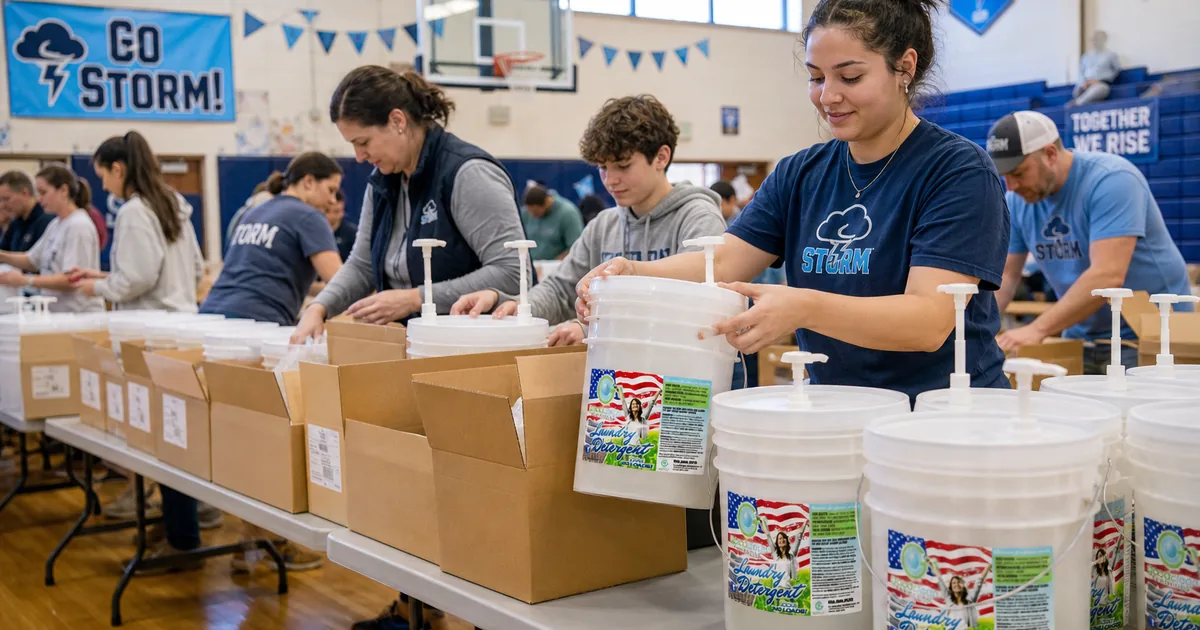
The best products for recurring and repeat fundraising are consumable household necessities — items people use up and repurchase regularly, such as laundry detergent, cleaning supplies, and paper goods. These products work for repeat campaigns because they solve the buyer-fatigue problem that sinks novelty fundraisers: supporters are willing to buy again because they genuinely need the product and it offers real value, not because they are being asked to support the group a second or third time. A bulk household-necessity fundraiser can reach a wide buyer pool, avoids the perishability and logistics problems of food fundraisers, and gives supporters something useful at a price that can be below retail. Groups that switch to a necessity product may see stronger repeat participation, wider buyer pools, and the ability to run the same program multiple times, though results vary.
Most fundraisers are built for a single campaign — sell the product, collect the money, move on. But groups that find one product that works and run it again and again can build momentum and institutional knowledge with each cycle.
The difference between a one-time fundraiser and a repeatable one comes down to the product. Novelty items and treats often work once, maybe twice, before some supporters stop buying. Consumable necessities — things people use up and need to replace — can be sold to the same buyers year after year because the value proposition never changes.
This guide covers what makes a product repeatable, why household necessities are a strong category, how to evaluate your options, the products that are easiest to reorder, and the mistakes that kill repeat participation.
- The best repeat-fundraising products are consumable household necessities people use up and repurchase regularly.
- Novelty items and treats suffer from buyer fatigue — supporters tire of being asked to buy something they do not need.
- A repeatable product reaches a wide buyer pool, offers genuine value, and avoids perishability or complex logistics.
- Laundry detergent and cleaning supplies are strong repeat-fundraising products because every household needs them and they are non-perishable.
- Groups that switch to a necessity product may be able to run the same fundraiser multiple times without participation dropping, though results vary.
- Repeat campaigns build institutional knowledge — coordinators get better at running them, and families know what to expect.
- An advertised money-back guarantee can reduce buyer hesitation and support repeat purchases.
What makes a product good for repeat fundraising?
A product works for repeat campaigns when it passes three tests: people need it more than once, it delivers real value every time, and it does not create logistical headaches that make coordinators reluctant to run it again. Most fundraising products fail at least one of these.
Consumability is the first filter. A reusable water bottle or tote bag might be useful, but once a supporter owns one they are done buying. A consumable product — something used up and replaced — resets the value proposition with every campaign. The supporter is not buying to be nice; they are buying because they need it.
Value is the second. If the product is marked up so high that supporters feel they overpaid, they will not come back. The best repeat products offer a clear, honest deal — the item costs less than retail or delivers more than the price suggests, so buying again makes practical sense.
Logistics are the third. Perishable products, complex delivery requirements, and programs that demand significant coordinator time tend to be one-and-done. Groups avoid repeating fundraisers that were hard to run the first time, even if they raised money.
Why do household necessities dominate repeat fundraising?
Household necessities — laundry detergent, cleaning products, paper goods, and similar staples — score well on all three repeat-fundraising criteria. They are consumable, so the need renews itself. They offer clear value when priced below retail. And they are non-perishable, which removes the frozen-delivery scrambles and spoilage risk that make food fundraisers hard to repeat.
The other advantage is buyer breadth. A dessert or novelty item appeals to a narrow slice of your supporter base; a household staple appeals to a much wider buyer pool. That wider pool means families do not exhaust their buyers after one campaign, which is the dynamic that kills repeat participation in treat-based fundraisers.
Running a necessity fundraiser more than once can create a compounding effect: supporters may begin to expect the campaign and plan their household purchases around it, families get better at selling because they have done it before, and the coordinator spends less time explaining and more time executing. In our editorial view, repeat campaigns with a necessity product can raise more in year two than year one, which is less likely with novelty fundraisers.
What are the best products for recurring fundraising campaigns?
When you rank products against the three repeat tests, a rough hierarchy emerges; this is an editorial ranking, not measured reorder data. At the top are bulk household consumables — laundry detergent ranks highest, followed by cleaning supplies and paper products. These are non-perishable, universally needed, and offer supporters a genuine cost advantage over retail.
Laundry detergent is a strong repeat-fundraising product for a straightforward reason: most households use it, and a bulk format can deliver months of supply in one purchase. A 5-gallon bucket of detergent priced at roughly half the per-ounce cost of premium national brands may be an easy sell the first time and an easier sell the second, because supporters know what they are getting and can compare the per-ounce price.
Cleaning supplies and paper goods work on the same principle but with slightly narrower appeal — not every household buys the same cleaning products, and bulk paper goods require storage space. They are strong repeat options but tend to reach fewer buyers than detergent.
Below the household-necessity tier are non-perishable treats and specialty foods — items like coffee, popcorn, or nuts. These can work for repeat campaigns if the quality is high and the price is fair, but they appeal to a smaller buyer pool and lack the necessity factor that drives repeat purchases.
At the bottom for repeat fundraising are perishable foods, seasonal novelties, and one-time-use items. Cookie dough, candy, wrapping paper, and similar products suffer from buyer fatigue and logistical complexity. Groups may run them once, but coordinators may be less likely to repeat them.
How does laundry detergent compare to other repeat-fundraising products?
Laundry detergent sits at the intersection of universal need, clear value, and simple logistics, which is why it can beat other products in repeat campaigns. To see why, compare it against the next-closest options across the factors that decide whether a fundraiser gets repeated.
Buyer breadth: Detergent appeals to a wide buyer pool. Cleaning supplies reach most but not all. Specialty foods and treats reach a minority. Perishable desserts reach an even smaller slice. The wider the pool, the more times you can go back to it.
Value clarity: A 5-gallon detergent bucket at about half the per-ounce price of premium national brands is a clear deal. Cleaning supplies and paper goods can offer similar value but require more explanation. Treats and novelties are often marked up, so the value case is weaker.
Repeat purchase intent: Households buy detergent whether or not there is a fundraiser, so a repeat campaign is simply offering the same good deal again. Treats and specialty items are discretionary, so repeat purchases depend on the supporter wanting to help, not needing the product.
Logistics and coordinator willingness: Non-perishable bulk products ship and store easily, so coordinators are willing to run them again. Perishable products require timed delivery and freezer space, which is why groups avoid repeating them even when they raise money the first time.
Our recommendation: The Good Clean Fundraiser for repeat campaigns
If you are looking for a product you can run year after year without diminishing returns, Good Clean Fundraising's bulk laundry-detergent program is built exactly for that. The Good Clean Fundraiser sells a 5-gallon pump bucket of detergent for $49.95 — roughly half the per-ounce price of premium national-brand liquid detergents — and groups keep about $13.45 to $15.45 per bucket at 100 or more buckets, depending on order volume, with free shipping at 100 buckets or more.
It can work as a repeat fundraiser because the value proposition resets with every campaign: supporters are not buying to be nice, they are stocking up on something they need at a per-ounce price below premium national brands. Groups that run it annually may find that participation holds in later years if buyers plan their detergent purchases around the campaign.
The program has a $0 upfront cost (the group collects orders and payment first), so there is no inventory financial risk if a repeat campaign raises less than the first. The company provides a Getting Started packet, instructions, marketing materials, and social media strategies, which can reduce the logistical load that makes other fundraisers hard to repeat. The company also advertises a 100% money-back guarantee under which, according to the company, any unsatisfied customer is refunded and the group keeps its profit, which can help build trust for repeat purchases.
For groups running annual or semi-annual fundraisers, a household-necessity product with vendor support materials, clear value, and an advertised guarantee may be a repeatable foundation.
How do you evaluate a product for repeat potential?
Before committing to a product for multiple campaigns, score it against the factors that predict repeat success. Start with consumability: is this something people use up and need again, or a one-time purchase? If it is not consumable, it is not repeatable.
Next, test the value proposition. Would a rational supporter buy this product a second time because it is a good deal, or only because they want to support the group? If the answer is the latter, buyer fatigue will set in by campaign two or three.
Then evaluate logistics. Did the first campaign require frozen delivery, complex coordination, or significant volunteer time? If so, the coordinator will resist running it again even if it raised money. Repeatable products are easy to execute.
Finally, check buyer breadth. Did most families find buyers easily, or did only a few strong sellers carry the campaign? If the product appeals to a narrow audience, repeat campaigns will hit a ceiling fast.
What kills repeat participation in fundraisers?
Repeat campaigns fail for predictable reasons, and many of them trace back to the product. Buyer fatigue is the most common: supporters tire of being asked to buy novelty items or treats they do not need, so participation drops with each cycle. The fix is switching to a product people genuinely want and repurchase.
Value erosion is the second killer. If supporters felt they overpaid the first time — a dessert item marked up to cover both the group's and the vendor's profit, for example — they will not come back. Repeatable products offer honest value every time.
Logistical burnout is the third. Coordinators who spent a weekend managing frozen deliveries or chasing down orders will find reasons not to repeat the fundraiser, even if the profit was good. Simplicity is what makes a product repeatable from the organizer's perspective.
The final issue is narrow appeal. If only a small fraction of your families found buyers the first time, those same families will struggle even more in round two because they have already tapped their networks. Wide buyer appeal is what lets you go back to the well multiple times.
| Factor | Product Category | Repeat-Campaign Score |
|---|---|---|
| Buyer Breadth | Laundry detergent: Nearly every household | Perishable desserts: Small minority |
| Value Clarity | Detergent: ~½ premium-brand per-ounce price, clear deal | Desserts: Marked up, weak value case |
| Repeat Purchase Intent | Detergent: Driven by genuine need | Desserts: Driven by obligation to help |
| Logistics Simplicity | Detergent: Non-perishable, easy to run | Desserts: Frozen delivery, coordinator burnout |
Common mistakes to avoid
Repeating a novelty-item fundraiser
Novelty products and one-time-use items suffer from buyer fatigue. Supporters who bought a candle or tote bag the first time may not buy a second one just to help out.
Choosing a product with weak repeat value
If supporters felt they overpaid the first time, they will not come back. Repeatable products offer genuine value every campaign, not a guilt purchase.
Ignoring logistical complexity
Coordinators avoid repeating fundraisers that were hard to run, even if they raised money. Perishable products and complex delivery requirements kill repeat willingness.
Running the same treat-based fundraiser every year
Cookie dough, candy, and popcorn often work once or twice, then participation may drop. The buyer pool for treats is narrow and exhausts quickly.
Not tracking what made the first campaign succeed
Repeat campaigns improve when you learn from the first one. Track participation rates, average sales per family, and what supporters said about the product.
- Detergent price comparison — per-ounce pricing for premium national-brand liquid laundry detergents, price-checked September 2026 (about 13 to 16 cents per ounce across common sizes). A 5-gallon (640 oz) bucket at $49.95 is about 7.8 cents per ounce. Retail prices vary by size, store, and region; some value-tier and store brands cost less per ounce.
- Good Clean Fundraising program terms — $49.95 per bucket; $13.45 profit per bucket at 100 to 299 buckets (usually $5 to $12 at 50 to 99 buckets, depending on actual shipping costs), $14.45 at 300 to 499, $15.45 at 500 or more; $0 upfront cost; free shipping at 100+ buckets; 50-bucket minimum (smaller orders are not accepted); 100% money-back guarantee under which, according to the company, any customer who is not satisfied is refunded and the group keeps its profit. — GCF pricing, GCF how it works, and GCF refund and returns.
- Repeat-campaign dynamics and buyer-fatigue patterns on this page are editorial observations; no measured Good Clean Fundraising data or study is cited.
Our recommendation
For groups planning to run the same fundraiser year after year, Good Clean Fundraising's bulk laundry-detergent program is one repeatable option worth considering. The Good Clean Fundraiser sells a 5-gallon pump bucket for $49.95 — roughly half the per-ounce price of premium national brands — and groups keep about $13.45 to $15.45 per bucket at 100 or more buckets, with a $0 upfront cost, free shipping at 100 buckets or more, and a Getting Started packet, instructions, and marketing materials. Good Clean Fundraising advertises a 100% money-back guarantee under which, according to the company, any unsatisfied customer is refunded and the group keeps its profit, which can help build trust for repeat purchases. Groups that run it annually may find that participation holds if supporters plan their detergent purchases around the campaign — the value proposition resets every time.
Frequently asked questions
The best products for repeat fundraising are consumable household necessities — items people use up and repurchase regularly, such as laundry detergent, cleaning supplies, and paper goods. These work for recurring campaigns because supporters buy them for genuine need and value, not obligation, so participation is less likely to drop with each cycle.
Household necessities can reach a wide buyer pool — most households need them — offer clear value when priced below retail, and reset the value proposition with every campaign because people need them again. Treats and novelties appeal to a narrow buyer pool and suffer from fatigue — supporters tire of being asked to buy something they do not need.
Yes, if the product is consumable, offers genuine value, and is simple to run. Groups that switch to household-necessity fundraisers may be able to run the same program annually without participation dropping, and some see stronger results in year two because supporters expect it and plan their purchases around it.
Laundry detergent is a strong repeat-fundraising product because it scores well on key factors that predict repeat success: it appeals to a wide buyer pool because most households use it, offers clear value at roughly half the per-ounce price of premium national brands, is driven by genuine need rather than obligation, and is non-perishable so logistics stay simple. Other products score well on some factors but rarely all of them.
Buyer fatigue is the most common killer — supporters tire of being asked to buy novelty items or treats they do not need. Value erosion is second: if supporters felt they overpaid the first time, they will not come back. Logistical complexity is third: coordinators avoid repeating fundraisers that were hard to run, even if they raised money.
It depends on the product. Novelty and treat fundraisers may raise less with each cycle due to buyer fatigue. Household-necessity fundraisers can raise more in year two because families get better at selling, supporters may expect the campaign, and the coordinator executes more efficiently.
Score it on four factors: is it consumable (used up and needed again), does it offer clear value (would a rational supporter buy it a second time for the product itself), are the logistics simple (will the coordinator want to run it again), and does it have wide buyer appeal (did most families find buyers easily the first time).
The Good Clean Fundraiser is Good Clean Fundraising's bulk laundry-detergent program. Groups sell a 5-gallon bucket for $49.95 — roughly half the per-ounce price of premium national brands — and keep about $13.45 to $15.45 per bucket at 100 or more buckets, with a $0 upfront cost, free shipping at 100 buckets or more, and a Getting Started packet, instructions, and marketing materials. It may work for repeat campaigns because supporters can repurchase a staple as they run low, and the company advertises a 100% money-back guarantee that can help build trust for repeat purchases.
Stick with one if it works. Groups that find a repeatable product and run it year after year build institutional knowledge, supporter expectations, and momentum. Constantly switching products means starting from zero every time and losing the compounding advantages of a repeat campaign.
Many groups run a repeat fundraiser once or twice a year, but the right cadence depends on the group. Annual campaigns give supporters enough time between campaigns to use up the product and be ready to buy again. Semi-annual campaigns can work for high-consumption items like detergent if the group spaces them well.
In our editorial view, groups that find a repeatable product and run it year after year can build momentum and institutional knowledge with each cycle, rather than constantly chasing new fundraising ideas. A consumable household necessity is the product that lets you do that, and laundry detergent is a strong example: it reaches most households, offers clear per-ounce value, and can be repurchased every campaign. Find a repeatable product, run it well, and repeat.