Product Fundraising: What to Sell
What Products Sell Best for Fundraisers?
The products that raise the most are the ones people already buy — here's what works, what doesn't, and why household necessities often outsell novelty items.
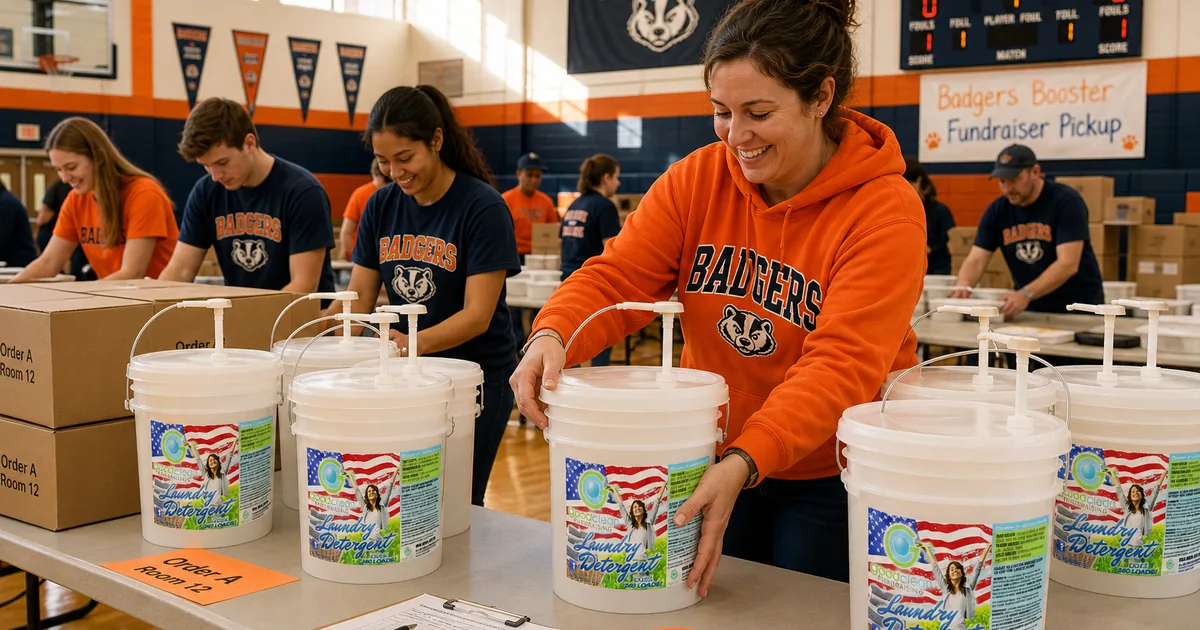
The products that sell best for fundraisers are consumable household necessities people already buy — especially laundry detergent, cleaning supplies, and similar staples. They often outsell novelty items, treats, and one-time-purchase products because they reach nearly every household rather than a narrow buyer pool, supporters can get genuine value at a lower per-ounce price than premium national brands, and sellers are asking people to shift a purchase they were already making rather than spend extra money. Bulk household-necessity fundraisers combine all three advantages: universal appeal, real savings for the buyer, and no awkward sell. The worst-performing products tend to be overpriced novelties, perishable treats with narrow appeal, and items that require a hard sell because the buyer doesn't actually need them.
If you have run more than one fundraiser, you have seen it firsthand: some products fly off the order form while others sit there no matter how hard families push. The difference is rarely the effort — it is the product itself.
The products that raise the most share three traits: they appeal to nearly everyone, supporters feel they got real value, and sellers are not asking for a favor. When all three line up, participation rises, average sales per family climb, and the group's total follows. When any one is missing, the campaign struggles no matter how motivated the volunteers are.
This guide covers what makes a fundraising product sell, which categories perform best and worst, how the top products compare on profit and appeal, and why household necessities are a strong category in product fundraising.
- The best-selling fundraising products are consumable household necessities people already buy, not novelty items or treats.
- A product sells well when it has universal appeal, gives the buyer genuine value, and requires no hard sell.
- Household staples like laundry detergent reach nearly every household, while treats and novelties appeal only to a narrow buyer pool.
- Supporters are far more willing to buy when they pay less than retail for something they need than when they pay a premium for something they don't.
- The worst-performing products are overpriced novelties, perishable items with narrow appeal, and anything that requires convincing the buyer they need it.
- Total dollars raised equals participants times average sales per family times profit per item — widening the buyer pool lifts the first two terms, which matters more than chasing a high margin.
- Bulk household-necessity fundraisers combine universal appeal, real savings, and high per-unit profit in one program.
What makes a fundraising product sell well?
Before comparing specific products, it helps to understand the three factors that decide whether something sells easily or sits on the order form. A product that scores well on all three will outsell one that wins on only margin or novelty.
First, buyer breadth: how many people will actually want it? A household necessity everyone uses usually beats a niche treat or novelty, because the pool of potential buyers is much wider. Second, perceived value: does the supporter feel they got something worth the price, or better yet, a deal? When people pay less than retail for a staple, they feel smart; when they pay a premium for a fundraiser novelty, they feel like they did a favor. Third, ease of the ask: is the seller asking someone to shift a purchase they were already making, or to spend extra money on something they did not need? The former is an easy yes; the latter is a hard sell that caps participation.
The products that raise the most are the ones that win on all three. When you see a fundraiser where only a few families participate and each sells only a handful of items, the product may have fallen short on at least two of the three.
Which product categories sell best?
Measured against those three factors, a rough hierarchy emerges in our editorial view. At the top are consumable household necessities — laundry detergent, cleaning products, paper goods, and similar staples. They score well on buyer breadth (everyone needs them), perceived value (bulk programs can be priced below premium retail brands), and ease of the ask (supporters are shifting a purchase, not adding one). These products reach grandparents, neighbors, coworkers, and extended family who would never buy a treat or novelty item, which is why groups that switch to a household-necessity fundraiser may see participation rise.
A step below are practical reusable items like water bottles, tote bags, or seasonal goods. They have broad appeal and avoid the perishability problem, but they are one-time purchases, so repeat buyers are rare and each family exhausts their network quickly. Below that are food and treat fundraisers — cookie dough, candy, popcorn, and similar items. These appeal only to people who want that specific treat, the buyer pool is narrow, and many are perishable, which adds logistics and limits shelf life. At the bottom are novelty and luxury items: overpriced candles, gift wrap, and specialty goods that require a hard sell because the supporter does not need them and knows they are paying a premium to help the group.
The pattern we see in our editorial view: the closer a product is to a genuine household necessity, the better it sells. The further it drifts toward novelty or luxury, the harder the campaign becomes.
Why do household necessities outsell novelty items?
The reason is simple: people were going to buy detergent, paper towels, or cleaning supplies this month anyway. A household-necessity fundraiser is not asking them to spend extra money — it is asking them to shift that purchase from the store to the group's drive, ideally at a better price. That is an easy yes for most supporters, and it is an easy ask for the seller, which is why participation climbs.
Contrast that with a novelty item. The supporter was not planning to buy an overpriced candle or a tub of cookie dough, so the seller has to convince them to spend money they were not going to spend, on something they do not need, at a price higher than the item is worth. Even when the supporter says yes, they are doing it as a favor, not because they wanted the product — and favors run out fast. A family might rely on a few favor-buyers for a novelty item and be reluctant to go back to those same people the next time.
Household necessities flip that dynamic. Supporters feel they got a deal on something useful, sellers are not asking for a favor, and the same buyers will participate again because the value was real. That repeat-buyer effect may be part of why necessity fundraisers can raise more over time.
How do the top fundraising products compare?
Here is how the main product categories stack up across the factors that decide how much a group raises. This is not a comparison of specific dollar figures or margins — it is a comparison of the practical differences that widen or narrow participation, which is the bigger lever.
What is the single best-selling fundraising product?
If the question is which single product is most likely to raise the most across a wide range of groups, our editorial answer is bulk laundry detergent. It hits every mark: universal appeal (every household does laundry), genuine value (priced at roughly half the per-ounce cost of typical premium national-brand liquid detergents), high per-unit profit, non-perishable, and an easy ask (supporters are stocking up on something they already buy). It is also a large-ticket item, so fewer sales are needed to reach a goal, and it is consumable, so buyers reorder.
Good Clean Fundraising built its entire program around this dynamic. Groups sell a 5-gallon pump bucket of laundry detergent for $49.95 — roughly 7 to 8 cents per ounce, compared to the 13 to 16 cents per ounce that typical premium national-brand liquid detergents run. At that price, supporters pay about half the per-ounce cost of premium national brands for a product they were going to buy anyway, and the group keeps about $13.45 to $15.45 per bucket at 100 or more buckets, depending on order volume, with free shipping at 100 buckets or more.
The program has a $0 upfront cost, so the group takes no inventory financial risk, and the company advertises a 100% money-back guarantee under which, according to the company, any unsatisfied customer is refunded and the group keeps its profit.
The result is that families reach buyers who would never participate in a treat or novelty fundraiser, participation may rise, and groups may raise more with less effort. It is why bulk detergent is one option coordinators consider when switching off cookie dough, candy, or catalog programs.
What products should you avoid?
The products that often underperform are the ones that fail on buyer breadth, perceived value, or ease of the ask. At the top of the avoid list are overpriced novelty items — candles, gift wrap, specialty foods, and similar goods that can cost more than their everyday equivalents and appeal only to people who want to help the group, not people who want the product. These cap participation fast because sellers run out of favor-buyers within their immediate circle.
Close behind are perishable treat items with narrow appeal. Cookie dough, candy, and popcorn reach only dessert buyers or snack buyers, the product often has to be kept frozen or has a short shelf life, and the logistics of delivery add work. Some supporters also prefer to avoid sweets. Reusable novelty items like custom water bottles or tote bags sit in the middle — they avoid perishability, but they are one-time purchases, so repeat participation is low and each family exhausts their buyers quickly.
In our editorial view, a product that people do not need, that costs more than it is worth, or that requires a hard sell is more likely to underperform. Consumable necessities avoid all three problems.
How much more can you raise with the right product?
Total dollars raised breaks down to participants times average sales per family times profit per item. Many groups focus only on the third term — margin — but the first two can matter more. As an illustration, a product that doubles participation and average sales per family would raise four times as much as one with twice the margin but half the participation.
When a group switches from a novelty or treat fundraiser to a household necessity, participation and average sales per family may rise, which can lift the total more than a few points of margin. A product that is easy to sell can also draw in families who did not participate before.
The exact dollar increase depends on your group's size and the products being compared, so treat any single projected total with caution. But the direction is logical: a wider buyer pool gives a group more chances to raise more.
| Factor | Household Necessities | Treat / Novelty Items |
|---|---|---|
| Buyer pool | Nearly every household | Narrow — treat or novelty buyers only |
| Perceived value | High — often below retail | Low — premium price for favor |
| Ease of ask | Easy — shifts existing purchase | Hard — requires extra spending |
| Profit per unit | High (bulk programs) | Moderate to low |
| Perishable? | No | Often yes (frozen, short shelf life) |
| Repeat buyers | Common — consumable staple | Rare — favor or one-time novelty |
Common mistakes to avoid
Choosing a product because the margin looks good on paper
A high per-item profit means nothing if only a few families participate. Total raised is participants times sales per family times margin — the first two terms matter more.
Picking a novelty item because it feels unique
Unique usually means narrow appeal. A household staple that everyone needs can outsell a clever novelty item.
Running a food fundraiser because it is familiar
Familiarity does not mean it works well. Cookie dough and candy have narrow buyer pools, perishability problems, and low perceived value — all of which cap how much you raise.
Ignoring perceived value
If supporters feel they overpaid for a novelty item, they will not buy again. Real value builds repeat participation; favor-based selling does not.
Overlooking the ease of the ask
When sellers have to convince buyers to spend money on something they do not need, participation drops fast. An easy ask is asking someone to shift a purchase they were already making.
- Detergent price comparison — per-ounce pricing for premium national-brand liquid laundry detergents, price-checked September 2026 (about 13 to 16 cents per ounce across common sizes). A 5-gallon (640 oz) bucket at $49.95 is about 7.8 cents per ounce. Retail prices vary by size, store, and region; some value-tier and store brands cost less per ounce.
- Good Clean Fundraising program terms — $49.95 per bucket; $13.45 profit per bucket at 100 to 299 buckets (usually $5 to $12 at 50 to 99 buckets, depending on actual shipping costs), $14.45 at 300 to 499, $15.45 at 500 or more; $0 upfront cost; free shipping at 100+ buckets; 50-bucket minimum (smaller orders are not accepted); 100% money-back guarantee under which, according to the company, any customer who is not satisfied is refunded and the group keeps its profit. — GCF pricing, GCF how it works, and GCF refund and returns.
- Profit and savings figures reflect standard bucket pricing at $49.95 and current retail detergent prices; both vary by group and store, so no single fixed percentage is stated. The only dollar figures published are the selling price ($49.95 per 5-gallon bucket) and the per-bucket profit range ($13.45 to $15.45 at 100 or more buckets, depending on order volume; usually $5 to $12 at 50 to 99 buckets due to variable freight).
Our recommendation
If you want the product that sells best across the widest range of groups, consider a bulk household-necessity fundraiser — and specifically, laundry detergent. Good Clean Fundraising's program sells a 5-gallon detergent bucket for $49.95, a price that gives supporters roughly half the per-ounce cost of premium national brands while the group keeps about $13.45 to $15.45 per bucket at 100 or more buckets, depending on order volume. It has a $0 upfront cost, includes free shipping on orders of 100 buckets or more, and advertises a 100% money-back guarantee under which, according to the company, any unsatisfied customer is refunded and the group keeps its profit. In our editorial view, it is a product likely to raise more because it reaches many buyers, gives them per-ounce value, and requires less of a hard sell.
Frequently asked questions
Consumable household necessities like laundry detergent and cleaning supplies sell best because they appeal to nearly every household, give supporters real value at a lower price than retail, and require no hard sell — sellers are asking people to shift a purchase they were already making. These products often outsell treats, novelties, and one-time-purchase items.
Household necessities reach a much wider buyer pool — everyone needs detergent, but only a small fraction want an overpriced candle or treat. Supporters also feel they got genuine value rather than doing a favor, which drives repeat participation. The ask is easier because you are not asking someone to spend extra money on something they do not need.
In our editorial view, bulk laundry detergent is the fundraising product most likely to sell well across a wide range of groups. It has universal appeal, is priced at roughly half the per-ounce cost of premium national brands, carries a strong per-unit profit, is non-perishable, and is consumable so buyers reorder. It scores well on every factor that makes a product sell.
Avoid overpriced novelty items like candles and gift wrap, perishable treats with narrow appeal like cookie dough and candy, and anything that requires a hard sell because the buyer does not need it. These products cap participation fast because sellers run out of favor-buyers quickly and supporters do not feel they got real value.
It depends on your group's size and how many families participate, so set a realistic goal rather than chasing a headline number. As a concrete example, groups using Good Clean Fundraising's bulk detergent program sell 5-gallon buckets for $49.95 and keep about $13.45 to $15.45 per bucket at 100 or more buckets, depending on order volume. The bigger factor is participation: a product that is easy to sell can widen participation, which can lift the total more than margin alone.
Often, because many supporters were going to buy detergent anyway and the fundraiser price is roughly half the per-ounce cost of typical premium national-brand liquid detergents. Supporters may feel they are getting a deal on something they need rather than overpaying for a novelty, which can support participation and repeat buying.
A product is easy to sell when it has broad appeal, gives the buyer genuine value, and requires no hard sell. The easiest ask is when you are asking someone to shift a purchase they were already making — like buying detergent from your group instead of the store — rather than convincing them to spend extra money on something they do not need.
Food fundraisers appeal only to people who want that specific treat, so the buyer pool is narrow. They are often perishable and require frozen storage or have a short shelf life, which adds logistics. Supporters also pay a premium rather than getting a deal, so perceived value is low and repeat buyers are rare. All three factors can cap how much a group can raise.
Good Clean Fundraising sells a 5-gallon detergent bucket for $49.95, giving supporters roughly half the per-ounce cost of premium national brands while groups keep about $13.45 to $15.45 per bucket at 100 or more buckets. It has a $0 upfront cost, includes free shipping at 100 buckets or more, and advertises a 100% money-back guarantee under which, according to the company, any unsatisfied customer is refunded and the group keeps its profit. It combines broad appeal, per-ounce value, strong profit, and no inventory financial risk in one program.
The products that sell best are the ones people were going to buy anyway. Household necessities win because they reach everyone, give supporters real value, and require no hard sell — which is why bulk laundry detergent is, in our editorial view, a leading fundraising product. If you want to raise more, start with a product people actually need.