
School Fundraising
Spring Fundraising Ideas for Schools: What Works Best in March, April & May
The best spring fundraising ideas for schools — from outdoor events to product drives that capitalize on end-of-year energy and warmer weather.
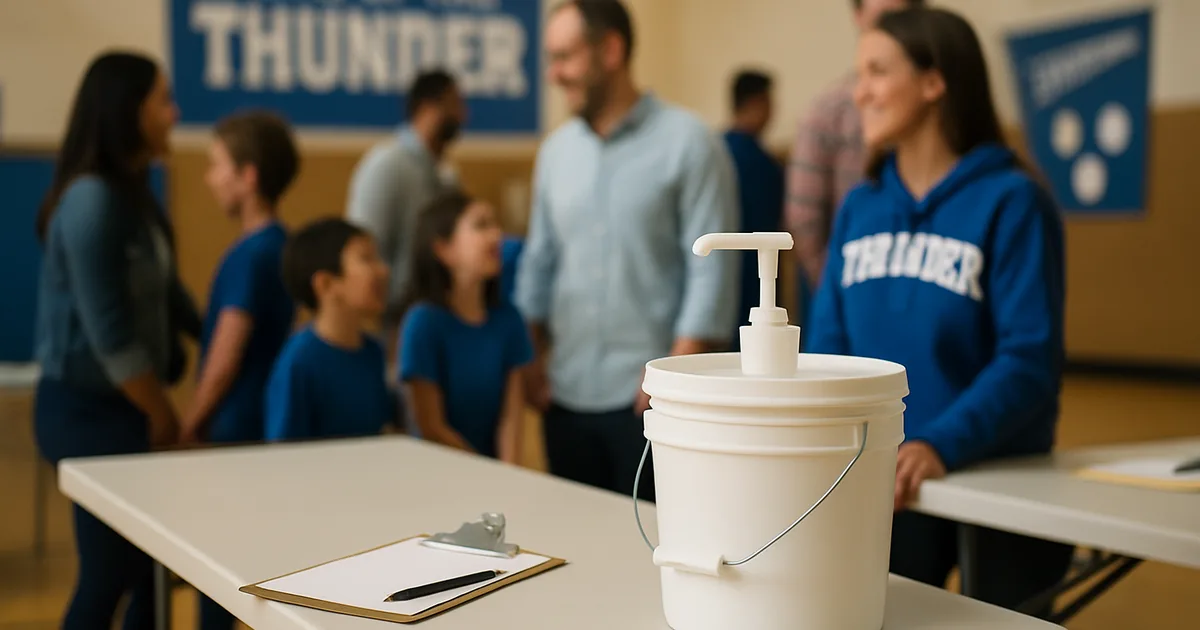
The best spring fundraising ideas for schools combine three advantages unique to the season: warmer weather that makes outdoor events practical, end-of-year urgency that drives participation, and timing that aligns with summer planning and back-to-school needs. Top-performing spring campaigns include outdoor community events like fun runs and field days, product fundraisers built around household necessities that families stock up on before summer, plant and garden sales that capitalize on spring planting season, and end-of-year giving appeals tied to visible goals like playground equipment or classroom technology. Spring also offers a natural deadline — the last day of school — that creates urgency without feeling arbitrary. The strongest spring fundraisers are those that either leverage the weather and season directly or offer products people genuinely need, rather than novelty items that compete with spring break spending and end-of-year fatigue.
In our editorial view, spring is one of the two best fundraising windows schools have all year. The weather cooperates, families are not yet burned out from fall campaigns, and the end of the school year creates a natural sense of urgency. But spring also brings competition for attention — spring break travel, testing season, sports schedules, and the general chaos of May. The fundraisers that succeed in this window are the ones that either use the season to their advantage or stay so simple that they cut through the noise.
A common mistake is treating spring like a second fall campaign and running the same catalog or treat sale they did in October. By March, families have fundraiser fatigue, and another round of cookie dough or wrapping paper rarely performs as well. The spring campaigns that raise the most tend to fall into one of three categories: outdoor events that were not possible in winter, necessity-based product drives that help families stock up before summer, or end-of-year giving tied to a specific, visible goal.
This guide covers what makes spring different as a fundraising season, the ideas that tend to perform well in March through May, how to time your campaign around the school calendar, and how to avoid the traps that sink spring fundraisers before they start.
- Spring offers three unique advantages: warmer weather for outdoor events, end-of-year urgency, and alignment with summer planning.
- The strongest spring fundraisers either leverage the season directly — outdoor events, plant sales — or offer necessities families stock up on before summer.
- Avoid running the same catalog or treat sale you did in fall; by spring, families have fundraiser fatigue.
- The last day of school is a natural, non-arbitrary deadline that drives participation.
- Spring break and testing schedules compress your selling window, so plan around them rather than through them.
- Outdoor community events like fun runs and field days work well in spring but require more volunteer coordination than product drives.
- Household-necessity fundraisers perform year-round but align especially well with spring cleaning and summer stocking-up behavior.
Why is spring a good time for school fundraising?
Spring has three built-in advantages that fall does not. First, the weather makes outdoor events practical again — fun runs, car washes, field days, and community gatherings that were impossible in January suddenly work in April. Second, the end of the school year creates urgency: families know the clock is ticking, and a campaign tied to a visible goal like new playground equipment or a class trip feels more concrete when there are only eight weeks of school left. Third, spring aligns with natural buying and planning cycles — families are thinking about summer camps, vacations, and stocking up on household staples before the break.
The challenge is that spring is also compressed and chaotic. Spring break cuts a week out of your calendar, standardized testing dominates another two, and sports schedules and end-of-year events fill the rest. That leaves a narrow window — usually mid-March through early May — to launch, sell, and close a campaign. The fundraisers that do well in spring are either fast-moving product drives that fit into that compressed timeline or outdoor events that become the end-of-year celebration themselves.
What are the best outdoor spring fundraising ideas for schools?
Outdoor events are the signature spring fundraiser because the weather finally cooperates. The most successful ones double as community-building activities, so families participate even if they are fundraised-out from fall campaigns.
Fun runs and walk-a-thons are the most popular outdoor spring fundraiser for a reason: they are simple to organize, scalable to any school size, and easy to tie to a per-lap or flat-donation model. Schools typically run them as a single-day event in late April or early May, and the combination of physical activity, community gathering, and a visible finish line tends to drive strong participation. The logistics are straightforward — a marked course, volunteers at checkpoints, and a pledge system — and many programs provide turnkey kits with bibs, tracking tools, and promotional materials.
Car washes are a classic spring fundraiser that works well for smaller groups like sports teams or clubs but can scale to a whole-school event with enough volunteers. The profit per car is modest, but the low cost to run and the visibility of a school parking lot full of volunteers washing cars in the sunshine creates goodwill. The key is picking a high-traffic Saturday and promoting it widely in advance.
Field day fundraisers combine an end-of-year tradition with a giving component. Schools set up activity stations — relay races, obstacle courses, water games — and ask families to sponsor their child's participation or donate per activity completed. It is less about the dollars per student and more about turning an event the school was already planning into a fundraising opportunity with almost no added work.
What product fundraisers work best in spring?
Product fundraisers in spring need to either align with the season or offer something families genuinely need, because by March most supporters are not interested in another novelty catalog. The campaigns that perform well fall into two categories: seasonal products that make sense in spring, and household necessities that families stock up on before summer.
Plant and garden sales are the quintessential spring product fundraiser. Schools partner with a local nursery or a fundraising supplier to sell flowers, vegetable seedlings, hanging baskets, and potting soil in April, right when families are ready to plant. The products are seasonal, the margins are decent, and the fact that people were going to buy plants anyway makes it an easy sell. The logistics are simple: pre-sell in late March, deliver in mid-April, and you are done before May chaos hits.
Household-necessity fundraisers — laundry detergent, cleaning supplies, paper products — perform year-round but align especially well with spring cleaning and summer stocking-up behavior. These campaigns work because they ask supporters to shift a purchase they were already making rather than buy something extra, and the products are not perishable or seasonal, so there is no narrow delivery window to manage. Participation can be broader because the value to the buyer is real, and because everyone needs these items, not just people who want a treat or a decoration.
Do spring giving campaigns work for schools?
Yes, but only if they are tied to something specific and visible. A generic end-of-year giving appeal — 'help us close the budget gap' — rarely moves the needle in spring because families are already thinking about summer expenses. But a campaign tied to a concrete goal that students will see and use — new library books, playground shade structures, classroom technology, or funding a specific field trip — performs much better because the urgency is real and the impact is tangible.
The strongest spring giving campaigns set a clear dollar goal, a firm deadline (often the last day of school), and a visual tracker that students can watch fill up. Schools that run these well typically launch in early April, send two or three updates showing progress, and close with a celebration or announcement when the goal is met. The key is making it feel like a sprint, not an open-ended ask.
How do you time a spring fundraiser around the school calendar?
Timing is the difference between a successful spring campaign and one that gets lost in the chaos. Start by marking three things on your calendar: spring break, testing weeks, and the last day of school. Your selling window needs to avoid the first two and finish before the third.
For most schools, that means launching in mid-to-late March, running a two-to-three-week selling window, and closing by early May. If you launch too early — say, the first week of March — you lose the end-of-year urgency; if you launch too late — after spring break — you are competing with testing, sports playoffs, and checkout chaos. The sweet spot is usually the two weeks before spring break for kickoff and the two weeks after for the bulk of selling.
Product fundraisers need to account for order processing and delivery time, so work backward from your ideal delivery date. If you want products in families' hands by the first week of May, you need orders submitted by mid-April, which means your selling window closes around April 10, which means your kickoff is late March. For outdoor events, pick a date in late April or early May and promote it from the moment you return from spring break.
What spring fundraising ideas should schools avoid?
The biggest mistake is running the same catalog or treat fundraiser you did in fall. By spring, families have fundraiser fatigue, and another round of cookie dough, popcorn, or wrapping paper often underperforms. If you ran a novelty product in fall, switch to a necessity or an event in spring — variety keeps participation up.
Avoid fundraisers that require families to spend extra money during spring break season. March and April are expensive months for many families — spring break travel, summer camp deposits, end-of-year sports fees — so a fundraiser that asks for a large upfront purchase or donation is fighting uphill. Necessity-based products work because they replace spending families were already planning; novelty items and high-ticket asks do not.
Do not launch a fundraiser the week before spring break or during testing. You will lose a week of momentum, and families will forget about it by the time they return. If your calendar is too compressed to avoid those windows entirely, consider pushing your campaign to fall or running a one-day event instead of a multi-week product drive.
Common mistakes to avoid
Running the same fundraiser you did in fall
By spring, families have fundraiser fatigue. If you sold treats or catalogs in October, switch to a necessity product or an outdoor event in April.
Launching the week before spring break
You lose a week of momentum, and families forget about the campaign by the time they return. Launch two weeks before break or two weeks after.
Ignoring the compressed calendar
Spring break, testing, and end-of-year events leave a narrow six-week window. Plan around those dates, not through them.
Asking families to spend extra during expensive months
March and April are costly for families — travel, camp deposits, sports fees. Necessity products work because they replace spending; novelty asks do not.
Skipping a clear deadline
The last day of school is a natural, non-arbitrary deadline. Use it to create urgency rather than leaving the campaign open-ended.
- Spring break and standardized testing schedules — typical U.S. public school calendar patterns, March through May.
- Fun run and walk-a-thon fundraising models — widely used school fundraising event structure.
- Editorial guidance: general planning advice on this page reflects the authors' editorial judgment and common school fundraising practice; it is not based on measured campaign data or a cited study.
- Good Clean Fundraising program terms — $49.95 per bucket; $13.45 profit per bucket at 100 to 299 buckets (usually $5 to $12 at 50 to 99 buckets, depending on actual shipping costs), $14.45 at 300 to 499, $15.45 at 500 or more; $0 upfront cost; free shipping at 100+ buckets; 50-bucket minimum (smaller orders are not accepted); 100% money-back guarantee under which, according to the company, any customer who is not satisfied is refunded and the group keeps its profit. — GCF pricing, GCF how it works, and GCF refund and returns.
Our recommendation
If you are planning a spring fundraiser and want something that works regardless of the weather or calendar chaos, a household-necessity product drive is a strong option. Good Clean Fundraising runs The Good Clean Fundraiser, a bulk laundry-detergent program that aligns especially well with spring: families are stocking up for summer, spring cleaning is top of mind, and the product is something every household uses and repurchases. Groups sell a 5-gallon pump bucket for $49.95 — roughly half the per-ounce price of premium national brands — and keep about $13.45 to $15.45 per bucket at 100 or more buckets, depending on order volume, with no upfront cost, free shipping on orders of 100 or more, and a Getting Started packet, instructions, marketing materials, and social media strategies. It fits into the compressed spring timeline, does not require volunteers to manage an event, and reaches buyers who would never purchase a novelty item but may well buy detergent they were going to need anyway. Orders under 50 buckets are not accepted.
Frequently asked questions
Mid-to-late March is the ideal kickoff window for most schools. Launch two weeks before spring break so you build momentum going into the break, then use the two weeks after for peak selling. Launching earlier loses end-of-year urgency; launching later puts you up against testing and May chaos.
Profitability depends on participation and per-item margin, not just the product. Household-necessity fundraisers tend to score well on both because they reach more buyers and carry higher margins than novelty items. Fun runs can raise a lot if participation is strong, but they require more volunteer work. Plant sales perform well in April but are seasonal and logistics-heavy.
It depends on your volunteer capacity and risk tolerance. Outdoor events like fun runs and car washes build community and work well in spring weather, but they require coordination, are weather-dependent, and need strong turnout to hit your goal. Product fundraisers are more predictable, require less volunteer time, and are not weather-dependent, which is why many schools favor them when the priority is hitting a dollar target with minimal risk.
They can, but the dynamics are different. Fall benefits from back-to-school energy and a longer, less interrupted calendar. Spring benefits from end-of-year urgency and better weather for events. The key is not running the same type of fundraiser in both seasons — if you did a treat sale in fall, switch to a necessity product or event in spring to avoid fatigue.
The best spring products either align with the season — plants, garden supplies — or offer something families genuinely need and were going to buy anyway, like household staples. Avoid novelty catalogs and treat items if you already ran one in fall; by spring, supporters want value, not another tub of cookie dough.
Two to three weeks is the sweet spot. A short, focused window creates urgency and keeps volunteers engaged. Campaigns that drag into late May lose momentum as families check out mentally and focus on summer. Plan to close and deliver by early May at the latest.
You can leave it open, but do not expect much activity. Most families are traveling or checked out, and you lose a week of momentum. The better approach is to launch two weeks before break, pause communication during the break week, and then push hard for the two weeks after when everyone is back and focused.
Spring has a compressed timeline, competes with testing and end-of-year events, and benefits from warmer weather and end-of-year urgency. Fall has a longer, cleaner calendar and back-to-school energy. The biggest tactical difference is that spring fundraisers need to be faster and simpler because you have less time and more distractions.
Yes, if you can manage the logistics. Plant sales align perfectly with spring planting season in April, and families are already planning to buy flowers and vegetables. The margins are decent, and the seasonal fit makes it an easy sell. The challenges are coordinating delivery with a nursery or supplier, managing perishable inventory, and timing it right — too early and plants freeze, too late and families have already bought elsewhere.
The Good Clean Fundraiser is Good Clean Fundraising's bulk laundry-detergent program. Groups sell a 5-gallon pump bucket for $49.95, keep about $13.45 to $15.45 per bucket at 100 or more buckets, depending on order volume, with no upfront cost to the school, free shipping at 100 buckets or more, and a Getting Started packet, instructions, marketing materials, and social media strategies. It works well in spring because it fits into the compressed timeline, aligns with spring cleaning and summer stocking-up behavior, and does not require managing an event or weather-dependent logistics.
Spring is a short, chaotic, high-opportunity fundraising window. The campaigns that succeed are the ones that either use the season to their advantage — outdoor events, plant sales — or stay so simple and useful that they cut through the noise. Pick one clear idea, time it around spring break and testing, and close before May turns into summer checkout. Keep it focused, and spring has a good chance of becoming your strongest fundraising season.