Scouts, 4-H, FFA & Youth Organizations
Girl Scout Troop Fundraising Ideas (Beyond Cookies)
Fresh, effective fundraising ideas for Girl Scout troops that reach more supporters, skip the logistics headaches, and raise serious money without another cookie sale.
The most effective Girl Scout troop fundraisers beyond cookies are household-necessity products like laundry detergent and cleaning supplies, no-upfront-cost programs, and service-based fundraisers like car washes or babysitting nights. These alternatives work because they reach a wider buyer pool than cookies—supporters buy something they already need rather than a seasonal treat—and they avoid the inventory pressure and narrow selling window that make cookie season stressful. The strongest programs combine broad appeal, real value for the buyer, no financial risk to the troop, and simple logistics volunteers can actually manage. When choosing a replacement or supplement to cookies, troops should weigh five factors: how many people will buy it, whether it offers genuine value, the profit per unit, whether there is upfront cost, and how much coordinator time it requires.
Girl Scout cookies are a tradition, and for many troops they are still a solid fundraiser. But they are also a narrow window of intense work, and for troops that need money outside cookie season—or that want to try something with less competition and logistics pressure—the options have gotten much better.
The best alternatives are not novelty items or complicated events. They are consumable products people already buy, programs with no upfront cost, and simple service fundraisers that let scouts practice real skills while raising money. The key is choosing something that reaches more buyers than cookies do, offers genuine value, and does not require a troop leader to become a logistics coordinator.
This guide covers why troops look beyond cookies, the fundraising ideas that work best, how they compare on profit and effort, what to avoid, and how to pick the right fit for your troop's size, age, and goals.
- Cookie sales are effective but seasonal, competitive, and logistics-heavy—many troops need fundraising options outside that narrow window.
- Household-necessity products like laundry detergent reach a wider buyer pool because everyone needs them, not just people who want a seasonal treat.
- No-upfront-cost programs remove financial risk, which matters for smaller troops or those testing a new fundraiser.
- Service fundraisers like car washes, babysitting co-ops, and yard work let scouts build skills while earning money.
- The strongest programs combine broad buyer appeal, real value for supporters, decent profit margins, and logistics a volunteer can manage.
- Judge any fundraiser on five factors: buyer breadth, value offered, profit per unit, upfront cost, and coordinator effort required.
Why do Girl Scout troops look for fundraising ideas beyond cookies?
Cookie season is a known quantity: established demand, a recognizable product, and an established system. But it is also a compressed, high-pressure window where every troop in the area is selling the same thing at the same time, and the logistics—inventory management, delivery coordination, payment collection—fall heavily on a handful of volunteers.
Troops look for alternatives for a few practical reasons. First, they need money outside cookie season for summer camp, service projects, or year-round activities. Second, some families are tapped out on cookies or prefer not to participate in that particular program. Third, smaller or newer troops may want something with lower upfront inventory risk. And fourth, many leaders simply want a fundraiser that does not require the same level of coordination and time commitment as cookie season.
The goal is not to replace cookies entirely for most troops—it is to have a second, simpler option that raises money without the same narrow window and logistics load. Girl Scout councils generally require written approval before a troop runs a money-earning activity outside the council product programs, and some councils discourage selling commercial products or competing with council product programs, so confirm your council's rules before choosing any alternative.
What are the best Girl Scout troop fundraising ideas beyond cookies?
The alternatives that often perform well fall into three categories: household-necessity products, no-inventory programs, and service-based fundraisers. Each has strengths depending on your troop's size, the age of your scouts, and how much coordinator time you can commit.
Household-necessity product fundraisers
Selling everyday staples—laundry detergent, cleaning products, paper goods—is a common cookie alternative for troops that want broad participation and strong margins. The reason is simple: these products reach nearly every household, not just dessert buyers, and supporters are shifting a purchase they were already going to make rather than buying something extra.
A bulk laundry-detergent fundraiser is one standout option in this category. Troops sell a 5-gallon bucket of detergent for $49.95—roughly half the per-ounce price of premium national brands—and keep about $13.45 to $15.45 per bucket at 100 or more buckets, depending on order volume. There is no upfront cost, shipping is free on orders of 100 buckets or more, and the program includes a Getting Started packet, instructions, marketing materials, and social media strategies.
The buyer appeal is straightforward: supporters get a product they use every month at about half the per-ounce price of premium national brands, and the troop raises money without asking anyone to buy something they did not need. It works especially well for troops with a wide age range or those that want a fundraiser families can run year-round without competing with cookie season.
No-inventory and direct-support programs
For troops that want minimal logistics, online giving platforms and direct-support programs remove the product entirely. Supporters donate or purchase e-gift cards, and the troop keeps a share. These work well for small troops, busy families, or groups with strong digital networks, though they lack the tangible value exchange that drives repeat participation.
Crowdfunding campaigns can be effective for specific goals—funding a service trip, buying camping gear—but they require clear storytelling and consistent promotion. The troop needs to explain exactly what the money is for and why it matters, or donor fatigue sets in quickly.
Service-based fundraisers
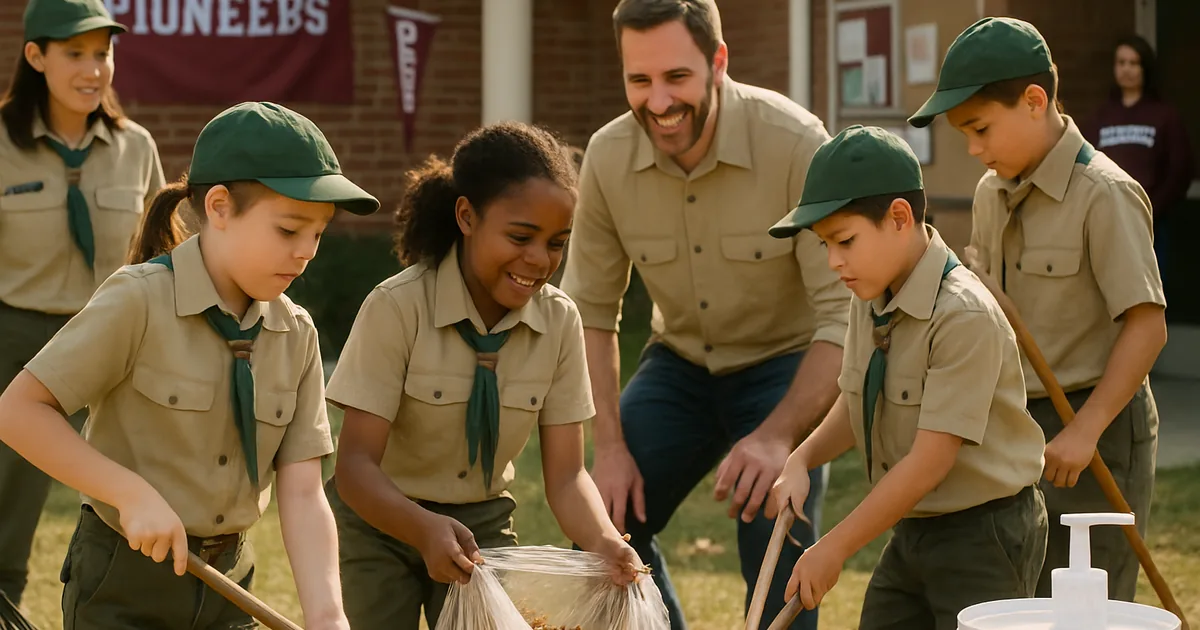
Service fundraisers let scouts earn money while building real skills: car washes, yard work, babysitting co-ops, pet-sitting, holiday decorating, or organizing community events. These tend to work best with older scouts who can take ownership of the work, and they offer something cookies and product sales do not—direct community engagement and hands-on learning.
A well-run car wash can raise a few hundred dollars in a single afternoon with minimal upfront cost. Babysitting nights—where parents drop off kids for a supervised evening while the troop provides games, crafts, and snacks—are popular in communities with young families. Yard work and seasonal services like leaf raking, snow shoveling, or garden prep appeal to older supporters who value the help and want to support the troop.
The trade-off is time and coordination. Service fundraisers require scheduling, supervision, and often insurance or liability considerations, so they are not as simple as handing out order forms. But for troops that want to combine fundraising with skill-building and community service, they are hard to beat.
How do these fundraisers compare to cookies on profit and effort?
Cookie profit varies by council, but troops typically keep a portion of each box sold, with the rest going to the council and baker. The exact split depends on your council's structure, so check your local terms. Cookies deliver a known margin, but the effort—inventory tracking, delivery coordination, payment collection—is substantial, and the selling window is short and competitive.
A household-necessity program like bulk detergent offers about $13.45 to $15.45 profit per bucket at the typical $49.95 price point, with no upfront cost and free shipping on larger orders. The coordinator effort is lower because there is no inventory to manage up front and the program ships the order. The selling window is flexible—troops can run it any time of year without competing with every other troop in the district.
Service fundraisers vary widely. A car wash might net a few hundred dollars for an afternoon of work; a babysitting night can bring in more if priced well and promoted effectively. Profit per hour of scout time is harder to predict, but the skill-building and community connection often justify the effort even if the dollar total is modest.
What should you look for in a Girl Scout troop fundraiser?
Not every fundraiser fits every troop, so judge your options against five practical criteria: buyer breadth, value offered, profit per unit, upfront cost, and coordinator effort. A fundraiser that scores well on all five is often easier to run and more successful than one that excels on margin alone.
Buyer breadth: How many people will actually buy it? A household necessity reaches more supporters than a niche novelty. Value offered: Are supporters getting something genuinely useful for their money, or are they just donating with extra steps? Profit per unit: What does the troop keep after costs? Upfront cost: Does the troop have to front money for inventory, or is it no-risk? Coordinator effort: How much time and logistics management does it require from volunteers?
For most troops, a no-upfront-cost program with broad appeal and simple logistics may outperform a high-margin product that requires heavy volunteer coordination. The goal is not to maximize profit per item—it is to maximize total dollars raised without burning out your volunteers.
Common mistakes troops make when choosing a fundraiser
The most common mistake is choosing something complicated because it sounds impressive. A multi-vendor craft fair or elaborate event might raise money, but if it requires months of planning and a dozen volunteers, it is probably not worth it for a small troop. Simple, repeatable fundraisers often outperform complex one-offs.
Another mistake is picking a product with high upfront cost and narrow appeal. If the troop has to buy inventory before collecting orders, and the product only appeals to a small slice of supporters, the financial risk is real. No-upfront-cost programs remove inventory risk.
Finally, many troops underestimate the importance of a clear kickoff and deadline. Fundraisers that are open-ended or poorly explained tend to fizzle. Set a specific start date, a two-to-four-week selling window, and a clear goal, and participation will be higher.
| Factor | Girl Scout Cookies | Household Necessity |
|---|---|---|
| Buyer pool | Dessert buyers + Scout supporters | Nearly every household |
| Selling window | Fixed season, high competition | Year-round, flexible |
| Upfront inventory | Troop manages inventory | No-upfront-cost options |
| Delivery logistics | Coordinated delivery days | Provider-handled delivery |
| Profit per unit | Varies by council | $13.45–$15.45 per bucket |
| Coordinator effort | Substantial volunteer time | Lower with provider support |
Common mistakes to avoid
Choosing something too complicated
A fundraiser that requires months of planning and a large volunteer team is rarely worth it for a small troop. Simple, repeatable programs often raise more with less burnout.
Picking a product with high upfront cost and narrow appeal
If the troop has to buy inventory before orders come in, and only a small group of supporters will buy it, the financial risk is real. Favor no-upfront-cost programs that collect orders first.
Running an open-ended fundraiser with no clear deadline
Fundraisers without a specific start, end, and goal tend to lose momentum. A focused two-to-four-week window with a clear target drives more participation than an always-on campaign.
Ignoring the coordinator effort required
A high-margin fundraiser that requires a troop leader to manage inventory, delivery, and payment collection may not be worth it if a lower-margin, no-logistics program raises nearly as much with a fraction of the work.
- Girl Scouts of the USA — official information on troop fundraising policies and guidelines. Individual councils set specific cookie profit-sharing terms, so check with your local council for exact figures. — source
- Girl Scouts of Greater Atlanta — Troop Finances (Volunteer Essentials), one council's policy example: written council approval is required before a troop money-earning event, troops are encouraged to prioritize council product programs, and selling or endorsing commercial products is discouraged. Other councils set their own rules. — source
- Detergent price comparison — per-ounce pricing for premium national-brand liquid laundry detergent, surveyed at major U.S. retailers September 2026 (typically 14 to 19 cents per ounce; example source: a leading national retailer). A 5-gallon (640 oz) bucket at $49.95 is about 7.8 cents per ounce. Prices vary by brand, size, store, and region; some value-tier and store brands cost less per ounce. Range reflects a market survey; individual prices will vary.
- Good Clean Fundraising program terms — $49.95 per bucket; $13.45 profit per bucket at 100 to 299 buckets (usually $5 to $12 at 50 to 99 buckets, depending on actual shipping costs), $14.45 at 300 to 499, $15.45 at 500 or more; $0 upfront cost; free shipping at 100+ buckets; 50-bucket minimum (smaller orders are not accepted); 100% money-back guarantee under which, according to the company, any customer who is not satisfied is refunded and the group keeps its profit. — GCF pricing, GCF how it works, and GCF refund and returns.
- Editorial guidance: general planning advice on this page reflects the authors' editorial judgment and common youth-group fundraising practice; it is not based on measured campaign data or a cited study.
Our recommendation for Girl Scout troops
If your troop needs a fundraiser outside cookie season—or wants a simpler, year-round option that reaches more buyers—a household-necessity program is one strong option to evaluate. Good Clean Fundraising runs The Good Clean Fundraiser, a bulk laundry-detergent program built for exactly this: troops sell a 5-gallon detergent bucket for $49.95, supporters pay roughly half the per-ounce price of premium national brands, and the troop keeps about $13.45 to $15.45 per bucket at 100 or more buckets with no upfront cost, free shipping on orders of 100 or more, and a Getting Started packet, instructions, marketing materials, and social media strategies. It works year-round, does not compete with cookies, and reaches grandparents, neighbors, and coworkers who would never buy a box of cookies but always need laundry soap. Many troops run it in the fall or spring as a complement to cookie season, giving families two distinct selling windows and supporters two chances to help without being asked for the same thing twice.
Frequently asked questions
The strongest alternatives are household-necessity products like laundry detergent and cleaning supplies, no-upfront-cost programs, and service-based fundraisers like car washes or babysitting nights. These reach a wider buyer pool than cookies because they offer something people already need or a service they value, and they can run year-round without competing with every other troop during cookie season.
Cookie season is a narrow, high-pressure window, and many troops need money outside that timeframe for summer camp, service projects, or year-round activities. Some families prefer not to participate in cookie sales, and smaller troops may want something with lower upfront inventory risk and less logistics coordination.
With a bulk detergent program, troops typically sell a 5-gallon bucket for $49.95 and keep about $13.45 to $15.45 per bucket at 100 or more buckets, depending on order volume, with no upfront cost and free shipping on larger orders. Total raised depends on how many families participate and how many buckets each sells, but the wider buyer pool—everyone needs detergent—often means more families find buyers than with cookies.
They are different tools for different needs. Cookies are an established, seasonal program with strong brand recognition. Household-necessity fundraisers like detergent reach a wider buyer pool, can run year-round, and require less logistics coordination. Some troops use both—cookies during the official season and, where their council approves, a household product in the fall or spring—so families have two distinct selling windows without overlap.
Small troops should favor no-upfront-cost programs with simple logistics and broad appeal. A household-necessity product fundraiser or a service-based option like a car wash or babysitting night works well because there is no inventory risk, and the coordinator effort is manageable even with just a few volunteers.
It depends on your council. Girl Scout councils generally require written approval before a troop runs a money-earning activity outside the council product programs, and some councils discourage selling commercial products or competing with council product programs, so confirm your council's rules before choosing any alternative. Unlike cookies, which run during a fixed council-wide season, other fundraisers can be scheduled at other times of year where approved. Many troops run a detergent fundraiser in the fall or spring when cookies are not in season, giving families two distinct fundraising windows and supporters two chances to help without being asked for the same product twice.
Not always. Many household-necessity and product programs are no-upfront-cost, meaning the troop collects orders first and never fronts money for inventory. This removes financial risk, which is especially important for smaller or newer troops testing a fundraiser for the first time.
Judge any fundraiser on five factors: how many people will actually buy it, whether it offers genuine value to supporters, the profit per unit, whether there is upfront cost or financial risk, and how much coordinator time and logistics it requires. A program that scores well across all five will often outperform one that has a high margin but requires heavy volunteer management.
The Good Clean Fundraiser is Good Clean Fundraising's bulk laundry-detergent program. Troops sell a 5-gallon pump bucket of detergent for $49.95, supporters pay roughly half the per-ounce price of premium national brands, and the troop keeps about $13.45 to $15.45 per bucket at 100 or more buckets. There is no upfront cost, free shipping on orders of 100 or more, and the program includes a Getting Started packet, instructions, marketing materials, and social media strategies.
Girl Scout cookies are not going anywhere, and for many troops they remain a solid fundraiser. But the best troop fundraising strategies now include a second option—something that runs outside cookie season, reaches a wider buyer pool, and does not require the same logistics load. A household-necessity program checks all three boxes, and for troops that want to raise money year-round without burning out volunteers, it is the simplest, most repeatable choice available.