Scouts, 4-H, FFA & Youth Organizations
No-Cost Fundraisers for Scout Troops
How troops raise money without upfront fees, inventory risk, or asking families to front cash — and which no-cost programs actually work.
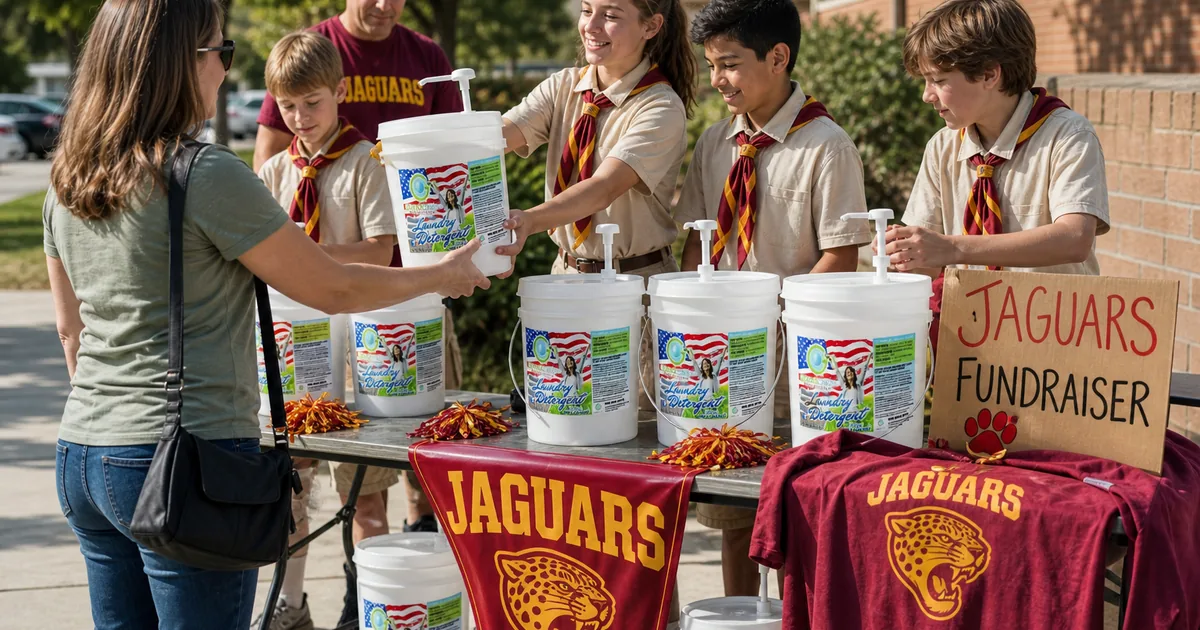
No-cost fundraisers let scout troops raise money without requiring the troop or families to pay upfront for inventory, removing inventory financial risk. The strongest no-cost models are pre-order product programs where supporters pay when they order and the troop never handles money for unsold goods, plus digital fundraisers like online giving platforms and discount card programs. Traditional catalog and treat sales typically require buying inventory first, which shifts risk onto the troop. When evaluating a no-cost program, confirm in writing that there are no startup fees and no penalty if the troop raises less than expected, and check any minimum order (Good Clean Fundraising's is 50 buckets). The best no-cost scout fundraisers combine no inventory financial risk with a product people genuinely need, broad appeal beyond just scout families, and simple logistics that do not burden volunteer leaders.
Scout troops run on tight budgets, and the last thing a volunteer leader needs is a fundraiser that requires the troop to front hundreds of dollars for inventory that may or may not sell. Yet many traditional scout fundraisers — popcorn tins, cookie dough, candy bars — work exactly that way: the troop orders stock, hopes it moves, and eats the cost of anything left over.
No-cost fundraisers flip that model. The troop collects orders or donations first, pays the supplier only for what sold, and never risks a dollar of troop funds or asks families to float money. For a volunteer-run organization where one bad fundraiser can wipe out months of progress, that shift from risk to certainty changes everything.
This guide covers what qualifies as a true no-cost fundraiser, which types work best for scout troops, how to spot hidden fees and traps, the models that often raise the most, and how to choose a program that fits your troop's size and goals.
- A true no-cost fundraiser requires no upfront payment from the troop or families and carries no financial penalty if sales fall short.
- Pre-order product programs and online giving platforms are the two common no-cost models for scout troops.
- Many traditional catalog and treat fundraisers require buying inventory first, which disqualifies them as no-cost.
- Hidden fees to watch for include startup charges, minimum order requirements, and shipping costs that hit before you collect money.
- The strongest no-cost scout fundraisers combine no inventory financial risk with a product people need, not a novelty item.
- Confirm all terms in writing before launch — verbal promises about no-cost structures do not protect the troop if something goes wrong.
What qualifies as a true no-cost fundraiser?
The term gets used loosely, so start with a clear definition. A true no-cost fundraiser is one where the troop and its families pay nothing upfront, the troop orders or pays the supplier only after collecting money from supporters, and there is no financial penalty if the campaign raises less than hoped. If a program asks for a deposit, requires a minimum purchase, or charges a setup fee before you have money in hand, it is not no-cost — it is low-cost or deferred-cost, and the troop still carries risk.
The structure that makes this possible is simple: supporters pay when they order, the troop collects that money, then the troop submits the final order with payment. The troop never holds inventory it has not already sold, and families are never asked to front cash and hope for reimbursement later. That is the standard a no-cost program should meet.
What are the best no-cost fundraiser models for scout troops?
A few structures often work well for troops, and they all share the same core trait: the troop collects money before paying anyone.
Pre-order product fundraisers
These are the workhorses of no-cost scout fundraising. Scouts take orders for a product — often a household staple like laundry detergent, cleaning supplies, or similar consumables — supporters pay when they order, and the troop submits the order and payment together. The troop keeps the profit with no inventory risk.
The reason this model works so well for troops is that it combines no financial risk with repeat-buyer appeal. A household necessity reaches grandparents, neighbors, and coworkers who would never buy a novelty item, and because people use it up and reorder, a troop can run the same fundraiser again without buyer fatigue.
Online giving and crowdfunding platforms
Digital fundraising platforms let supporters donate directly online, and the troop receives funds electronically with no product to manage. These are genuinely no-cost if the platform does not charge setup or monthly fees — though most take a small processing fee from each donation. The tradeoff is that online-only campaigns tend to raise less per participant than product fundraisers because there is no tangible value exchange, but they are simple to run and work well as a supplement to a main fundraiser.
Discount card programs
Troops sell cards that give supporters discounts at local or national businesses. Many discount card programs are no-cost: the troop orders cards only after collecting payment, and the profit is built into the card price. The challenge is that discount cards are a tougher sell than they used to be — smartphone apps and loyalty programs have made physical discount cards feel dated — but they can still work in communities where local businesses actively participate and promote the program.
What scout fundraisers are NOT no-cost?
It helps to know what to avoid. These common scout fundraisers are often assumed to be no-cost but typically are not:
Popcorn, cookie dough, and candy sales
Most of these programs require the troop to order and pay for inventory upfront, then sell it and hope to recoup the cost. Some offer a return policy for unsold goods, but that still means the troop or families front the money and wait for a refund. Unless the specific program explicitly operates on a pay-after-orders-collected basis, assume it requires upfront payment.
Catalog sales with minimum orders
Some catalog fundraisers advertise no upfront cost but bury a minimum order requirement in the fine print. If the troop does not hit that minimum, it either pays a fee or loses access to the discounted pricing that made the profit margin work. Read the contract carefully.
Event-based fundraisers with venue or permit fees
Car washes, pancake breakfasts, and similar events can be great fundraisers, but they are rarely no-cost. Venue rental, permits, liability insurance, and supplies all require money upfront. They can be low-cost and high-return, but they do not meet the no-cost standard.
How do you spot hidden fees in a no-cost fundraiser?
Programs that claim to be no-cost sometimes are not, and the fees show up in places most troop leaders do not think to check. Here is what to confirm in writing before you commit:
Startup or registration fees
Some programs charge a small setup fee to access materials or join the platform. If the troop pays anything before collecting a dollar from supporters, it is not no-cost.
Minimum order requirements
A program may be no-cost if you hit a certain order volume, but if you fall short the troop either pays a penalty or loses the profit margin. Ask what the minimum order is and whether there is any penalty for a smaller campaign (Good Clean Fundraising's minimum is 50 buckets).
Shipping or delivery charges due upfront
Some programs require the troop to pay shipping before delivery, which means fronting money before you have collected from supporters. True no-cost programs either include shipping in the product price or charge it only after the troop has collected payment.
Material or sample fees
Order forms, brochures, and sample products are sometimes free and sometimes not. If the program charges for materials before the campaign starts, factor that into your decision.
Which no-cost fundraisers raise the most for scout troops?
The programs that often raise the most combine three things: no inventory financial risk, a product or cause with genuinely broad appeal, and simple logistics that do not burn out volunteer leaders. Pre-order household-staple fundraisers tend to win on all three. They reach buyers outside the troop's immediate circle because the product is something people already purchase, they avoid the perishability and storage headaches of food fundraisers, and they give supporters real value rather than asking for a donation with nothing in return.
Online giving platforms can work well as a secondary effort or for troops with strong digital networks, but they rarely match the per-participant totals of a product fundraiser because there is no tangible exchange. Discount cards can raise solid amounts in the right community but require more selling effort than a necessity product. The pattern is consistent: the less the supporter has to go out of their way, and the more useful the product, the more the troop raises.
How do you choose the right no-cost fundraiser for your troop?
Start by confirming the program is genuinely no-cost — no upfront fees, no penalties, and a clearly stated minimum — then evaluate it on four factors: Does the product or cause appeal to people beyond just scout families? Are the logistics simple enough that a volunteer leader can manage them without it becoming a second job? Is the profit margin strong enough to make the effort worth it? And does the program provide real support, or does it dump everything on the troop?
For many troops, a pre-order household-staple program checks all four boxes. The product reaches a wide buyer base, the logistics are straightforward, the profit is clear and predictable, and the best programs provide setup materials and instructions so the troop leader is not figuring it out alone.
Our recommendation
If you are looking for a no-cost fundraiser that removes financial risk and reaches buyers beyond your troop families, Good Clean Fundraising is built for exactly that. Troops sell a 5-gallon bucket of laundry detergent for $49.95 — a household staple supporters buy at roughly half the per-ounce price of premium national brands — and keep about $13.45 to $15.45 per bucket at 100 or more buckets, depending on order volume. There is no upfront cost, a 50-bucket minimum order, free shipping on orders of 100 buckets or more, and the program includes a Getting Started packet, instructions, marketing materials, and social media strategies. Good Clean Fundraising advertises a 100% money-back guarantee under which, according to the company, any unsatisfied customer is refunded and the group keeps its profit.
It is a true no-cost program — the troop collects orders and payment first, submits the order, and keeps the profit with no inventory risk. Scouts are not pushing an overpriced novelty; they are offering something every household already buys, at a genuinely good price, while backing their troop. That is a pitch that works with grandparents, neighbors, and coworkers, not just parents, which is why troops that switch to a household-necessity fundraiser may see higher participation and higher totals than they did with traditional scout products.
| Factor | No-Cost (Pre-Order) | Upfront-Cost (Inventory) |
|---|---|---|
| Financial risk | $0 — troop pays nothing upfront | High — troop buys inventory first |
| Cash flow | Collect from supporters, then pay supplier | Troop fronts money, waits for sales |
| Unsold inventory | None — order only what sold | Troop holds unsold goods or waits for refund |
| Participation barrier | Low — families pay nothing upfront | High — families must front cash |
| Reconciliation | Simple — troop never holds money it doesn't own | Complex — track who fronted money |
Common mistakes to avoid
Assuming all product fundraisers are no-cost
Many traditional scout fundraisers — popcorn, candy, cookie dough — require buying inventory upfront. Confirm in writing that the program collects payment from supporters before you submit the order, and ask about any minimums or penalties.
Not reading the contract for hidden fees
Startup fees, minimum order requirements, and upfront shipping charges can turn a claimed no-cost program into a financial risk. Get the terms in writing and read them before you commit.
Choosing a program based only on profit margin
A high margin does not matter if the product is hard to sell or the logistics burn out your volunteers. Evaluate the whole package: risk, appeal, simplicity, and support.
Running a no-cost fundraiser without a clear goal
Even a zero-risk program needs a specific dollar target and a deadline. Without a goal, participation drifts and the troop raises less than it could have with a focused two-to-four-week push.
Not confirming the money-back or return policy
For GCF specifically: Good Clean Fundraising refunds the dissatisfied supporter directly, and the group keeps its earned profit. If you are evaluating a different vendor, confirm their refund process in writing so you know whether the troop or supplier handles returns.
- Good Clean Fundraising program terms — $49.95 per bucket; $13.45 profit per bucket at 100 to 299 buckets (usually $5 to $12 at 50 to 99 buckets, depending on actual shipping costs), $14.45 at 300 to 499, $15.45 at 500 or more; $0 upfront cost; free shipping at 100+ buckets; 50-bucket minimum (smaller orders are not accepted); 100% money-back guarantee under which, according to the company, any customer who is not satisfied is refunded and the group keeps its profit. — GCF pricing, GCF how it works, and GCF refund and returns.
- Detergent price comparison — per-ounce pricing for premium national-brand liquid laundry detergent, surveyed at major U.S. retailers September 2026 (typically 14 to 19 cents per ounce; example source: a leading national retailer). A 5-gallon (640 oz) bucket at $49.95 is about 7.8 cents per ounce. Prices vary by brand, size, store, and region; some value-tier and store brands cost less per ounce. Range reflects a market survey; individual prices will vary.
- Editorial guidance: general planning advice on this page reflects the authors' editorial judgment and common youth-group fundraising practice; it is not based on measured campaign data or a cited study.
Our recommendation
If you are looking for a no-cost fundraiser that removes financial risk and reaches buyers beyond your troop families, Good Clean Fundraising is built for exactly that. Troops sell a 5-gallon bucket of laundry detergent for $49.95 — a household staple supporters buy at roughly half the per-ounce price of premium national brands — and keep about $13.45 to $15.45 per bucket at 100 or more buckets, depending on order volume. There is no upfront cost, a 50-bucket minimum order, free shipping on orders of 100 buckets or more, and the program includes a Getting Started packet, instructions, marketing materials, and social media strategies. Good Clean Fundraising advertises a 100% money-back guarantee under which, according to the company, any unsatisfied customer is refunded and the group keeps its profit.
Frequently asked questions
A no-cost fundraiser is one where the troop and its families pay nothing upfront, the troop orders or pays the supplier only after collecting money from supporters, and there is no financial penalty if sales fall short. The troop collects payment first, then submits the order, so it never holds inventory it has not already sold.
Pre-order product fundraisers — especially household staples like laundry detergent — are the strongest no-cost option because they combine no inventory financial risk with broad buyer appeal and simple logistics. Online giving platforms and discount card programs can also work well, though they tend to raise less per participant than a product people genuinely need.
Most are not. Traditional popcorn, cookie dough, and candy fundraisers typically require the troop to buy inventory upfront and hope it sells. Some offer return policies, but the troop or families still front the money and wait for reimbursement. Unless the specific program operates on a pay-after-orders-collected basis, it is not truly no-cost.
Confirm in writing that there are no startup fees, no upfront shipping charges, and no penalty if the troop raises less than expected, and check any minimum order (Good Clean Fundraising's is 50 buckets). If the program asks the troop or families to pay anything before collecting money from supporters, it is not no-cost.
Pre-order household-staple fundraisers can raise more because they reach buyers outside the troop's immediate circle, give supporters real value at a fair price, and avoid the logistics headaches of perishable or novelty products. The less the supporter has to go out of their way, and the more useful the product, the more the troop raises.
Some do. Watch for startup or registration fees, minimum order requirements that trigger penalties, upfront shipping charges, and material or sample fees. Read the contract carefully and get all terms in writing before you commit.
Yes. Many no-cost programs offer strong profit margins because they cut out the cost and risk of holding inventory. For example, one household-necessity program has troops keep about $13.45 to $15.45 per bucket at 100 or more buckets on a product that sells for $49.95, with no upfront cost and free shipping on larger orders.
Confirm the program is genuinely no-cost, then evaluate it on buyer appeal, logistics simplicity, profit margin, and the level of support the program provides. For many troops, a pre-order household-staple program checks all the boxes: wide appeal, simple to run, clear profit, and real support from the supplier.
Good Clean Fundraising is a true no-cost program: troops collect orders and payment first, then submit the order and keep the profit with $0 upfront cost, a 50-bucket minimum order, and free shipping on larger orders. Scouts sell a 5-gallon bucket of detergent for $49.95 — roughly half the per-ounce price of premium national brands — and the troop keeps about $13.45 to $15.45 per bucket at 100 or more buckets. The program includes a Getting Started packet, instructions, marketing materials, and social media strategies. Good Clean Fundraising advertises a 100% money-back guarantee under which, according to the company, any unsatisfied customer is refunded and the group keeps its profit.
A no-cost fundraiser is not just about avoiding upfront fees — it is about removing the financial risk that can sink a volunteer-run troop if a campaign underperforms. When the troop collects money first and pays the supplier only for what sold, the worst-case scenario is raising less than hoped, not losing money the troop did not have. For scout leaders already juggling meetings, outings, and paperwork, that shift from risk to certainty is what makes a fundraiser manageable instead of stressful.