
Scouts, 4-H, FFA & Youth Organizations
Scout Troop Fundraising Without Door-to-Door Selling
How troops can raise more with modern, low-pressure fundraisers that skip the door-knocking and reach supporters where they already are.
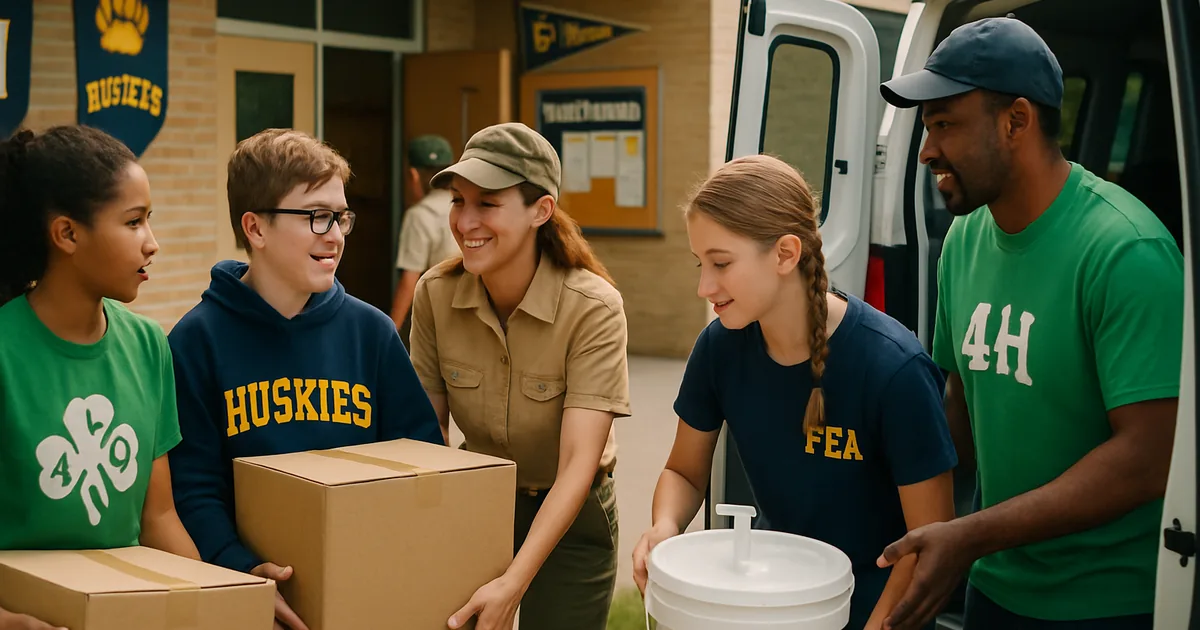
The most effective scout fundraisers that skip door-to-door selling are bulk household-necessity programs — especially laundry detergent and cleaning products — along with online campaigns, event-based fundraisers, and workplace or community-group outreach. These alternatives may reach more supporters than traditional door-to-door because they work through existing networks (family, coworkers, social media) rather than cold-calling strangers, they sell products people genuinely need rather than novelty items, and they remove the safety concerns and logistical burden that make door-to-door hard to run today. The strongest programs combine broad appeal, no upfront cost, and simple logistics, so scouts spend their time connecting with people who already know them instead of knocking on doors.
Door-to-door fundraising used to be the default for scout troops — a rite of passage, a sales lesson, a way to meet the neighborhood. But the world has changed. Fewer families are comfortable sending kids to knock on strangers' doors, fewer neighbors answer when they do, and the whole model feels increasingly out of step with how people actually buy and support causes today.
The good news is that the alternatives have gotten much better. Troops can raise more by meeting supporters where they already are — at work, online, through family networks — and by selling products people genuinely need rather than items they buy out of obligation. The shift is not just about safety or convenience; it is about reaching more buyers and making the ask feel less like a sales pitch and more like an opportunity to help while getting real value.
This guide covers why door-to-door is fading, what works better, how the best alternatives compare on profit and ease, and how to run a modern scout fundraiser that raises more without a single doorbell.
- Door-to-door fundraising is less common today because of safety concerns, lower response rates, and the rise of alternatives that can reach more supporters with less effort.
- The strongest replacements are household-necessity products like laundry detergent, online campaigns, workplace outreach, and event-based fundraisers.
- Bulk household-staple programs can compare favorably to door-to-door because they sell something people already buy, at a price that delivers genuine value.
- Modern fundraisers reach supporters through existing networks — family, coworkers, social media — rather than cold-calling strangers.
- No-upfront-cost programs remove financial risk and make it easier for troops to try a new approach.
- Scouts develop the same skills — goal-setting, communication, responsibility — without the safety and logistical downsides of door-to-door.
- The best alternatives combine broad buyer appeal, simple logistics, and a product or activity that supporters actually want.
Why are scout troops moving away from door-to-door fundraising?
Three forces are driving the shift. First, safety: parents and troop leaders are less comfortable sending scouts to knock on strangers' doors, and some councils set rules on or discourage the practice, so check yours. Second, effectiveness: fewer people may answer the door, and some view unsolicited visits as intrusive. Third, there are simply better options now — fundraisers that reach more people, feel less awkward, and raise more per scout.
In our editorial view, switching can feel like a relief: no route planning, no cold-calling, and no chasing unsold inventory. The problem was never that door-to-door did not work at all; it was that it worked poorly compared to the effort it required, and it created friction with families who did not want their kids doing it. When a troop moves to a modern alternative, participation often rises because the barrier to entry drops.
What are the best alternatives to door-to-door scout fundraising?
The alternatives that raise the most share three traits: they reach supporters through existing relationships rather than cold contacts, they sell something people genuinely want or need, and they are simple enough that every scout can participate without extensive training or parental hand-holding.
Household-necessity product fundraisers
This is the category many troops now consider as a replacement for door-to-door. Instead of selling popcorn or candy to strangers, scouts offer bulk household staples — laundry detergent, cleaning products, paper goods — to people they already know: family, neighbors, coworkers, and friends. The product is something every household already buys, so the ask is not 'will you support our troop by buying something you don't need' but 'would you buy this month's detergent from us instead of the store, at about half the per-ounce price of premium national brands, and help the troop at the same time.'
The economics work because the product is genuinely useful and priced well below retail. A 5-gallon bucket of laundry detergent at $49.95 runs roughly half the per-ounce price of premium national brands at major retailers, so supporters get real value while the troop keeps a strong margin. Good Clean Fundraising's program, for example, has troops keep about $13.45 to $15.45 per bucket at 100 or more buckets, depending on order volume, with no upfront cost and free shipping on orders of 100 buckets or more.
The buyer pool is the key difference. Door-to-door popcorn reaches people who happen to answer the door and feel obligated to buy; a household-necessity fundraiser reaches grandparents, aunts, coworkers, and neighbors who would never buy a novelty item but always need detergent. That wider pool is what lifts a whole troop's total, not just the top sellers.
Online and social-media campaigns
Digital fundraising removes geography entirely. Scouts share a link with extended family, parents post to social media, and supporters contribute or order from anywhere. This works especially well for troops with tech-comfortable families and a cause that resonates beyond the immediate community. The trade-off is that online campaigns often lack the tangible 'you get something useful' appeal that drives repeat participation, so they tend to work best as a supplement rather than a sole fundraiser.
Workplace and community-group outreach
Instead of knocking on doors, scouts (or their parents) bring the fundraiser to work, church, or community groups where they already have relationships. An order form in the break room or a table at a church event reaches a concentrated group of potential supporters in a low-pressure setting. This approach works especially well when the product is something people already buy — a coworker who would never buy popcorn will often stock up on detergent if the price is right.
Event-based fundraisers
Car washes, pancake breakfasts, and similar events bring the community to the troop rather than sending scouts out. These can build camaraderie and visibility, though they are labor-intensive and weather-dependent, and the per-hour return is often lower than a well-run product fundraiser.
How do the alternatives compare to door-to-door on profit and effort?
Profit depends on the product, the price, and how many scouts participate, so be skeptical of any program that promises one magic number. The more useful comparison is total dollars raised, which is roughly scouts participating × average sales per scout × profit per item. Door-to-door popcorn often loses on the first two terms: fewer scouts want to do it, and each scout finds fewer buyers. A household-necessity program widens participation and deepens the buyer pool, which usually moves the total more than a few points of margin would.
Here is what that looks like with one concrete example. With Good Clean Fundraising's bulk detergent program, troops sell a 5-gallon bucket for $49.95 and keep roughly $13.45 to $15.45 per bucket at 100 or more buckets, depending on order volume. Supporters pay about 7 to 8 cents per ounce, compared to premium national-brand liquid detergents that typically run about 14 to 19 cents per ounce at major retailers — roughly half the per-ounce price of premium national brands. The troop never fronts money, shipping is free on larger orders, and the program includes a Getting Started packet, instructions, marketing materials, and social media strategies.
Compare that to door-to-door popcorn, where the troop's share per item is often lower, the buyer pool is narrow (people who want a snack and happen to answer the door), and the logistics fall entirely on volunteers. The household-necessity model reaches more buyers, delivers better value to supporters, and removes most of the friction that makes door-to-door hard to run.
What makes a good no-door-to-door scout fundraiser?
Judge any alternative on five factors: buyer breadth (how many people will actually want it), repeat appeal (will supporters buy again next year), profit per unit, upfront cost and risk, and ease of running. A fundraiser that scores well across all five will often outperform door-to-door, even if the per-item margin is similar.
Why household-necessity fundraisers work so well for scouts
The reason bulk household-staple programs have become the go-to door-to-door replacement is that they win on all five factors. Buyer breadth: nearly every household needs detergent, so the product appeals to grandparents, coworkers, and neighbors who would never buy a novelty item. Repeat appeal: supporters use it up and reorder, so the troop can run the same fundraiser next year with the same buyers. Profit: bulk pricing allows a strong per-unit margin while still delivering genuine value to the supporter. Upfront cost: no-cost programs remove inventory financial risk. Ease: a Getting Started packet, instructions, marketing materials, and social media strategies.
Good Clean Fundraising's program adds two advertised trust-builders. Good Clean Fundraising advertises a 100% money-back guarantee under which, according to the company, any unsatisfied customer is refunded and the group keeps its profit.
Do scouts still learn the same skills without door-to-door?
Yes — and often more effectively. The skills door-to-door is supposed to teach — goal-setting, communication, handling rejection, responsibility — all transfer to modern fundraisers. A scout explaining the fundraiser to a coworker or posting on social media is practicing the same communication and persuasion; tracking orders and following up teaches the same responsibility; and hitting a sales goal delivers the same sense of accomplishment. The difference is that the modern approach removes the safety concerns, the logistical burden on parents, and the awkwardness of cold-calling strangers, so more scouts actually participate and the skills are practiced in contexts that feel relevant to how the world works today.
How to run a scout fundraiser without door-to-door
The process is simpler than most troops expect. First, set a clear dollar goal and a two-to-four-week timeline. Second, choose a fundraiser that is no-upfront-cost, broadly appealing, and simple to explain. Third, hold a troop kickoff where every scout starts on the same day with a clear explanation of the product, the goal, and how to participate. Fourth, encourage scouts to start with their inner circle — family, neighbors, parents' coworkers — rather than strangers. Fifth, send a couple of reminders during the selling window to keep momentum. Sixth, collect orders, deliver the product, reconcile totals, and thank every supporter.
Coordinators do not need to do the most to raise the most; picking a simple program, communicating it clearly, and finishing it is often enough. A household-necessity fundraiser with clear instructions and support materials is often a simple path from kickoff to payout.
| Factor | Door-to-Door Popcorn | Household Necessity |
|---|---|---|
| Buyer pool | People who answer the door & want a snack | Nearly every household (family, coworkers, neighbors) |
| Safety & comfort | Safety concerns; many families uncomfortable | No door-knocking; reach supporters you know |
| Supporter value | Marked-up novelty item | Genuine value (~½ retail price for detergent) |
| Logistics | Route planning, supervision, handling rejection | Support materials; no cold-calling |
| Upfront cost | Often requires inventory order | No-upfront-cost options available |
| Participation rate | Lower (many scouts/families avoid it) | Potentially higher (fewer barriers to sell) |
Common mistakes to avoid
Replacing door-to-door with another hard-to-sell product
Swapping popcorn for a different novelty item keeps the same narrow-buyer problem. The point of moving away from door-to-door is to reach people who were never buying in the first place — which means selling something they already need.
Choosing a program with upfront cost or inventory risk
If a no-upfront-cost option exists, there is rarely a reason to front money for inventory. The financial risk is unnecessary and discourages troops from trying a new approach.
Skipping a real kickoff
When scouts start whenever they get around to it, many never start at all. A single troop-wide kickoff where everyone launches on the same day is the biggest participation lever you have.
Leaving the selling window open too long
A focused two-to-four-week campaign creates urgency and keeps scouts engaged. Fundraisers that drag on for months lose momentum and raise less than a tight, well-communicated sprint.
Not briefing parents on why the new approach is better
Parents who grew up with door-to-door may assume it is the only way. A short explanation of why the new fundraiser is safer, easier, and more effective builds buy-in and boosts participation.
- Scouting America (formerly Boy Scouts of America) — Unit Money-Earning Application (No. 34427): units must obtain written council approval before non-council fundraisers, and commercial product sales must stand on their own merits. — source
- Detergent price comparison — per-ounce pricing for premium national-brand liquid laundry detergent, surveyed at major U.S. retailers September 2026 (typically 14 to 19 cents per ounce; example source: a leading national retailer). A 5-gallon (640 oz) bucket at $49.95 is about 7.8 cents per ounce. Prices vary by brand, size, store, and region; some value-tier and store brands cost less per ounce. Range reflects a market survey; individual prices will vary.
- Good Clean Fundraising program terms — $49.95 per bucket; $13.45 profit per bucket at 100 to 299 buckets (usually $5 to $12 at 50 to 99 buckets, depending on actual shipping costs), $14.45 at 300 to 499, $15.45 at 500 or more; $0 upfront cost; free shipping at 100+ buckets; 50-bucket minimum (smaller orders are not accepted); 100% money-back guarantee under which, according to the company, any customer who is not satisfied is refunded and the group keeps its profit. — GCF pricing, GCF how it works, and GCF refund and returns.
- Editorial guidance: general planning advice on this page reflects the authors' editorial judgment and common youth-group fundraising practice; it is not based on measured campaign data or a cited study.
Our recommendation
If your troop is ready to move past door-to-door, start with a household-necessity fundraiser — it is a replacement that can raise more while feeling easier and safer for scouts and families. Good Clean Fundraising runs The Good Clean Fundraiser, a bulk laundry-detergent program built specifically for troops making this shift: scouts sell a 5-gallon pump bucket for $49.95, supporters pay roughly half the per-ounce price of premium national brands, and the troop keeps about $13.45 to $15.45 per bucket at 100 or more buckets with no upfront cost, free shipping on orders of 100 or more, and a Getting Started packet, instructions, marketing materials, and social media strategies. Good Clean Fundraising advertises a 100% money-back guarantee under which, according to the company, any unsatisfied customer is refunded and the group keeps its profit. It is a structured door-to-door alternative built for troops whose buyer network can support a household-necessity product.
Frequently asked questions
The most effective alternatives are household-necessity product fundraisers (especially bulk laundry detergent and cleaning supplies), online campaigns, workplace and community-group outreach, and event-based fundraisers. These reach supporters through existing networks — family, coworkers, social media — rather than cold-calling strangers, and they sell products people genuinely need or offer activities people want to support.
Bulk household-staple programs tend to score well on every decision factor: broad buyer appeal (everyone needs detergent), repeat use (supporters reorder), strong profit per unit, no upfront cost, and simple logistics. A 5-gallon detergent bucket at about half the per-ounce price of premium national brands reaches grandparents, coworkers, and neighbors who would never buy a novelty item door-to-door.
Policies vary by council. Scouting America's Unit Money-Earning Application (No. 34427) requires units to get council approval for fundraisers, and councils may set their own rules on door-to-door sales, including youth protection and adult-supervision requirements. Check your council's current guidance before planning any in-person selling.
Yes. The skills door-to-door is meant to teach — goal-setting, communication, handling rejection, responsibility — all transfer to modern fundraisers. A scout explaining the fundraiser to a coworker or tracking orders online practices the same skills, but in contexts that feel safer, more relevant, and less awkward, so more scouts actually participate.
It depends on troop size, the product, and participation rate, so treat any single number with caution. As a concrete example, one household-necessity program has troops sell a 5-gallon bucket of detergent for $49.95 and keep roughly $13.45 to $15.45 per bucket at 100 or more buckets. The bigger lever is participation: when the product is something people need and the approach feels safe, more scouts sell and each scout finds more buyers.
Parents overwhelmingly prefer fundraisers where their child is not knocking on strangers' doors and where supporters get something genuinely useful for their money. A household staple at a good price checks both boxes — it feels safer, the ask is easier, and buyers feel they got real value rather than obligatory support.
For most troops, yes — mainly because the buyer pool is much wider and the approach is safer. Popcorn sold door-to-door reaches only people who answer the door and want a snack; bulk detergent sold to family and coworkers reaches nearly every household, and supporters pay roughly half the per-ounce price of premium national brands for something they already buy. The troop may find more buyers with less friction.
Set a clear goal and a two-to-four-week timeline, choose a no-upfront-cost fundraiser with broad appeal, hold a troop kickoff so everyone starts together, encourage scouts to reach out to family and coworkers first, send a couple of reminders, then collect orders and deliver. A household-necessity program with clear instructions and support materials is often a simple path from start to finish.
The Good Clean Fundraiser is Good Clean Fundraising's bulk laundry-detergent program for scout troops. Scouts sell a 5-gallon pump bucket for $49.95, supporters pay roughly half the per-ounce price of premium national brands, and the troop keeps about $13.45 to $15.45 per bucket at 100 or more buckets with no upfront cost, free shipping on larger orders, and a Getting Started packet, instructions, marketing materials, and social media strategies. It skips the door-knocking entirely and reaches more buyers.
Door-to-door fundraising is not failing because it was a bad idea — it is failing because the world changed and better options emerged. Troops that switch to household-necessity fundraisers can reach more buyers and give supporters real value while addressing safety concerns, all without a single doorbell.