
Clubs, Nonprofits & Community Organizations
Volunteer Organization Fundraising Ideas That Actually Work
The fundraising strategies volunteer organizations use to raise serious money without burning out their volunteers or asking supporters to overpay for things they don't need.
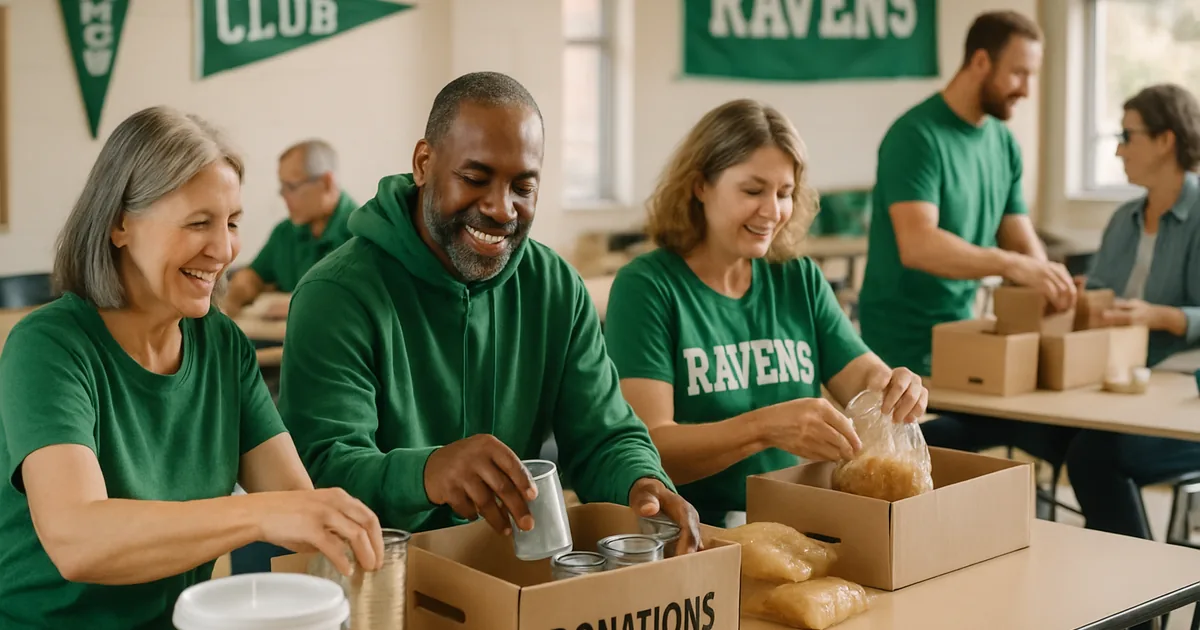
Volunteer organizations can compare household-staple preorders, community events, digital appeals, and traditional catalogs. Choose an offer supporters want and a workload volunteers can manage. Household products can be an option, but there is no verified ranking showing they always outperform other models. Budget promotion, payment handling, delivery, and follow-up alongside expected income.
Volunteer organizations face a fundraising challenge most other groups don't: the people running the campaign are also the people who showed up to do the actual mission work, and asking them to sell candles on top of their regular volunteer hours can strain even committed volunteers.
A manageable plan respects the time volunteers also give to the mission. Check demand, costs, and duties before launching; simplicity can help, but it does not guarantee participation or eliminate burnout.
This guide compares fundraising options for volunteer organizations, with checks for workload, demand, costs, and responsibilities. The recommendations are planning judgments rather than measured profitability rankings.
- Volunteer organizations need fundraisers that are simple to run, require no upfront cost, and don't add a heavy workload to already-busy volunteers.
- Compare household staples and novelty items using your own audience and supplier terms.
- No-upfront-cost programs reduce advance inventory spending and remove the barrier of needing seed money to launch.
- Coordinator support can help, but local payments and distribution still need volunteers.
- Set a selling deadline and allow separate time for fulfillment and pickup.
- Programs that include free shipping at volume and a money-back guarantee reduce friction for both the organization and the buyer.
- Use active sellers, units sold, margin, and expenses together to estimate retained funds.
What makes a fundraiser work for volunteer organizations?
Volunteer organizations operate differently from schools and sports teams. There's no built-in parent base that expects to fundraise, no captive audience at practice, and no natural communication channel like a team email list. The people you're asking to sell are the same people who already give their time to the mission, and most of them didn't sign up expecting to run a sales campaign.
A school fundraiser may need a different plan for a volunteer fire department or community service group. Check the hours available, the offer, costs, and supplier support rather than assuming the same program fits every organization.
A clear offer and manageable jobs can make participation easier. Ask volunteers what they can commit and adjust the plan if essential jobs remain unfilled.
What are the best fundraising ideas for volunteer organizations?
The strongest options fall into a few clear categories, each with different trade-offs on effort, profit, and volunteer load.
Household-necessity product fundraisers
Household staples are worth considering when supporters want the specific formula, size, and price. Detergent does not need frozen storage, but buckets still need suitable handling, unloading, and distribution.
GCF's 5-gallon pump bucket sells for $49.95 (online orders add $2). The published margin is $13.45 per bucket at 100–299 buckets, $14.45 at 300–499, and $15.45 at 500+, before additional group expenses. The minimum order is 50 buckets; shipping is free at 100+, while shipping charges below 100 reduce the margin. There is no payment to start: collect supporter orders and payments, then submit the paid group order. GCF recommends 2–3 weeks of selling, followed by about two weeks after the paid order for fulfillment. Allow extra time for setup and distribution. A coordinator provides guidance; your group arranges a commercial delivery address, unloading, and supporter pickup.
Explain the price, product, and funding purpose clearly. A useful purchase may appeal to supporters, but selling still takes outreach, and some buyers may prefer a smaller size, another brand, or a direct donation.
Community events with low overhead
Volunteer organizations with strong local ties can do well with community events — car washes, pancake breakfasts, yard sales, or seasonal festivals. The upside is visibility and community engagement; the downside is volunteer hours. A successful event requires planning, setup, staffing, and cleanup, and if turnout is low the return per volunteer hour worked can be disappointing.
An event can be a main fundraiser, a supplemental activity, or an annual tradition. Use its budget, staffing needs, and community value to decide where it fits.
No-inventory digital and direct-support programs
Online giving platforms, crowdfunding campaigns, and direct-donation drives avoid product handling but still require promotion, records, and donor support. Supporters give money, the organization keeps most or all of it, and there's no product to manage. The challenge is that without a tangible exchange — something the supporter receives in return — these programs rely heavily on the strength of the ask and the donor's existing connection to the cause.
Digital campaigns can be a main or supplemental fundraiser when the group has an interested audience and can promote the appeal. Compare their costs and workload with a product sale rather than assuming they rarely replace one.
Traditional product catalogs (with caution)
Cookie dough, popcorn, wrapping paper, and other catalogs vary by supplier. Check preorder options, unit margin, customer price, and demand instead of assuming every program needs an inventory purchase or has a narrow audience.
Both catalog and household-staple sales require orders, payments, delivery, and resolving missing or damaged items. Compare the specific supplier's support and storage requirements rather than assuming one category always takes more work.
How do you choose the right fundraiser for your volunteer organization?
Start by asking four questions. First, how much volunteer time is realistically available — not in theory, but in practice? Second, is there any budget to front costs, or does the program need to be low upfront cost? Third, how wide is your natural supporter base, and how often can you reasonably ask them? Fourth, what's your goal amount and timeline?
If volunteer time is limited, compare a supported preorder sale with an online appeal or a small event. The right mix depends on demand, duties, and costs; there is no universal rule that a product sale must be the revenue backbone.
How much can a volunteer organization raise with a product fundraiser?
Estimate retained funds from active sellers × average units sold × applicable unit margin, less additional expenses. Ten sellers do not automatically earn more than three; the units and margin matter too.
As an illustration, 20 active sellers averaging ten GCF buckets would sell 200 buckets. At the 100–299 tier, 200 × $13.45 = $2,690 before additional group expenses. The participation and sales averages are assumptions to test, not typical results.
What mistakes do volunteer organizations make with fundraising?
The most common mistake is choosing a fundraiser that's too complicated for the available volunteer capacity. A multi-day event or a high-touch catalog program might raise more in theory, but if half your volunteers burn out or opt out, the actual total comes in lower than a simpler program would have delivered.
Other frequent missteps: fronting money for inventory without confirming the group can afford the risk if sales fall short; running campaigns that drag on for months and lose all urgency; skipping a real kickoff so volunteers never start on the same day; and picking products with narrow appeal that only reach a small slice of potential supporters. The fix for all of these is the same — simplify, set a deadline, and choose something with broad reach.
| Factor | Household Necessity | Traditional Catalog |
|---|---|---|
| Buyer appeal | Check bulk-product demand | Check item demand |
| Volunteer effort | Orders + coordinator help | Orders + supplier support |
| Upfront cost | Paid group order | Check supplier terms |
| Value to supporter | 7.8¢/fl oz base price | Compare specific prices |
| Storage needs | No freezer; plan storage | Product-specific storage |
| Repeat participation | Check restocking needs | Check repeat interest |
Common mistakes to avoid
Choosing a fundraiser that's too complex for available volunteer capacity
A program that requires extensive planning, setup, and volunteer hours will fail if your volunteers are already stretched thin. Simplicity is a feature, not a compromise.
Fronting money for inventory without confirming financial risk tolerance
If your organization can't afford to absorb the cost of unsold inventory, choose a no-upfront-cost program. The financial risk of a failed campaign can damage a volunteer group far more than a lower per-item margin.
Running campaigns with no clear deadline
A product sale that stays open indefinitely can lose urgency, and participation may fade; an ongoing donation channel is different. A firm two-to-four-week window for a sale can create momentum and keep volunteers engaged.
Picking products with narrow buyer appeal
Household staples are worth considering alongside treats, apparel, and direct giving. Ask your own supporters about price, product preferences, storage, and pickup: familiarity with detergent does not mean everyone wants a 5-gallon bucket.
Skipping a real kickoff meeting or communication
When volunteers start whenever they get around to it, some may miss the start. A single kickoff where everyone begins together gives volunteers a clear starting point.
Underestimating the value of coordinator support
Coordinator support helps with planning and questions, but your group still promotes the sale, reconciles orders and payments, arranges commercial delivery and unloading, and distributes buckets. Assign those jobs before setting the campaign dates.
- Editorial scope — fundraiser comparisons and scheduling suggestions are planning judgments, not measured rankings or campaign results. Illustrative calculations do not predict participation.
- GCF pricing — customer price, online surcharge, order tiers, and shipping. Calculations use the tier for a single group order and exclude additional group expenses. GCF how it works — 50-bucket minimum, selling period, paid-order lead time, commercial delivery and distribution, and advertised guarantee.
- Calculation method — figures are illustrative, use the tier for one group order, and exclude additional expenses. No market-wide retail saving or expected campaign result is claimed.
Our recommendation for volunteer organizations
For a volunteer group considering a household-staple sale, check supporter interest and assign the delivery jobs before committing. GCF's 5-gallon pump bucket sells for $49.95 (online orders add $2). The published margin is $13.45 per bucket at 100–299 buckets, $14.45 at 300–499, and $15.45 at 500+, before additional group expenses. The minimum order is 50 buckets; shipping is free at 100+, while shipping charges below 100 reduce the margin. There is no payment to start: collect supporter orders and payments, then submit the paid group order. GCF recommends 2–3 weeks of selling, followed by about two weeks after the paid order for fulfillment. Allow extra time for setup and distribution. A coordinator provides guidance; your group arranges a commercial delivery address, unloading, and supporter pickup. GCF advertises a 100% money-back guarantee: GCF refunds dissatisfied supporters directly, and the group keeps its earned profit. Contact GCF for any remaining refund details.
Frequently asked questions
Choose a plan volunteers can manage and supporters want to join. Household-staple preorders, events, digital appeals, and catalogs are options; compare their actual costs and duties instead of assuming a universal winner.
Coordinator support helps with planning and questions, but your group still promotes the sale, reconciles orders and payments, arranges commercial delivery and unloading, and distributes buckets. Assign those jobs before setting the campaign dates. For GCF, plan 2–3 weeks for selling and about two weeks for fulfillment after submitting the paid group order, plus setup and distribution. Set dates around your own calendar; the selling window is not the full campaign timeline.
A preorder program reduces the need to buy speculative inventory; it does not eliminate costs or financial risk. For GCF, collect orders and payments before submitting the paid group order, meet the 50-bucket minimum, and budget for shipping below 100 buckets and any local expenses.
Compare active sellers × units per seller × margin, less extra expenses. Participation, demand, and costs all matter; a household staple does not automatically beat a novelty item or event.
For GCF, plan 2–3 weeks for selling and about two weeks for fulfillment after submitting the paid group order, plus setup and distribution. Set dates around your own calendar; the selling window is not the full campaign timeline.
They can fit when buyers want the bulk size and the group can manage fulfillment. GCF's 5-gallon pump bucket sells for $49.95 (online orders add $2). The published margin is $13.45 per bucket at 100–299 buckets, $14.45 at 300–499, and $15.45 at 500+, before additional group expenses. The minimum order is 50 buckets; shipping is free at 100+, while shipping charges below 100 reduce the margin. Coordinator support helps with planning and questions, but your group still promotes the sale, reconciles orders and payments, arranges commercial delivery and unloading, and distributes buckets. Assign those jobs before setting the campaign dates.
Mistakes to watch for include choosing a fundraiser that's too complicated for available volunteer capacity, fronting money for inventory without confirming the group can absorb the risk, running a product sale with no clear deadline (an ongoing donation channel is different), picking products with narrow appeal, and skipping a real kickoff so volunteers never start together. Each of these is a risk that can reduce participation and the total raised.
There is no universal minimum volunteer count. As an illustration, ten sellers averaging ten GCF buckets would reach 100 and retain $1,345 before extra costs. Test the sales assumption and also assign enough helpers for unloading and distribution.
GCF's 5-gallon pump bucket sells for $49.95 (online orders add $2). The published margin is $13.45 per bucket at 100–299 buckets, $14.45 at 300–499, and $15.45 at 500+, before additional group expenses. The minimum order is 50 buckets; shipping is free at 100+, while shipping charges below 100 reduce the margin. There is no payment to start: collect supporter orders and payments, then submit the paid group order. GCF recommends 2–3 weeks of selling, followed by about two weeks after the paid order for fulfillment. Allow extra time for setup and distribution. A coordinator provides guidance; your group arranges a commercial delivery address, unloading, and supporter pickup. GCF advertises a 100% money-back guarantee: GCF refunds dissatisfied supporters directly, and the group keeps its earned profit. Contact GCF for any remaining refund details.
Choose a fundraiser that fits available volunteers, supporter demand, and the costs your group can afford. Compare the options using a budget and clear duties, then use actual results to improve the next campaign.