Scouts, 4-H, FFA & Youth Organizations
Youth Organization Fundraising Ideas That Actually Work
The best fundraising ideas for scouts, 4-H, FFA, and youth groups — from product programs to no-upfront-cost options that reach more supporters and raise more per participant.
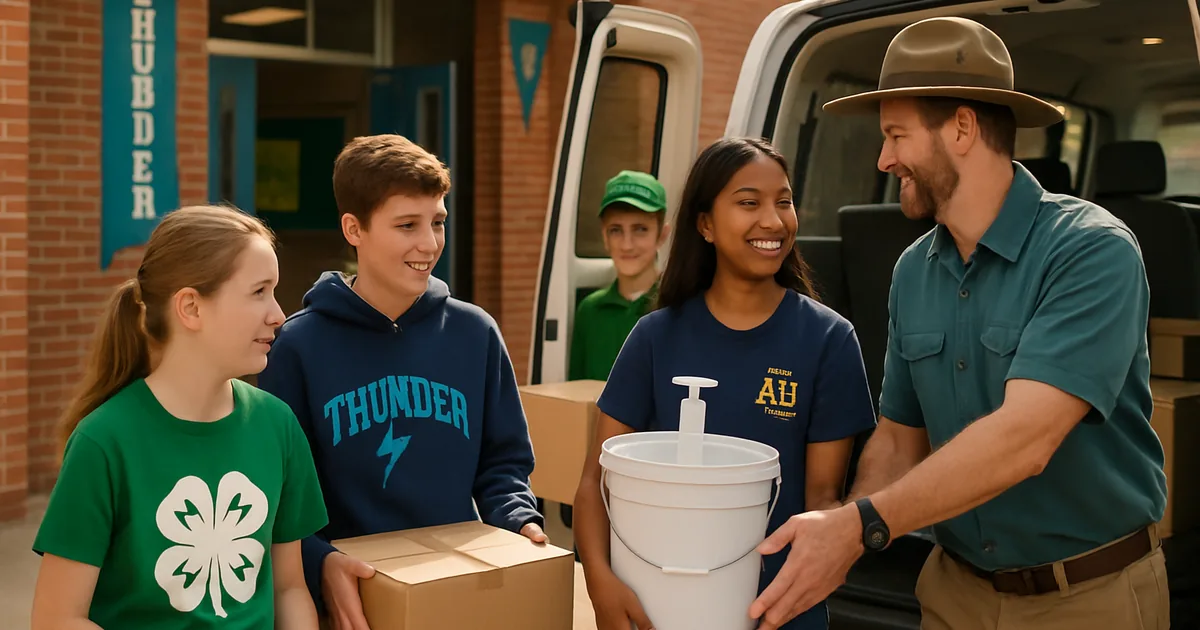
The most successful youth organization fundraisers share three traits: they sell products or services people genuinely need rather than novelty items, they require no upfront investment so groups take on no inventory financial risk, and they give supporters real value for their money. Household-necessity fundraisers — especially bulk laundry detergent and cleaning products — often outperform traditional treat and catalog programs because they reach a wider buyer pool (every household needs detergent, but only a fraction wants cookie dough or popcorn), they are non-perishable and easy to store and deliver, and supporters pay roughly half the per-ounce price of premium national brands for something they already buy. The best programs also provide clear support materials, which can reduce the work for volunteer leaders.
Youth organizations — scouts, 4-H clubs, FFA chapters, and similar groups — run fundraisers for the same reasons schools and teams do: to cover program costs, travel, equipment, and activities that budgets do not reach. But the fundraisers that worked a decade ago are showing their age. Cookie dough and popcorn still raise money, but participation is thinner, buyers are fatigued, and the logistics of frozen or perishable products create headaches that fall on already-stretched volunteer leaders.
The good news is that newer fundraisers built around household necessities can help groups that want a change. These programs are built around products people genuinely use, they carry no upfront cost or financial risk, and they are simple enough that a busy troop leader or advisor can hand them off without a training manual. The difference in participation and total dollars raised is not small — it is the kind of jump that changes what a group can afford to do in a year.
This guide covers the fundraising ideas that are working best for youth organizations right now: what makes a fundraiser easy to run and high-performing, the top product and non-product options, how the economics compare, the mistakes that quietly cost groups money, and how to pick the right fit for your troop, club, or chapter.
- The best youth organization fundraisers sell household necessities people already buy, not novelty treats or overpriced catalog items.
- No-upfront-cost programs remove inventory financial risk — the group never fronts money for inventory.
- Household-necessity products reach a wider buyer pool than dessert or snack fundraisers, which lifts participation across the whole group.
- Non-perishable products eliminate the frozen-delivery logistics that make traditional programs hard to run.
- Programs that provide clear support materials can reduce the load on volunteer leaders.
- Supporters are more willing to buy when they receive genuine value — a useful product at roughly half the per-ounce price of premium national brands — rather than paying a premium for a novelty item.
- The most common mistake is choosing a fundraiser based on familiarity rather than what will actually raise the most with the least work.
What makes a good fundraiser for youth organizations?
Youth groups face a specific set of constraints that schools and sports teams often do not: participants are younger, volunteer leaders are juggling full-time jobs and family commitments, and the group may meet only once or twice a week. A fundraiser that works has to fit into that reality, which means it needs to be simple to explain, easy to hand off, and low-risk if participation comes in lighter than hoped.
The fundraisers that often perform well for scouts, 4-H, FFA, and similar organizations share five characteristics. First, they sell something with broad appeal — a product or service that nearly every household wants, not a niche treat. Second, they require no upfront cost, so the group is never on the hook for unsold inventory. Third, the logistics are simple: no perishability, no timed delivery day, no freezer required. Fourth, supporters get real value for their money, which makes the ask easier and repeat participation more likely. Fifth, the program provides support — materials and instructions — so the troop leader or advisor is not figuring it out alone.
When you evaluate any fundraising idea against those five criteria, the field narrows fast. Many traditional programs fall short on at least two of them, which is why groups that switch to a necessity-based, no-upfront-cost model may see participation and totals rise.
What are the best product fundraisers for youth organizations?
Product fundraisers remain the most reliable option for youth groups because they give supporters something tangible in exchange for their money, which feels less like a donation and more like a fair trade. But not all products perform equally — the difference between a strong product fundraiser and a weak one comes down to buyer breadth, repeat use, and perceived value.
Household consumables — laundry detergent, cleaning products, paper goods — are the standout category. They reach nearly every household, they get repurchased, and they avoid the perishability and storage problems that plague food fundraisers. A bulk laundry detergent program, for example, sells a 5-gallon bucket for $49.95, a price that works out to roughly half the per-ounce price of premium national brands at major retailers. Supporters stock up on something they already buy at a genuinely good price, and the group keeps a strong margin per bucket with no upfront cost and free shipping on larger orders.
The contrast with traditional youth-organization fundraisers is stark. Popcorn and cookie dough appeal mainly to people who want a snack or dessert, which is a narrow slice of potential buyers. They are perishable, so they require careful handling and timed delivery. And supporters often feel they are paying a premium for a novelty item rather than receiving real value. The result is lower participation, smaller orders per family, and more work for leaders.
Other product options that work well for youth groups include reusable items like water bottles or tote bags (practical, non-perishable, but typically one-time purchases) and seasonal items like holiday greenery or plants (strong margins, but narrow selling windows). In our editorial view, the household-necessity category is a consistent performer because it scores well on all five criteria.
What are the best non-product fundraising ideas for youth organizations?
Non-product fundraisers — events, services, and direct-support programs — can work well for youth groups, especially when the organization has strong community ties or a specific skill set to offer. The trade-off is that they typically require more coordination and volunteer time than a product program, so they are best suited to groups that have the capacity to run them.
Service fundraisers like car washes, yard work, or community clean-up events are classics for a reason: they build visibility, they give participants a sense of accomplishment, and they can raise meaningful amounts if turnout is strong. The downside is that they are weather-dependent, labor-intensive, and capped by how many hours your group can work. A car wash might bring in a few hundred dollars on a good Saturday, but it will not replace a product program that runs for two weeks and reaches dozens of buyers per participant.
Direct-support and online fundraising platforms — crowdfunding, donation pages, peer-to-peer campaigns — remove logistics almost entirely, which makes them appealing for groups that are comfortable with digital tools. The challenge is that supporters give money and receive nothing tangible in return, which can limit repeat participation. These programs work best as supplements to a primary fundraiser rather than the sole source of funds.
Hybrid models that combine a product sale with a service component — for example, selling a useful product and offering delivery as part of the package — can perform well because they give supporters value while adding a personal touch. The key is to keep the service element simple enough that it does not overwhelm your volunteers.
How do the economics of youth organization fundraisers compare?
Profit per item matters, but it is not the only number that decides how much a fundraiser raises. Total dollars raised is a function of three variables: how many participants take part, how many items each participant sells, and the profit per item. A fundraiser with a slightly lower margin that reaches twice as many buyers will often raise more than a high-margin program with narrow appeal.
Traditional youth-organization fundraisers like popcorn and cookie dough typically offer moderate per-item profit, but they lose on participation and average sales per participant because the buyer pool is narrow. A household-necessity program flips that dynamic: the per-item profit is competitive, but the real advantage is that more families find buyers and each family finds more of them, because the product is something nearly everyone needs.
Here is what that looks like with one concrete example. A bulk laundry detergent fundraiser has groups sell a 5-gallon bucket for $49.95 and keep roughly $13.45 to $15.45 per bucket at 100 or more buckets, depending on order volume, with free shipping on orders of 100 buckets or more. Supporters pay about 7 to 8 cents per ounce, compared to the typical 14 to 19 cents per ounce for premium national-brand liquid detergents at major retailers — about half the per-ounce price of premium national brands. They are not paying a premium to support the group; they are getting a genuinely useful product at a price that makes sense, which is why more supporters may say yes.
Compare that to a treat fundraiser where supporters pay a marked-up price for a novelty item they did not need, and the difference in buyer willingness becomes clear. The economics favor the necessity product on every dimension: broader appeal, easier sell, higher participation, and stronger perceived value.
What mistakes do youth organizations make when choosing a fundraiser?
The most common mistake is choosing a fundraiser based on what the group has always done rather than what will actually raise the most with the least work. Familiarity feels safe, but it often means sticking with a program that is underperforming simply because no one has taken the time to evaluate alternatives.
Another frequent error is underestimating the logistics burden. Perishable products, timed delivery days, and inventory that has to be stored in a freezer all create work that falls on volunteer leaders who are already stretched thin. A program that looks good on paper can become a source of stress and burnout if the logistics are not manageable.
Groups also tend to overlook upfront cost and financial risk. Some traditional fundraisers require the organization to order inventory in advance, which means the group is on the hook for unsold product if participation is lighter than expected. A no-upfront-cost program removes inventory risk, which is especially important for smaller troops and clubs with limited budgets.
Finally, many youth organizations fail to brief participants and families clearly at the start. A short, honest kickoff that explains what the group is raising money for, why the product is easy to sell, and how to get started can make a difference in participation. When families are left to figure it out on their own, many may never start.
| Factor | Traditional (Treat/Snack) | Household Necessity |
|---|---|---|
| Buyer pool | Snack/dessert buyers only | Nearly every household |
| Repeat customers | Occasional treat | Repurchased regularly |
| Perishable? | Often yes (frozen/timed) | No |
| Delivery logistics | Can require freezer/timing | Ships & stores easily |
| Upfront cost | Some require inventory order | No-upfront-cost options |
| Perceived value | Premium for novelty | Useful product, ~½ retail |
Common mistakes to avoid
Choosing based on familiarity instead of performance
Sticking with a traditional fundraiser because it is what the group has always done often means leaving money on the table. Evaluate alternatives objectively.
Underestimating the logistics burden
Perishable products, timed deliveries, and freezer storage create work that falls on volunteer leaders. Choose programs with simple logistics.
Taking on unnecessary financial risk
Fundraisers that require ordering inventory in advance put the group on the hook for unsold product. No-upfront-cost programs remove inventory risk.
Skipping a clear kickoff
When families are left to figure out the fundraiser on their own, participation suffers. A short, clear kickoff can make a difference.
Ignoring supporter value
Asking supporters to pay a premium for a novelty item they do not need makes the sell harder. Programs that offer genuine value at a fair price raise more.
- Detergent price comparison — per-ounce pricing for premium national-brand liquid laundry detergent, surveyed at major U.S. retailers September 2026 (typically 14 to 19 cents per ounce; example source: a leading national retailer). A 5-gallon (640 oz) bucket at $49.95 is about 7.8 cents per ounce. Prices vary by brand, size, store, and region; some value-tier and store brands cost less per ounce. Range reflects a market survey; individual prices will vary.
- Good Clean Fundraising program terms — $49.95 per bucket; $13.45 profit per bucket at 100 to 299 buckets (usually $5 to $12 at 50 to 99 buckets, depending on actual shipping costs), $14.45 at 300 to 499, $15.45 at 500 or more; $0 upfront cost; free shipping at 100+ buckets; 50-bucket minimum (smaller orders are not accepted); 100% money-back guarantee under which, according to the company, any customer who is not satisfied is refunded and the group keeps its profit. — GCF pricing, GCF how it works, and GCF refund and returns.
- Editorial guidance: general planning advice on this page reflects the authors' editorial judgment and common youth-group fundraising practice; it is not based on measured campaign data or a cited study.
Our recommendation for youth organizations
If your troop, club, or chapter is ready to move past popcorn and cookie dough, start with a household-necessity fundraiser — it is a change that can widen your buyer pool. Good Clean Fundraising runs The Good Clean Fundraiser, a bulk laundry-detergent program built specifically for groups like yours: a detergent in 5-gallon pump buckets that supporters buy for about half the per-ounce price of premium national brands, with no upfront cost to your organization, free shipping on orders of 100 buckets or more, and a Getting Started packet, instructions, marketing materials, and social media strategies. At the typical fifty-dollar price, groups keep about $13.45 to $15.45 per bucket at 100 or more buckets. Good Clean Fundraising advertises a 100% money-back guarantee under which, according to the company, any unsatisfied customer is refunded and the group keeps its profit.
Frequently asked questions
The best fundraisers for youth organizations sell household necessities people already buy — especially bulk laundry detergent and cleaning products — because they reach a wider buyer pool than treat or snack fundraisers, they are non-perishable and easy to store and deliver, and supporters get genuine value at roughly half the per-ounce price of premium national brands. No-upfront-cost programs remove financial risk, and clear support materials reduces the load on volunteer leaders.
Scouts, 4-H clubs, and FFA chapters see the strongest results with product fundraisers that are simple to run, require no upfront investment, and sell something with broad appeal. Household-necessity programs like bulk laundry detergent often outperform traditional popcorn and cookie dough fundraisers because they reach more buyers, avoid perishability logistics, and give supporters better value for their money.
It depends on how many participants take part, how many items each participant sells, and the profit per item, so set a realistic goal based on your group's size rather than a headline number. As a concrete example, one household-necessity program has groups sell a 5-gallon bucket of detergent for $49.95 and keep roughly $13.45 to $15.45 per bucket at 100 or more buckets, with free shipping on larger orders. The bigger lever is participation: when the product is something people need rather than a treat, more families find buyers, which raises the total more than a small change in per-item profit would.
For most youth organizations, yes — mainly because the buyer pool is much wider. Laundry detergent is a necessity every household already purchases, so it reaches grandparents, neighbors, and coworkers who would never buy a snack or dessert product. It is also non-perishable, which removes the frozen-delivery logistics that make traditional programs hard to run, and supporters pay roughly half the per-ounce price of premium national brands for something they genuinely use.
Some do and some do not. Traditional catalog and treat programs often require ordering inventory in advance, which puts the group on the hook for unsold product. No-upfront-cost programs remove inventory risk — the group collects orders first and never fronts money, which is especially important for smaller troops and clubs with limited budgets.
The easiest fundraisers are ones with no upfront cost, simple logistics, and clear support materials so the leader is not figuring it out alone. Household-necessity product programs score well on all three: they are non-perishable, they ship and store easily, and the best ones provide a Getting Started packet, instructions, marketing materials, and social media strategies.
A two-to-four-week window is common for youth organization fundraisers. A short, focused selling window creates urgency and keeps participants engaged; campaigns that drag on for months tend to lose momentum and raise less. Set a clear end date at the kickoff and hold to it.
The Good Clean Fundraiser is Good Clean Fundraising's bulk laundry-detergent program. Youth groups sell a 5-gallon pump bucket for $49.95, a household staple supporters buy at roughly half the per-ounce price of premium national brands, and keep about $13.45 to $15.45 per bucket at 100 or more buckets, with no upfront cost, free shipping on larger orders, an advertised 100% money-back guarantee, and a Getting Started packet, instructions, marketing materials, and social media strategies.
Youth organizations do not need to keep running the same tired fundraisers their predecessors ran. The programs that work best today are the ones that respect your volunteers' time, remove financial risk, and give supporters something they actually want at a price that makes sense. Switch to a household-necessity fundraiser, and the two hardest parts of fundraising — participation and logistics — get easier at the same time.