
Laundry Detergent Fundraising
Are Laundry Detergent Fundraisers Profitable?
The honest math on profit margins, what groups actually keep per bucket, and how detergent fundraisers compare with traditional product sales.
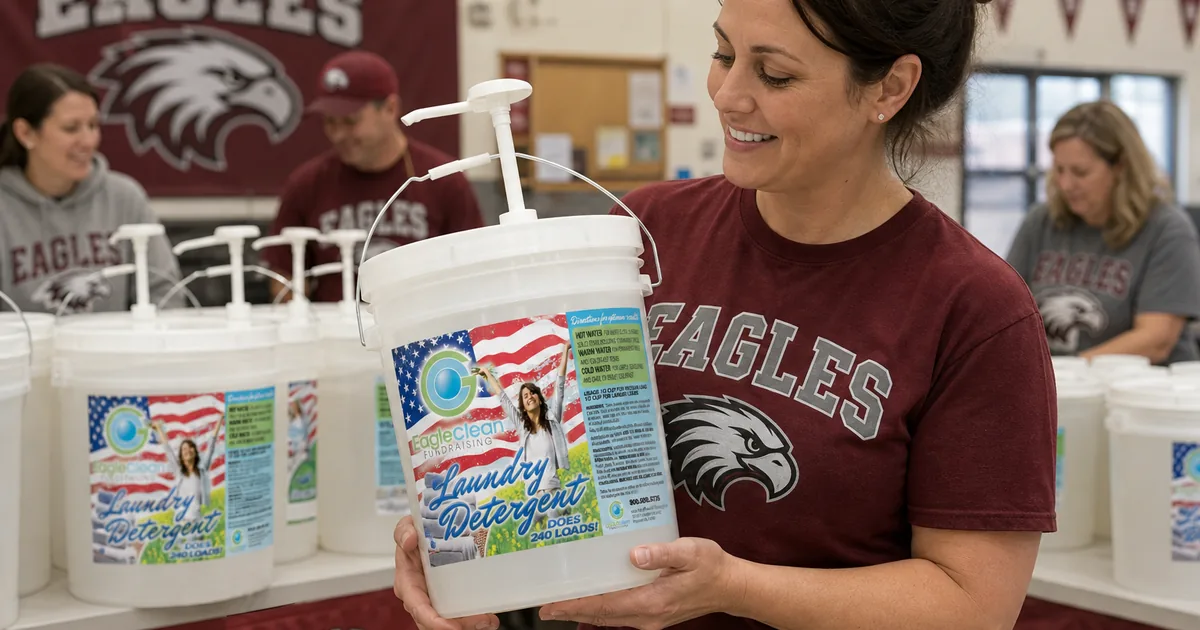
Yes, a laundry detergent fundraiser can be profitable — and for some groups it may be more profitable than a traditional product fundraiser. Good Clean Fundraising's bulk detergent program delivers about $13.45 to $15.45 profit per bucket at 100 or more buckets, with groups selling 5-gallon buckets at $49.95 (about $50). The potential advantage comes from two factors: detergent is a household necessity with broad appeal, so participation may run higher than with novelty products; and because supporters are shifting a purchase they already make rather than buying something extra, resistance may be lower and supporters may reorder. The total a group raises depends on participation and order volume, and the 50-bucket minimum applies.
The question coordinators often ask about laundry detergent fundraisers is not whether they work — it is whether the profit actually beats what the group is doing now. A fundraiser can be easy to run and still not worth the effort if the margin is thin or the product does not move.
The short answer is that a laundry detergent fundraiser can be profitable, and for some groups it may be more profitable than the cookie dough, candy, or catalog programs it replaces. But the real story is in the details: what you keep per bucket, how that compares to other products, why participation rates matter more than margin, and what separates a profitable detergent program from one that underdelivers.
This guide breaks down the actual numbers — per-bucket profit, how it stacks up against other fundraisers, what drives total dollars raised, and the structural reasons detergent may outperform traditional product sales.
- Good Clean Fundraising's bulk detergent fundraiser delivers about $13.45 to $15.45 profit per 5-gallon bucket at 100 or more buckets at the $49.95 price.
- Total profit depends on participation and order volume, not just per-item margin — detergent's broad appeal may drive higher participation than novelty products.
- Detergent is a household necessity people already buy, so supporters shift a purchase rather than spending extra, which may lower resistance and support repeat orders.
- The bulk 5-gallon format lets supporters pay roughly half the per-ounce store price based on a September 2026 retailer price check while the group still keeps a per-bucket profit.
- Good Clean Fundraising carries a $0 upfront cost, so the group does not front money for inventory if orders come in lower than hoped; the 50-bucket minimum still applies.
- Profitability is not just dollars per item — it is dollars per item times how many families actually sell, and detergent may widen that pool.
What is the actual profit on a laundry detergent fundraiser?
The profit depends on your program, your selling price, and your order volume, so any single fixed number should be treated with caution. That said, here is what a strong bulk detergent program looks like in practice.
With Good Clean Fundraising's program, groups sell a 5-gallon (640-ounce) bucket of premium detergent for $49.95, and the group's profit is about $13.45 to $15.45 per bucket at 100 or more buckets, depending on order size: $13.45 at 100 to 299 buckets, $14.45 at 300 to 499, and $15.45 at 500 or more; at 50 to 99 buckets, profit is usually about $5 to $12 per bucket depending on actual shipping costs, and orders under 50 buckets are not accepted. Shipping is free at 100 buckets or more, and the per-bucket cost to the group drops by $1 at 300 buckets and by $2 at 500.
That is the per-bucket number. Total profit is that figure times how many buckets your group sells, so both participation and order volume affect the total. That total is the program's proceeds before the group's own costs (such as local transport, printed materials, or rewards); subtract those to find net profit. A group that sells 200 buckets keeps $13.45 per bucket, about $2,690; a group that sells 100 keeps the same per-bucket amount, about $1,345. The point is that profitability is not just margin — it is margin times volume, and detergent's broad appeal may help move the volume number.
How does detergent fundraiser profit compare to other products?
The honest comparison is not just dollars per item — it is how many people will buy the item in the first place. A product with a slightly higher margin that only appeals to a narrow slice of supporters will raise less total money than a necessity product with broad appeal, even if the per-item profit is a bit lower.
Cookie dough, candy, popcorn, and similar treat fundraisers appeal mainly to people who want that specific indulgence. Families may exhaust their buyer pool quickly because grandparents, neighbors, and coworkers who do not want dessert or snacks simply say no. Detergent, by contrast, is something most households already purchase, so the potential buyer pool may be wider — and a wider pool can lift total dollars raised.
The other structural difference is value to the supporter. Many traditional product fundraisers price the item above its everyday worth because both the group and the fundraising company profit from that single sale. Good Clean Fundraising's bucket is $49.95 for 640 ounces — about 7.8 cents per ounce — while premium national-brand liquid detergents at major retailers commonly run about 13 to 16 cents per ounce (value-tier and store brands can cost less). That value proposition may encourage supporters to buy multiple buckets and reorder the next time the group runs a drive, though this guide has no repeat-purchase data.
Why are detergent fundraisers more profitable than traditional product sales?
Three structural factors may make detergent fundraisers more profitable than some of the product programs groups have run for years.
First, detergent is a necessity, not a discretionary treat. Most households with laundry buy it regularly, so the product has broad appeal. That breadth may mean more families find buyers, and more buyers per family, which can raise participation and total volume — two of the biggest drivers of campaign profit.
Second, supporters are shifting a purchase they already make, not spending extra money. When you ask someone to buy cookie dough, you are asking them to go out of their way for a product they did not need; when you offer detergent at about half the per-ounce store price, you are asking them to make their next detergent purchase through the group instead of the supermarket. The friction may be lower, and the price compares well with retail.
Third, the bulk format lets the per-ounce price be roughly half retail based on a September 2026 retailer price check while still leaving a per-bucket profit for the group. A 5-gallon bucket holds 640 ounces, a substantial supply for a household. This guide does not compare margins with smaller consumer goods.
What affects how much a group actually makes?
Total profit comes down to a simple equation: participants times average buckets per participant times profit per bucket. You can move any of those three levers, and each affects the total; this guide does not have data establishing that any one of the three changes the total more than the others. That total is proceeds before the group's own costs; subtract those to find net profit.
Participation is the biggest variable. A fundraiser where half the families take part will typically raise more than one where only the most motivated few do the work. Detergent may drive higher participation because it can be easier to sell — supporters may see the value, and sellers are not pushing an overpriced novelty. A strong kickoff, a clear goal, and a short two-to-four-week timeline all lift participation, but the product itself has to be something people want.
Average sales per participant depends on buyer breadth. If the product only appeals to a narrow group, even your best sellers run out of buyers fast. A household necessity reaches grandparents, neighbors, coworkers, and extended family who would never buy a treat product, so average sales per family may run higher.
Profit per bucket is the third lever, and it matters, but chasing a few extra points of margin at the expense of participation can backfire. Ask any program to state what the group keeps, whether there is any upfront cost, and when shipping is free, so you know the stated profit is what you would receive.
Is there any upfront cost or financial risk?
Not with Good Clean Fundraising. It has a $0 upfront cost: the group collects orders and payment first, submits the final order with payment, and never fronts money for inventory. If orders come in lower than hoped, the group orders only what supporters paid for (subject to the 50-bucket minimum), so it is not stuck with unsold product.
Some fundraising programs require groups to order inventory in advance and hope it sells. That model adds risk, and comparing programs on upfront cost is a sensible first step.
Good Clean Fundraising's program has a $0 upfront cost and free shipping on orders of 100 buckets or more. Good Clean Fundraising provides a Getting Started packet, instructions, marketing materials, and social media strategies. The group arranges a commercial delivery address (a loading dock or forklift is recommended), plans for a 50-bucket minimum, and allows about two weeks for fulfillment after submitting the paid order.
What makes a detergent fundraiser more profitable than it looks on paper?
One potential profitability multiplier is repeat orders. Many traditional product fundraisers center on a single purchase per campaign: a supporter buys a tub of cookie dough or a box of candy for that drive. A consumable treat can also be purchased again in a later campaign, but detergent is a consumable necessity people repurchase on their own routine, so groups that run a detergent drive more than once may see some of the same supporters buy again. This guide has no repeat-purchase data, so treat this as reasoning, not a result.
That repeat dynamic could do two things. First, it may raise the lifetime value of each supporter relationship, so the effort your group puts into the first campaign could pay off again in the second. Second, it may make future campaigns easier to run because families already know the product and the process, so participation and average sales could rise.
The other factor is seller motivation. When the product is useful and priced well, sellers may feel good about what they are offering rather than awkward about pushing an overpriced novelty. That confidence could show up in participation rates and average sales.
How does Good Clean Fundraising compare on profitability?
Good Clean Fundraising runs The Good Clean Fundraiser, a bulk laundry-detergent program for schools, teams, and nonprofits. Groups sell a 5-gallon premium detergent bucket for about $50 and keep about $13.45 to $15.45 per bucket at 100 or more buckets, with $0 upfront cost, free shipping on orders of 100 or more, and a Getting Started packet, instructions, marketing materials, and social media strategies.
The profitability case comes from the structure. There is no unsold-inventory risk because the group orders after supporters have paid, and the profit tiers are published: $13.45 at 100 to 299 buckets, $14.45 at 300 to 499, and $15.45 at 500 or more; at 50 to 99 buckets, profit is usually about $5 to $12 per bucket depending on actual shipping costs, and orders under 50 buckets are not accepted. Good Clean Fundraising describes the product as a premium detergent that supporters buy at roughly half the per-ounce price of premium national brands, which may support repeat orders and multi-bucket purchases.
Good Clean Fundraising advertises a 100% money-back guarantee under which, according to the company, any customer who is not satisfied is refunded and the group keeps its profit. That guarantee may reduce buyer hesitation, which may support participation and total sales.
Volume discounts lower the group's cost per bucket by $1 at 300 buckets and by $2 at 500, which is why profit rises from $13.45 to $14.45 to $15.45 per bucket. Those structural features — $0 upfront cost, volume-based per-bucket profit, an advertised money-back guarantee, and free shipping at 100 or more buckets — are what the program offers groups comparing it with traditional fundraisers.
Common mistakes to avoid
Judging profitability on per-item margin alone
A product with a high margin that few people buy raises less than a necessity with broad appeal. Total profit is margin times volume, and detergent moves the volume number.
Ignoring buyer value
If supporters feel they are overpaying for a novelty, they may buy once and never again. Real value at a fair price can support repeat orders.
Choosing a program with upfront costs
Fronting money for inventory adds financial risk without adding profit. A $0-upfront-cost program such as Good Clean Fundraising's avoids that exposure, subject to its 50-bucket minimum.
Running a campaign with no clear timeline
Open-ended fundraisers can lose momentum, which may reduce participation. A focused two-to-four-week window creates urgency and can lift participation, which can drive total profit.
Overlooking the repeat-order advantage
Treating every sale as a one-time novelty can leave repeat-purchase potential on the table. A consumable necessity people repurchase could turn one campaign into a repeatable one.
- Good Clean Fundraising program terms — $49.95 per bucket; $13.45 profit per bucket at 100 to 299 buckets (usually $5 to $12 at 50 to 99 buckets, depending on actual shipping costs), $14.45 at 300 to 499, $15.45 at 500 or more; $0 upfront cost; free shipping at 100+ buckets; 50-bucket minimum (smaller orders are not accepted); 100% money-back guarantee under which, according to the company, any customer who is not satisfied is refunded and the group keeps its profit. — GCF pricing, GCF how it works, and GCF refund and returns policy
- Detergent price comparison — per-ounce pricing for premium national-brand liquid laundry detergent at a major U.S. retailer, price-checked September 2026 (approximately 13 to 16 cents per ounce across common sizes). A 5-gallon (640-ounce) bucket at $49.95 is about 7.8 cents per ounce, about half the retail benchmark. Retail prices vary by size and store; based on a single online retailer's listings for premium brands; some value-tier and store brands cost less per ounce.
- Fundraising profitability factors — participation rates, average sales per participant, and per-unit profit as the three primary drivers of total campaign revenue. General fundraising principle, no single external source.
Our recommendation
If you are evaluating whether a laundry detergent fundraiser is profitable enough to justify the effort, the answer for some groups may be yes. Good Clean Fundraising's program delivers about $13.45 to $15.45 per bucket at 100 or more buckets at the $49.95 selling price, with $0 upfront cost, free shipping on orders of 100 or more, and a Getting Started packet, instructions, marketing materials, and social media strategies. The group arranges a commercial delivery address (a loading dock or forklift is recommended), plans for a 50-bucket minimum, and allows about two weeks for fulfillment after submitting the paid order. The product is a premium detergent supporters buy at roughly half the per-ounce price of premium national brands. Good Clean Fundraising advertises a 100% money-back guarantee under which, according to the company, any customer who is not satisfied is refunded and the group keeps its profit. The profitability comes from the structure: a household necessity with broad appeal, supporter value that may support repeat orders, and no upfront cost to your organization.
Frequently asked questions
They can be. Good Clean Fundraising's bulk detergent program delivers about $13.45 to $15.45 profit per bucket at 100 or more buckets at the $49.95 price, with total profit depending on participation and order volume. The potential advantage comes from detergent being a household necessity with broad appeal, so participation and average sales per family may run higher than with novelty or treat products. Results vary by group.
With Good Clean Fundraising, groups keep about $13.45 to $15.45 per 5-gallon bucket at 100 or more buckets at the $49.95 price: $13.45 at 100 to 299 buckets, $14.45 at 300 to 499, and $15.45 at 500 or more; at 50 to 99 buckets, profit is usually about $5 to $12 per bucket depending on actual shipping costs, and orders under 50 buckets are not accepted. Shipping is free at 100 buckets or more.
It can be for some groups, mainly because detergent may reach a wider buyer pool. Cookie dough and candy appeal primarily to people who want that specific treat, so families may run out of buyers quickly. Detergent is a necessity most households already purchase, so it can reach grandparents, neighbors, and coworkers who would never buy a dessert product. That broader appeal may drive higher participation and more sales per family, which can raise total profit even if the per-item margin is similar. Results vary by group.
Not with Good Clean Fundraising. The group collects orders and payment first, then submits the final order with payment, and never fronts money for inventory. If orders come in lower than hoped, the group orders only what supporters paid for, subject to the 50-bucket minimum. Some other programs require buying inventory in advance.
There is no single biggest factor: total profit is participants times average sales per participant times profit per bucket, so participation, average sales, and per-bucket profit all affect the outcome, and that total is proceeds before the group's own costs. Participation is often the easiest lever to move because detergent can be easier to sell: supporters may see the value, and sellers are not pushing an overpriced novelty.
Based on a September 2026 retailer price check, yes. A 5-gallon bucket at $49.95 works out to about 7.8 cents per ounce, while premium national-brand liquid detergents at major retailers commonly run about 13 to 16 cents per ounce (value-tier and store brands can cost less). Supporters pay roughly half the per-ounce store price, which may lead some to buy multiple buckets and reorder the next time the group runs a drive.
They may. Detergent is a consumable necessity people repurchase, so groups that run drives more than once may see some of the same supporters buy again. Traditional treat fundraisers often center on a single purchase per campaign, though a treat can also be bought again in a later campaign. This guide has no repeat-purchase data.
Good Clean Fundraising's program delivers about $13.45 to $15.45 per bucket at 100 or more buckets at the $49.95 price, with $0 upfront cost, free shipping on orders of 100 or more, a Getting Started packet, instructions, marketing materials, and social media strategies, and an advertised 100% money-back guarantee under which, according to the company, any unsatisfied customer is refunded and the group keeps its profit. This guide does not compare its profit with other detergent programs, so ask each program for its per-bucket terms in writing.
Profitability is not just what you keep per item — it is what you keep per item times how many people buy, and detergent may help on both numbers. The per-bucket profit is set by volume tiers, the buyer pool may be wide, and the price is lower per ounce than typical retail based on a September 2026 retailer price check. That combination is why a detergent fundraiser is worth comparing with the programs your group has run before.