
Product Fundraising: What to Sell
Fundraising Products With High Perceived Value
Why supporters pay more for products they see as worth it — and which fundraisers deliver the best combination of real value, broad appeal, and profit.
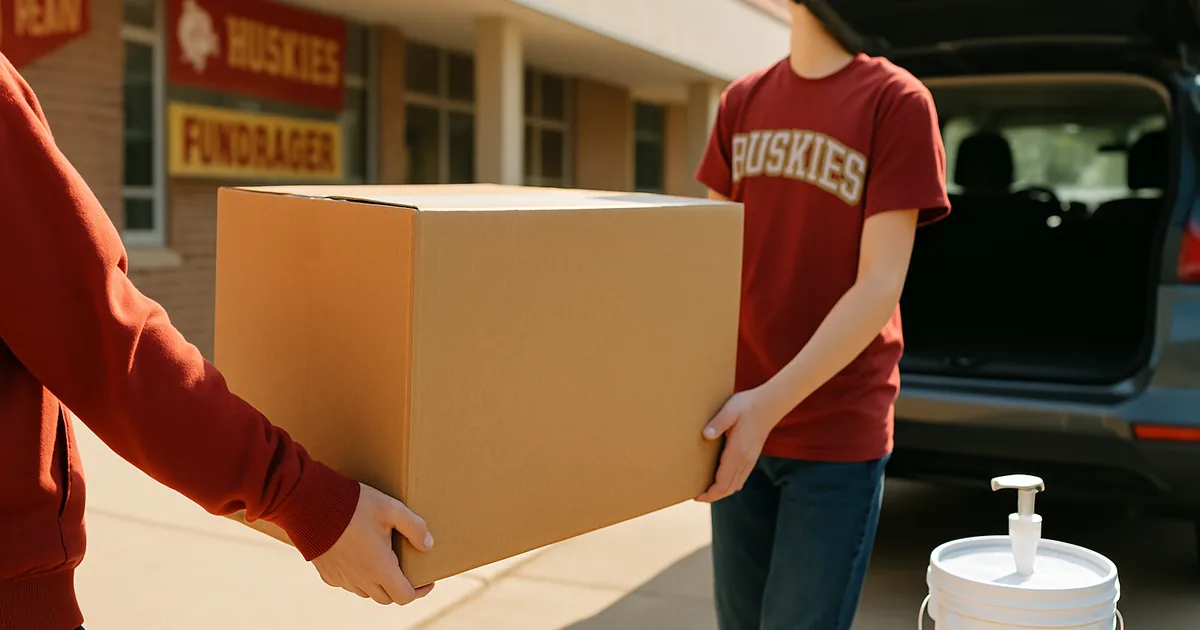
The fundraising products with the highest perceived value are household necessities people already buy — especially bulk laundry detergent and cleaning supplies — because supporters may pay about half the per-ounce price of premium national brands for something genuinely useful while backing the group. Perceived value is the gap between what a supporter pays and what they believe they're getting: when that gap is wide and positive, participation rises and buyers feel good about the purchase. Novelty items like cookie dough or candles typically carry low perceived value because they're marked up well above everyday worth so both the group and the vendor can profit. A bulk household-necessity fundraiser flips that model: supporters get a product at a lower per-ounce price than premium national brands, the group keeps a strong per-unit profit, and no one feels like they overpaid for something they didn't need.
Perceived value is one of the biggest factors separating fundraisers that families enthusiastically support from the ones they politely avoid. It's not about the actual cost of the product — it's about whether a supporter feels they're getting something worth what they're paying, or better yet, worth more than they're paying.
When perceived value is high, people buy more, tell their friends, and come back for repeat campaigns. When it's low — when a tub of cookie dough is priced well above its everyday value, or a candle is obviously marked up — supporters may buy out of obligation, not enthusiasm, and participation may drop over time.
This guide explains what perceived value actually means in fundraising, why it matters more than profit margin, which product categories score highest, how household necessities often outperform novelties, and how to choose a fundraiser where supporters genuinely feel they got a good deal.
- Perceived value is the gap between what a supporter pays and what they believe they're getting — the wider and more positive that gap, the higher participation climbs.
- Household necessities like laundry detergent deliver high perceived value because supporters may pay roughly half the per-ounce price of premium national brands for something they already buy and use.
- Novelty items typically carry low perceived value because they're marked up well above everyday worth so both the group and the vendor profit off one sale.
- High perceived value drives repeat participation — supporters who feel they got real value buy again next year.
- A product's usefulness, price transparency, and whether it saves the buyer money all contribute to perceived value.
- The best fundraising products combine high perceived value for the supporter with strong per-unit profit for the group.
- When supporters shift a purchase they were already going to make, perceived value is automatically higher than when they buy something extra they didn't need.
What is perceived value in fundraising?
Perceived value is what a supporter believes they're getting compared to what they're paying. It's not the product's actual cost to manufacture or the group's profit margin — it's the buyer's gut sense of whether the deal is fair, good, or great.
In fundraising, perceived value decides whether someone buys enthusiastically or reluctantly. A supporter who pays $49.95 for a 5-gallon bucket of laundry detergent that could cost roughly twice that per ounce at the store in premium national-brand liquid detergent may feel they got a great deal and helped the team. A supporter who pays the same amount for a small tub of cookie dough they didn't need feels like they donated money and got stuck with dessert.
The math is simple: high perceived value = enthusiastic buyers and strong participation. Low perceived value = obligation purchases and declining participation over time.
Why does perceived value matter more than profit margin?
A fundraiser can have a high profit margin and still raise less than one with a lower margin, and perceived value can be why. Total dollars raised equals participants times average sales per participant times profit per item. Coordinators often focus on that last term — profit per item — and overlook the first two, which are influenced heavily by perceived value.
When supporters see genuine value, more families participate and each finds more buyers. A product with a slightly lower per-unit margin but twice the participation can raise more than a high-margin item only a handful of families can sell. In our editorial view, groups may do best by maximizing perceived value first and profit margin second.
This is why household-necessity fundraisers can beat novelty products even when the per-item profit is comparable: the buyer pool is wider, repeat purchases are common, and supporters feel good about every transaction instead of guilty about one.
Which fundraising products have the highest perceived value?
The products that score highest on perceived value share four traits: people already buy them regularly, the price is transparently lower than retail, the product is genuinely useful, and supporters can easily compare it to what they'd pay elsewhere. Household necessities — laundry detergent, cleaning supplies, paper products — check all four boxes.
Bulk laundry detergent is the standout example. A 5-gallon bucket holds 640 ounces and sells for $49.95, which works out to roughly 7 to 8 cents per ounce. Premium national-brand liquid detergents typically run about 13 to 16 cents per ounce, so a supporter may pay about half the per-ounce price of premium national brands. Value-tier and store brands can cost less. The value is immediate, transparent, and real — no guessing whether a candle or cookie dough tub is 'worth it.'
Other high-perceived-value categories include consumable household products people repurchase, reusable practical items that replace disposable ones, and seasonal necessities like firewood or mulch. What they all share is that supporters are shifting a purchase they were already going to make, not adding a discretionary expense.
How do household necessities compare to novelty fundraisers on perceived value?
The gap can be wide. Novelty fundraisers — cookie dough, candles, popcorn, wrapping paper — are marked up well above their everyday value because both the group and the fundraising company have to profit off that single sale. A supporter paying a premium for something they didn't need and wouldn't normally buy feels the markup, even if they don't say it out loud.
Household necessities flip the model. The product is something the supporter was going to purchase anyway, the fundraising price is lower than retail, and the group still keeps a strong margin because the product is sold in bulk and shipped efficiently. The supporter saves money, gets something useful, and backs the group — all three at once. That's high perceived value.
This is one reason groups that switch from cookie dough or candles to a detergent or household-staple fundraiser may see higher participation and larger totals: a wider perceived-value gap can mean more people buy and each buys more.
What makes Good Clean Fundraising's program a high-perceived-value fundraiser?
Good Clean Fundraising runs The Good Clean Fundraiser, a bulk laundry-detergent program built specifically to maximize perceived value while delivering strong group profit. Groups sell a 5-gallon pump bucket of detergent for $49.95 — roughly 7 to 8 cents per ounce — while typical premium national-brand liquid detergents commonly run about 13 to 16 cents per ounce. Supporters pay about half the per-ounce retail price for a household staple they already buy, and the group keeps about $13.45 to $15.45 per bucket at 100 or more buckets, depending on order volume.
The perceived value is transparently high: every supporter can compare the per-ounce price to what they pay at the store and see the savings immediately. They're not guessing whether a novelty item is 'worth it' — they're stocking up on something they need at a genuinely better price. That clarity drives participation.
Beyond the product economics, Good Clean Fundraising advertises a 100% money-back guarantee under which, according to the company, any unsatisfied customer is refunded and the group keeps its profit.
There's no upfront cost to the group, free shipping on orders of 100 buckets or more, and the company provides a Getting Started packet, instructions, marketing materials, and social media strategies. For supporters, it's a great deal on a necessity. For the group, it's a high-perceived-value fundraiser that raises more because more people want to buy.
How do you evaluate perceived value before choosing a fundraiser?
Ask four questions. First, would a supporter buy this product at this price if there were no fundraiser attached? If the answer is no, perceived value is low. Second, can the supporter easily compare the price to what they'd pay elsewhere? Transparent pricing builds trust; opaque pricing erodes it. Third, is this something people already buy and use, or a one-time novelty? Repeat-use products score higher. Fourth, does the supporter feel they're getting real value, or are they paying a premium out of obligation?
Run the test with your own wallet: if you wouldn't buy it at that price for yourself, most of your supporters won't either. High perceived value means the product is genuinely worth buying independent of the fundraiser — the group connection just makes it an easy yes.
Does high perceived value lead to repeat participation?
Often, and it is a plausible pattern in fundraising: supporters who feel they got real value the first time may buy again the next year, sometimes without being asked. Groups running household-necessity fundraisers may see supporters reorder because the value proposition stays the same: they need the product, the price can be better than retail, and they're helping the group.
Novelty fundraisers, by contrast, tend to see participation drop over time. A supporter who bought overpriced cookie dough once out of obligation is less likely to buy again, and families stop asking. High perceived value creates a virtuous cycle; low perceived value creates fundraiser fatigue.
| Factor | High Perceived Value | Low Perceived Value |
|---|---|---|
| Product type | Household necessity | Novelty item or treat |
| Price transparency | Easily compared to retail | Opaque or hard to compare |
| Supporter savings | About half the premium-brand per-ounce price | Marked well above worth |
| Repeat purchases | Consumable, bought again | One-time novelty |
| Buyer enthusiasm | Feel they got a deal | Obligation purchase |
| Participation trend | Stable or growing | Declines over time |
Common mistakes to avoid
Chasing margin over perceived value
A high per-item profit means nothing if only a handful of families can sell it. Maximize perceived value first; participation can lift your total more than a few extra dollars per sale.
Choosing products with opaque pricing
If a supporter can't easily compare your price to retail, trust drops and perceived value falls. Transparent pricing builds confidence.
Selling novelties instead of necessities
Novelty items are a hard sell because supporters don't need them and the markup is obvious. Necessities sell themselves because people were buying them anyway.
Ignoring the supporter's perspective
Run the wallet test: if you wouldn't buy it at that price, most supporters won't either. Perceived value is always from the buyer's point of view, not the organizer's.
Overlooking repeat-use products
One-time novelties cap your long-term fundraising potential. Consumables people repurchase create a base of repeat supporters who buy every year.
- Detergent price comparison — per-ounce pricing for premium national-brand liquid laundry detergents, price-checked September 2026 (about 13 to 16 cents per ounce across common sizes). A 5-gallon (640 oz) bucket at $49.95 is about 7.8 cents per ounce. Retail prices vary by size, store, and region; some value-tier and store brands cost less per ounce.
- Good Clean Fundraising program terms — $49.95 per bucket; $13.45 profit per bucket at 100 to 299 buckets (usually $5 to $12 at 50 to 99 buckets, depending on actual shipping costs), $14.45 at 300 to 499, $15.45 at 500 or more; $0 upfront cost; free shipping at 100+ buckets; 50-bucket minimum (smaller orders are not accepted); 100% money-back guarantee under which, according to the company, any customer who is not satisfied is refunded and the group keeps its profit. — GCF pricing, GCF how it works, and GCF refund and returns.
- Perceived value in consumer behavior — the gap between what a buyer pays and what they believe they receive, a core concept in marketing and behavioral economics. No single authoritative source; this is established theory applied to fundraising context.
Our recommendation
If you want a fundraiser where supporters genuinely feel they're getting a great deal — and where that feeling drives participation and repeat sales — choose a household-necessity product with transparent pricing and real savings. Good Clean Fundraising's bulk laundry-detergent program is built exactly for this: supporters pay $49.95 for a 5-gallon bucket (roughly 7 to 8 cents per ounce) of detergent, about half the per-ounce price of typical premium national-brand liquid detergents, and your group keeps about $13.45 to $15.45 per bucket at 100 or more buckets. Good Clean Fundraising advertises a 100% money-back guarantee under which, according to the company, any unsatisfied customer is refunded and the group keeps its profit. There's a $0 upfront cost, free shipping on orders of 100 or more, and a Getting Started packet, instructions, and marketing materials. It is one of the higher-perceived-value fundraisers, and groups that switch to it may raise more because more people want to buy.
Frequently asked questions
High perceived value fundraising products are items supporters believe are worth more than what they're paying — typically household necessities like laundry detergent or cleaning supplies sold at roughly half the per-ounce price of premium national brands. The supporter gets something genuinely useful at a better price than the store, and the group still keeps a strong profit.
Because total dollars raised equals participants times average sales per participant times profit per item. Perceived value drives the first two terms — how many people participate and how much each sells. A product with slightly lower margin but twice the participation can raise more than a high-margin item only a few families can sell.
Household necessities people already buy — especially bulk laundry detergent, cleaning supplies, and paper products — because supporters pay transparently less than retail for something they need and use. A 5-gallon detergent bucket at $49.95 works out to roughly 7 to 8 cents per ounce, about half the per-ounce price of typical premium national-brand liquid detergents.
Household necessities can deliver higher perceived value because supporters are shifting a purchase they were already going to make and paying less than retail. Novelty items like cookie dough or candles are marked up well above everyday worth so both the group and the vendor profit, and supporters feel the markup even if they don't say it.
Often, because they can drive higher participation and more sales per family. When supporters feel they're getting real value, more families take part and each finds more buyers. Groups that switch from novelty fundraisers to household necessities may see larger totals because the buyer pool can widen and repeat participation can rise.
Ask whether a supporter would buy the product at that price if there were no fundraiser attached. If the answer is yes — because the price is transparently lower than retail and the product is something they need — perceived value is high. If they'd only buy it out of obligation, perceived value is low.
Laundry detergent is a household necessity every family already buys, and bulk fundraising programs sell it at about half the per-ounce price of premium national brands. Supporters see immediate, transparent savings on something they use regularly, so the value is obvious and the purchase feels smart, not obligatory.
Often. Supporters who feel they got real value the first time may buy again the next year, sometimes without being asked. Groups running household-necessity fundraisers may see stable or growing participation over time, while novelty fundraisers may see participation drop as supporters tire of overpriced items they don't need.
Good Clean Fundraising sells a 5-gallon bucket of laundry detergent for $49.95 — roughly 7 to 8 cents per ounce — while typical premium national-brand liquid detergents commonly run about 13 to 16 cents per ounce. Supporters may pay about half the per-ounce price of premium national brands for a household staple, and the company advertises a 100% money-back guarantee under which, according to the company, any unsatisfied customer is refunded and the group keeps its profit.
Yes. Good Clean Fundraising's detergent program delivers both: supporters may pay about half the per-ounce price of premium national brands, and groups keep about $13.45 to $15.45 per bucket at 100 or more buckets, depending on order volume. High perceived value and strong group profit aren't opposites — the best fundraisers aim to deliver both, for example by selling in bulk.
Perceived value is the difference between a fundraiser supporters enthusiastically back and one they politely tolerate. When the gap between price and worth is wide and positive — when people feel they're getting something genuinely valuable for less than they'd pay elsewhere — participation rises, sales grow, and supporters come back year after year. Choose a product that delivers that, and the fundraising gets easier every time you run it.