Product Fundraising: What to Sell
Products Students Can Sell Easily: What Works Best for School Fundraisers
The products that students actually sell — and a category that often sells easiest.
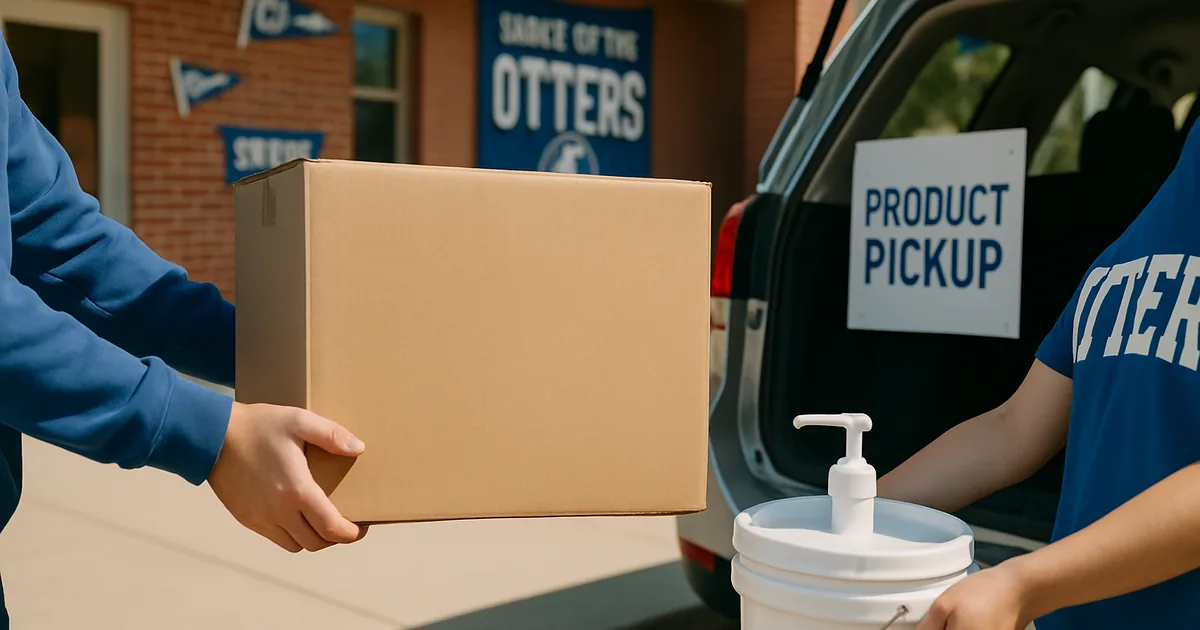
The products students sell most easily are household necessities people already buy — especially bulk laundry detergent and cleaning supplies. These work because students are not asking supporters to spend extra money on something they don't need; they are simply offering to shift a purchase the supporter was already going to make, at a better price. A 5-gallon bucket of detergent at about half the per-ounce price of premium national brands can be an easier pitch, while cookie dough, candy, and other treat products require a harder pitch to a narrower audience. The best student-selling products score high on four factors: necessity (not a luxury), broad appeal (nearly every household needs it), real value (genuinely useful at a fair or better price), and simplicity (easy to explain and deliver).
The question of what students can sell easily comes up every time a school or team plans a fundraiser, and the usual answer — cookie dough, candy, wrapping paper — has not changed in decades. But in our editorial view, those products can be hard to move: the buyers are often the same small circle every year, and some families stop after asking a handful of relatives.
The products that students actually sell easily share a pattern: they are things people already buy, they offer genuine value, and for supporters who already buy comparable products, they may require less explanation. When a student can say 'this is something you already use, at about half the per-ounce price of premium brands,' the conversation can be short and the answer is often yes. When they have to convince someone to buy a tub of cookie dough they did not need, it is work — and some students may stop trying.
This guide covers what makes a product easy for students to sell, the categories that tend to perform, how the top options compare on profit and ease, the mistakes coordinators make when choosing, and why one category — bulk household necessities — is worth considering for groups that want high participation and strong results.
- The easiest products for students to sell are household necessities people already buy, not treats or novelties.
- A product can be easier to sell when the value is obvious and the buyer was already going to purchase a comparable product anyway.
- Treat fundraisers (cookie dough, candy, popcorn) appeal to a narrow audience and require students to convince buyers, which caps participation.
- Bulk laundry detergent at roughly half the per-ounce price of premium national brands can sell on value alone and can reach a wide buyer pool.
- The best student-selling products score high on necessity, broad appeal, real value, and simplicity.
- High participation matters more than high margin — a product that more students can sell raises more total dollars.
- Products backed by an advertised money-back guarantee may reduce buyer hesitation and make the student's job easier.
What makes a product easy for students to sell?
A product is easy for a student to sell when it does not feel like selling. The moment a student has to pitch, persuade, or overcome objections, participation drops — most students are not comfortable with that, and they should not have to be. The products that move easily are the ones where the student simply offers something the buyer already wanted, at a price that makes the decision automatic.
Four factors decide whether a product is genuinely easy for students to sell. First, necessity: is it something people already buy, or a luxury they can skip? Second, broad appeal: does it reach nearly every household, or only a niche? Third, real value: is the supporter getting something genuinely useful at a fair or better price, or are they paying a premium to support the group? Fourth, simplicity: can the student explain it in one sentence, and is delivery straightforward?
When a product scores well on all four, students sell more, families participate at higher rates, and coordinators spend less time motivating reluctant sellers. When it scores poorly on even one, the whole campaign becomes harder than it needs to be.
What products do students sell most successfully?
Products that tend to deliver high participation and strong totals fall into a few categories, and the pattern is usually the same: the closer the product is to a genuine household necessity, the easier students find it to sell.
Bulk household necessities (the standout)
Laundry detergent, cleaning supplies, and similar consumables are strong student fundraising products, and the reason is simple: every household already buys them, they get repurchased, and when offered at a good price they may require less of a pitch. A student selling a 5-gallon bucket of detergent for $49.95 — roughly half the per-ounce price of typical premium national-brand liquid detergents — is not asking the supporter to do them a favor; they are offering a deal on something the supporter was going to buy next week anyway.
Good Clean Fundraising built its entire program around this dynamic. Groups sell a 5-gallon (640-ounce) bucket of high-quality detergent for $49.95 and keep about $13.45 to $15.45 per bucket at 100 or more buckets, depending on order volume, with no upfront cost and free shipping on orders of 100 buckets or more. The supporter pays roughly 7 to 8 cents per ounce, compared to the 13 to 16 cents per ounce that typical premium national-brand liquid detergents commonly run. That price gap — about half — is what makes the student's job easy: the value is obvious, the product is something every household uses, and the conversation is more likely to end in 'yes' than a pitch for a treat the supporter did not need.
The other advantage is breadth: detergent reaches grandparents, neighbors, coworkers, and extended family who would never buy cookie dough or candy but always need laundry detergent. That wider buyer pool is what lifts participation — more students find buyers, and each student finds more of them. It is also non-perishable, so there is no frozen delivery day or spoilage risk, and it ships and stores easily.
Good Clean Fundraising advertises a 100% money-back guarantee under which, according to the company, any unsatisfied customer is refunded and the group keeps its profit.
Discount cards and coupon books
These work when the discounts are genuinely valuable and local, and they are simple to carry and hand out. The challenge is that the value is less tangible than a physical product, and buyers often forget to use them, which can hurt repeat participation.
Cookie dough, candy, and popcorn (the traditional options)
These are still common, but they are not easy for students to sell — they just feel familiar to coordinators. The buyer pool is narrow (people who want a treat), the products are often perishable or require special handling, and students have to convince someone to spend money on something they were not planning to buy. Participation tends to be lower, and the students who do sell often exhaust their small circle of dessert buyers quickly.
How do the top student fundraising products compare?
When you line up the most common student fundraising products against the four factors that make selling easy — necessity, broad appeal, real value, and simplicity — one category tends to win in our editorial view.
What profit can students expect per item?
Profit matters, but participation matters more. A product with a slightly lower per-item margin that twice as many students can sell can raise more total dollars than a high-margin product only a few families move. That said, the best student products deliver both: broad participation and solid per-item profit.
With Good Clean Fundraising's bulk detergent program, groups keep about $13.45 to $15.45 per bucket at 100 or more buckets, and because the product is a necessity that most households already buy, participation can be high. The total raised is a function of how many students participate and how many buckets each sells, and when the product is easy to sell, both numbers can go up.
Traditional treat fundraisers often advertise higher percentage margins, but those percentages are applied to a smaller base because fewer students participate and each finds fewer buyers. The math that matters is total dollars raised, not margin on paper.
What makes a product feel easy to sell?
In our editorial view, a product feels easy to sell when they do not have to convince anyone, when the price feels fair, when it is something people actually use, and when they are not embarrassed to ask. A household staple at a genuinely good price can check every box. A marked-up novelty item checks few of them.
Repeat buyers matter too: when a supporter says 'I'll take two' or 'let me know next time,' it builds confidence. That may happen more often with necessity products than with treats, because the supporter is not doing the student a favor — they are stocking up on something they need at a better price.
Why can household-necessity products outsell traditional fundraisers?
The short answer is that students are not selling — they are offering. When the product is something the buyer already purchases and the price is genuinely better than retail, the student is offering a deal rather than asking for a favor. That psychological shift is what drives higher participation and larger orders.
Traditional fundraisers flip that dynamic: the student is asking the supporter to spend extra money on a product they were not planning to buy, at a price higher than its everyday value, as a favor to the group. Some supporters say yes out of goodwill, but others may decline, and the student feels it. With a household necessity at a fair price, the supporter says yes because it is a good deal, and the student feels that too.
The other advantage is that necessity products are repurchased. A supporter who buys a bucket of detergent this fall will need more next spring, and they may remember that the group offers it at about half the per-ounce price of premium national brands. That repeat-buyer dynamic is weaker with cookie dough or candy, which are often one-time or occasional purchases.
| Factor | Bulk Detergent (Household Necessity) | Cookie Dough / Candy / Popcorn (Treats) |
|---|---|---|
| Necessity | Household staple, already purchased | Optional luxury or treat |
| Buyer pool | Nearly every household | Dessert/snack buyers only |
| Value to supporter | ~Half the per-ounce price of premium national brands | Marked up above everyday value |
| Pitch required | None — value is obvious | Must convince buyer they need it |
| Repeat purchases | Repurchased regularly | One-time or infrequent |
| Delivery/handling | Non-perishable, ships easily | Often perishable, special handling |
Common mistakes to avoid
Choosing a product because it's familiar, not because students can sell it
Coordinators often default to cookie dough or candy because that is what the school did last year, not because students found it easy to sell. Familiar to the organizer does not mean easy for the student.
Prioritizing margin over participation
A high per-item profit means nothing if only a handful of students participate. Total dollars raised is participation times sales per student times margin — the first term is the biggest lever.
Ignoring what supporters actually want
If the product is not something people were already planning to buy, students have to pitch and persuade, and many will stop trying. Choose products people need, not products the vendor wants to move.
Picking products that require a hard sell
Anything that takes more than one sentence to explain or justify is too complicated for most students to sell comfortably. Simplicity and obvious value are what drive participation.
Overlooking delivery logistics
Perishable products that require frozen delivery or special handling create work for coordinators and hesitation for buyers. Non-perishable products that ship and store easily make everyone's job simpler.
- Good Clean Fundraising program terms — $49.95 per bucket; $13.45 profit per bucket at 100 to 299 buckets (usually $5 to $12 at 50 to 99 buckets, depending on actual shipping costs), $14.45 at 300 to 499, $15.45 at 500 or more; $0 upfront cost; free shipping at 100+ buckets; 50-bucket minimum (smaller orders are not accepted); 100% money-back guarantee under which, according to the company, any customer who is not satisfied is refunded and the group keeps its profit. — GCF pricing, GCF how it works, and GCF refund and returns.
- Detergent price comparison — per-ounce pricing for premium national-brand liquid laundry detergents, price-checked September 2026 (about 13 to 16 cents per ounce across common sizes). A 5-gallon (640 oz) bucket at $49.95 is about 7.8 cents per ounce. Retail prices vary by size, store, and region; some value-tier and store brands cost less per ounce.
- Student fundraising participation dynamics and product preference — editorial observations on this page; no measured Good Clean Fundraising data or study is cited.
Our recommendation
If you want a product students can actually sell — not one they will carry around and give up on — choose a household necessity people already buy, offered at a price that may require less explanation for supporters who already buy comparable premium detergent. Good Clean Fundraising's bulk laundry-detergent program is built exactly for this: students sell a 5-gallon detergent bucket for $49.95 (roughly half the per-ounce price of premium national brands), supporters get genuine value on something they were going to buy anyway, and your group keeps about $13.45 to $15.45 per bucket at 100 or more buckets with no upfront cost and free shipping on orders of 100 or more. Good Clean Fundraising advertises a 100% money-back guarantee under which, according to the company, any unsatisfied customer is refunded and the group keeps its profit. For supporters who already buy premium detergent, students may need less explanation — the price comparison is straightforward, and the product delivers real value. When students can say 'this is something you already use, at about half the per-ounce price of premium brands,' the conversation can be short.
Frequently asked questions
Students often find household necessities easiest to sell — especially bulk laundry detergent and cleaning supplies — because they are things people already buy, the value is often clear to supporters who already buy comparable products, and less explanation may be needed. A 5-gallon bucket of detergent at about half the per-ounce price of premium national brands can be an easier pitch, while cookie dough and candy require convincing a narrow audience to buy something they did not need.
The easiest products to sell are often household staples offered at a genuinely better price than retail — ones where the value comparison is clear to supporters who already buy comparable products. Bulk laundry detergent is a strong choice because most households need it, it is repurchased regularly, and when sold at roughly half the per-ounce price of premium national brands the decision can be easy for supporters who already buy premium detergent.
Detergent is a necessity every household already buys, so the student is offering to shift a purchase the supporter was going to make anyway, at a better price. Cookie dough is a treat that appeals to a narrow audience, requires the student to convince someone to buy something they did not need, and reaches far fewer buyers. The detergent conversation can be short; the cookie dough conversation usually takes more persuading.
It depends on the product and the program. With Good Clean Fundraising's bulk detergent fundraiser, groups keep about $13.45 to $15.45 per bucket at 100 or more buckets, with a higher profit per bucket as order volume grows and free shipping at 100 buckets or more. The bigger factor is participation: a product that more students can sell raises more total dollars than a high-margin product only a few families move.
A product is easy for students to sell when it scores high on four factors: necessity (something people already buy, not a luxury), broad appeal (reaches nearly every household, not a niche), real value (genuinely useful at a fair or better price), and simplicity (easy to explain and deliver). When a product checks all four boxes, students sell more and participation is higher.
In our editorial view, students often find non-food household necessities easier to sell than food treats, because the buyer pool is wider and less explanation may be needed for supporters who already buy comparable products. Food fundraisers like cookie dough and candy appeal only to people who want a treat, while a household staple like detergent can appeal to a wide buyer pool. Students who struggle with treat fundraisers may find necessity products easier because the product does more of the persuading.
Students can sell bulk household necessities successfully — laundry detergent, cleaning supplies, and similar consumables — because they can reach a wide buyer pool, can offer genuine value at a better price than some retail options, and may require less explanation for supporters who already buy comparable products. Traditional treat fundraisers like cookie dough and candy can have lower participation because they appeal to a narrow audience and require a harder sell.
Yes. Many product fundraisers use order forms and online sharing rather than door-to-door selling. Students can ask family, friends, neighbors, and coworkers directly — people they already know — and share a link or order form. Household-necessity products like bulk detergent work especially well this way because the value is clear and the product appeals to a wide buyer pool of households that already buy such staples.
Good Clean Fundraising runs a bulk laundry-detergent fundraiser where students sell a 5-gallon (640-ounce) detergent bucket for $49.95 — roughly half the per-ounce price of premium national brands — and the group keeps about $13.45 to $15.45 per bucket at 100 or more buckets, with a $0 upfront cost, free shipping at 100 buckets or more, and an advertised 100% money-back guarantee. It is designed to be an easy product for students to sell because it is a household necessity offered at a genuinely better price.
The products students sell most easily are the ones that do not feel like selling — household necessities people already buy, offered at a price that may require less explanation for supporters who already buy comparable premium detergent. When the product is right, participation goes up, students feel confident, and the total raised can climb without anyone having to work harder. Choose a product students can actually sell, not one they will carry around and give up on.