Scouts, 4-H, FFA & Youth Organizations
Eagle Scout Project Fundraising Ideas That Actually Work
Smart, practical fundraising strategies for Eagle Scout service projects — from choosing the right approach to hitting your goal without overwhelming your troop.
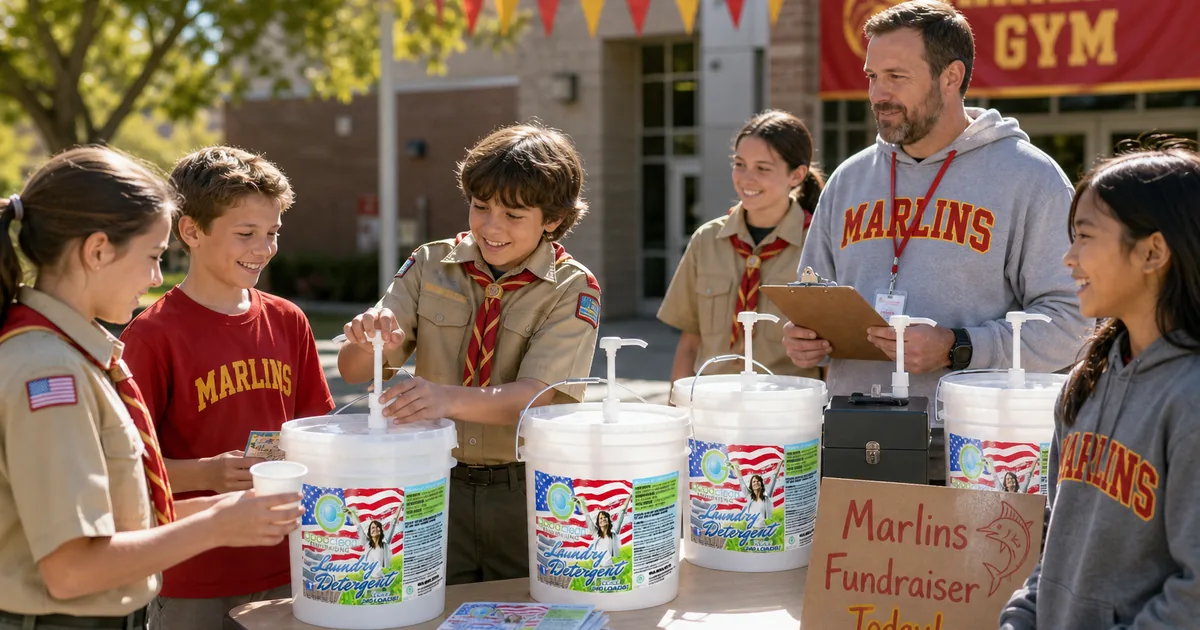
The most effective Eagle Scout project fundraisers share three traits: they sell something people genuinely need rather than a novelty, they require no upfront money so the Scout takes on no inventory financial risk, and they are simple enough to run alongside school and other commitments. Household-necessity products like laundry detergent can reach a much wider buyer pool than traditional treat fundraisers — grandparents, neighbors, and coworkers who would never buy cookie dough but always need detergent — and supporters get real value at roughly half the per-ounce price of premium national brands. Programs that provide simple instructions and materials let the Scout spend more time on the service work itself. When choosing, weigh buyer breadth, profit per unit, upfront cost, time commitment, and whether the program aligns with Scouting values of service and integrity.
Earning Eagle Scout rank means planning and leading a service project that benefits your community — and for most Scouts, that means raising the money to fund it first. Project fundraising generally needs council approval, and any leftover funds go to the project beneficiary, so confirm the current rules with your council and the Eagle Scout Service Project Workbook before you start. Whether you need a few hundred dollars for materials or several thousand for a larger build, the fundraiser you choose will decide how much time you spend selling versus actually doing the project work.
The challenge is that most Scouts are juggling school, other activities, and the project itself, so a fundraiser that demands weeks of door-to-door selling or complex event logistics can quietly derail the whole timeline. The programs that work best are the ones that are simple to run, carry no financial risk, and sell something people actually want to buy.
This guide covers what makes a good Eagle Scout project fundraiser, the strongest options available, how to choose based on your timeline and goal, real profit expectations, and the mistakes that trip up Scouts who are running their first campaign.
- The best Eagle Scout fundraisers sell household necessities people already buy, not novelty treats with a narrow buyer pool.
- No-upfront-cost programs remove financial risk — helpful when a Scout is responsible for running the campaign.
- Household-staple fundraisers reach buyers who would never purchase a dessert product, which widens participation.
- A program that provides instructions and materials can help the Scout focus on the service project instead of logistics.
- Most successful Eagle project fundraisers run in two to four weeks, not months.
- Profit matters, but participation and ease of selling matter more — a simple product more families will support raises more than a high-margin item few people want.
- Choose a fundraiser that aligns with Scouting values: honest value for supporters, integrity in the ask, and a focus on service over sales pressure.
What makes a good Eagle Scout project fundraiser?
A good Eagle project fundraiser is one the Scout can run without it becoming a second full-time job. That means weighing five factors: how many people will actually buy the product, what the Scout keeps per sale, whether there is any upfront cost or financial risk, how much time it takes to manage, and whether it aligns with the values Scouting teaches.
The programs that often work well score high on all five. They sell something with broad appeal so the Scout is not burning through their contact list in the first weekend, they carry a decent margin so fewer sales are needed to hit the goal, they require no money up front so the Scout is not left covering costs if the campaign falls short, they are simple enough to run alongside school and the project itself, and they let the Scout make an honest ask — supporters get real value, not an overpriced novelty.
What are the best fundraising ideas for Eagle Scout projects?
Measured against those five factors, a few categories rise to the top. Here are options that tend to be easy to run and suited to hitting a goal.
Household-necessity product fundraisers
Selling a consumable household staple — laundry detergent, cleaning products, paper goods — is the standout choice for Eagle projects because it solves the two biggest problems Scouts face: a narrow buyer pool and the awkwardness of asking people to buy something they do not need. A necessity product reaches nearly every household, gets repurchased, and gives supporters genuine value instead of asking them to overpay for a treat.
Bulk laundry detergent fundraisers are one option worth considering for Eagle projects. A Scout sells a 5-gallon bucket for $49.95 — roughly half the per-ounce price of premium national brands — and the project fundraiser keeps about $13.45 to $15.45 per bucket at 100 or more buckets, depending on order volume, with free shipping on orders of 100 or more. The buyer gets a product they were going to purchase anyway at a genuinely good price, the Scout makes an honest ask, and the margin is strong enough that a modest-sized project may reach its goal within a few weeks.
The other advantage is logistics: most programs provide a Getting Started packet, instructions, marketing materials, and social media strategies. That keeps the focus on the service project itself, which is the whole point of the rank.
Car washes and community service events
A well-organized car wash or yard-work day can raise several hundred dollars in a weekend and double as a visible demonstration of the Scout's leadership and service ethic. The profit per transaction is modest, but the community engagement is high, and it gives the Scout a chance to explain the project face-to-face.
The downside is time and weather dependence. A car wash requires recruiting a crew, securing a location, promoting the event, and hoping it does not rain. For a Scout with a tight timeline or a higher dollar goal, it is often a supplement rather than the primary fundraiser.
Direct donation campaigns
Some Scouts run a straightforward donation drive — letters, emails, or an online platform where supporters contribute directly to the project. This works well when the Scout has a strong personal network and can clearly articulate the project's community impact.
The challenge is that many supporters prefer to get something tangible for their money, so a donation-only approach often raises less than a product fundraiser where buyers feel they received real value. It is most effective when combined with another method or when the project has a compelling story that resonates widely.
Traditional product fundraisers: popcorn, cookie dough, candy
Scouting popcorn is a familiar option, and some troops default to it because it is a known quantity. The margin can be decent, but the buyer pool is narrow — it is a treat product, so it mainly appeals to people who want a snack, and many families hit buyer fatigue after years of the same catalogs.
Cookie dough and candy face the same limitation: they are non-necessities that require a freezer or have a short shelf life, and they ask supporters to pay a premium for something they did not need in the first place. For an Eagle project with a specific dollar goal and a firm deadline, a necessity product can reach a wider buyer pool with simpler logistics.
How much can an Eagle Scout project fundraiser realistically raise?
It depends on your goal, your product, and how many people participate, so be cautious of any program that promises a fixed total. The more useful way to think about it is that total raised equals participants times average sales per person times profit per unit. A household-necessity product tends to win on the first two terms: more people find buyers, and each finds more of them, because the product has universal appeal.
As a concrete example, a Scout selling bulk laundry detergent at $49.95 per bucket and keeping roughly $13.45 to $15.45 per bucket at 100 or more buckets would need to sell about 33 to 38 buckets to raise $500, or about 78 to 90 buckets to raise $1,200. Because those per-bucket figures apply at 100 or more buckets, Good Clean Fundraising has a 50-bucket minimum order, and profit is lower (usually $5 to $12 per bucket) on orders of 50 to 99 buckets, a Scout with a smaller goal should confirm the actual profit for the order size. Those numbers may be reachable within a few weeks when the product is something every household uses and the Scout is not limited to dessert buyers.
The bigger lever is not margin — it is participation. A product people need brings in buyers who would never support a treat fundraiser, and that wider pool is what moves the total more than a few points of profit ever could.
How do you choose the right fundraiser for your Eagle project?
Start with your goal and your timeline, then work backward. If you need $800 in six weeks, you need a fundraiser that can realistically deliver that in the time you have without taking over your life. Ask these questions: Does this product have broad enough appeal that I will not run out of buyers in the first week? Is the profit per unit strong enough that I do not need to make a hundred sales? Is there any upfront cost or financial risk I would be personally responsible for? Can I run this while staying on top of school and the project work itself? And does this align with Scouting values — am I offering real value, or am I asking people to overpay for something they do not need?
If the answer to any of those is no, keep looking. The right fundraiser is the one that gets you to your goal without derailing the project or burning you out in the process.
How long should an Eagle Scout fundraiser take?
Plan for a two-to-four-week selling window. That is long enough to reach your network but short enough to maintain urgency and momentum. Scouts who leave a fundraiser open for months find that participation quietly fades and the total comes in lower than a focused two-week push would have delivered.
Set a clear start date, a clear end date, and communicate both up front. A defined timeline keeps supporters from putting it off and keeps you on track to move from fundraising to the actual project work.
| Factor | Household Necessity | Treat Products |
|---|---|---|
| Buyer breadth | Nearly every household | Dessert buyers only |
| Profit per unit | $13.45–$15.45 per bucket | Moderate margins |
| Upfront cost | None | Often requires inventory |
| Time commitment | Low (support materials provided) | Moderate |
| Scouting values alignment | High (genuine value to supporters) | Lower (premium for non-necessity) |
Common mistakes to avoid
Choosing a fundraiser with upfront cost
If the campaign raises less than expected, the Scout could be left covering the shortfall. No-upfront-cost programs remove inventory risk.
Picking a product with a narrow buyer pool
Treat products exhaust your contact list fast. A necessity reaches buyers who would never support a dessert fundraiser, which is what gets you to your goal.
Leaving the selling window open too long
Urgency drives participation. A focused two-to-four-week window can outperform an open-ended campaign that drags on for months.
Underestimating the time commitment
A complex fundraiser can quietly take over the project timeline. Choose something simple enough to run while staying on top of school and the actual service work.
Not communicating the project's impact
Supporters want to know what their money is funding. A clear, specific explanation of the project and its community benefit drives participation and larger individual contributions.
- Scouting America — Navigating the Eagle Scout Service Project: project fundraising generally requires council approval (a fundraising application), and funds raised must be used for the project, with leftover funds going to the beneficiary. Confirm current rules with your council. — source
- Good Clean Fundraising program terms — $49.95 per bucket; $13.45 profit per bucket at 100 to 299 buckets (usually $5 to $12 at 50 to 99 buckets, depending on actual shipping costs), $14.45 at 300 to 499, $15.45 at 500 or more; $0 upfront cost; free shipping at 100+ buckets; 50-bucket minimum (smaller orders are not accepted); 100% money-back guarantee under which, according to the company, any customer who is not satisfied is refunded and the group keeps its profit. — GCF pricing, GCF how it works, and GCF refund and returns.
- Detergent price comparison — per-ounce pricing for premium national-brand liquid laundry detergent, surveyed at major U.S. retailers September 2026 (typically 14 to 19 cents per ounce; example source: a leading national retailer). A 5-gallon (640 oz) bucket at $49.95 is about 7.8 cents per ounce. Prices vary by brand, size, store, and region; some value-tier and store brands cost less per ounce. Range reflects a market survey; individual prices will vary.
- Editorial guidance: general planning advice on this page reflects the authors' editorial judgment and common youth-group fundraising practice; it is not based on measured campaign data or a cited study.
Our recommendation for Eagle Scout project fundraising
If you are funding an Eagle Scout service project, start with a household-necessity fundraiser — it is an approach that can help you reach a goal without taking over your timeline. Good Clean Fundraising runs The Good Clean Fundraiser, a bulk laundry-detergent program built specifically for Scouts: you sell a 5-gallon pump bucket for $49.95, supporters get a staple they already buy at roughly half the per-ounce price of premium national brands, and you keep about $13.45 to $15.45 per bucket at 100 or more buckets with no upfront cost, free shipping on orders of 100 or more, and a Getting Started packet, instructions, marketing materials, and social media strategies. Note that GCF uses commercial delivery — orders ship to a commercial address and the group organizes pickup; a dock or forklift is recommended for large orders. It is an honest ask, a strong margin, and a product that reaches buyers who would never support a treat fundraiser — which may help you reach your goal within a few weeks, depending on your network and order size.
Frequently asked questions
The best Eagle Scout project fundraiser is one that sells a household necessity people already buy, requires no upfront cost so the Scout takes on no inventory financial risk, and is simple enough to run alongside school and the project itself. Bulk laundry detergent fundraisers can reach a much wider buyer pool than treat products and give supporters genuine value at roughly half the per-ounce price of premium national brands.
It varies widely by project scope. Simple builds or improvements may need a few hundred dollars for materials, while larger construction or installation projects can require several thousand. The key is to budget carefully, get quotes for materials in advance, and add a small buffer for unexpected costs before setting your fundraising goal.
Most successful Eagle project fundraisers run in two to four weeks. A short, focused selling window creates urgency and keeps participation high, while campaigns that stay open for months tend to lose momentum and raise less. Set a clear start and end date and communicate both up front.
Yes, and many Scouts do, but donation-only campaigns often raise less than product fundraisers because supporters prefer to get something tangible for their money. A hybrid approach — a product fundraiser as the primary method with a donation option for those who prefer it — tends to perform better than donations alone.
Not always. Many product programs are no-upfront-cost, meaning the Scout collects orders first and never fronts money for inventory. For a Scout who is personally responsible for the campaign, that removes the financial risk if the fundraiser raises less than hoped. Always confirm the terms in writing before you start.
It depends on the product and the program. As a concrete example, a bulk laundry detergent fundraiser yields about $13.45 to $15.45 in profit per bucket sold at 100 or more buckets at the standard $49.95 price, with the margin improving as order volume grows. Treat products like popcorn or cookie dough offer moderate margins but reach fewer buyers, so total raised often ends up lower despite a similar per-item profit.
Start with a clear, specific explanation of what the project is, who it benefits, and how much you need to raise. Reach out to family, neighbors, coworkers of parents, and your troop and chartered organization networks. Send a couple of friendly reminders during the selling window, and make it easy to buy — a simple order form or online link, not a complicated process. Personal outreach and a compelling project story tend to help participation.
Yes, and they have become one of the most popular choices because they solve the two biggest challenges Scouts face: a narrow buyer pool and the awkwardness of asking people to buy something they do not need. Detergent is a necessity every household already purchases, so it reaches grandparents, neighbors, and coworkers who would never buy a dessert product. Supporters get real value at about half the per-ounce price of premium national brands, the Scout makes an honest ask, and the margin can be strong enough to reach many project goals within a few weeks, depending on network size and order volume.
Look for five things: broad buyer appeal so you do not exhaust your contact list in the first week, strong profit per unit so you do not need to make a hundred sales, no upfront cost so you are not left covering costs if the campaign falls short, simple logistics so it does not take over your timeline, and alignment with Scouting values so you are offering genuine value rather than asking people to overpay for a novelty. If a program scores well on all five, it is a good fit.
Good Clean Fundraising runs a bulk laundry-detergent program designed for Scouts and youth groups. You sell a 5-gallon pump bucket of detergent for $49.95, supporters get a household staple at roughly half the per-ounce price of premium national brands, and you keep about $13.45 to $15.45 per bucket at 100 or more buckets with no upfront cost, free shipping on orders of 100 or more, and a Getting Started packet, instructions, marketing materials, and social media strategies. It is built to be simple enough to run alongside school and the project itself, so you can focus on the service work rather than fundraising logistics.
Earning Eagle Scout is about leading a project that serves your community, not spending months on a fundraiser that takes over your life. Choose a necessity product people already buy, a program with no upfront cost and simple logistics, and a clear two-to-four-week timeline — and you will hit your goal with time and energy left to focus on the project work itself, which is the whole point of the rank.